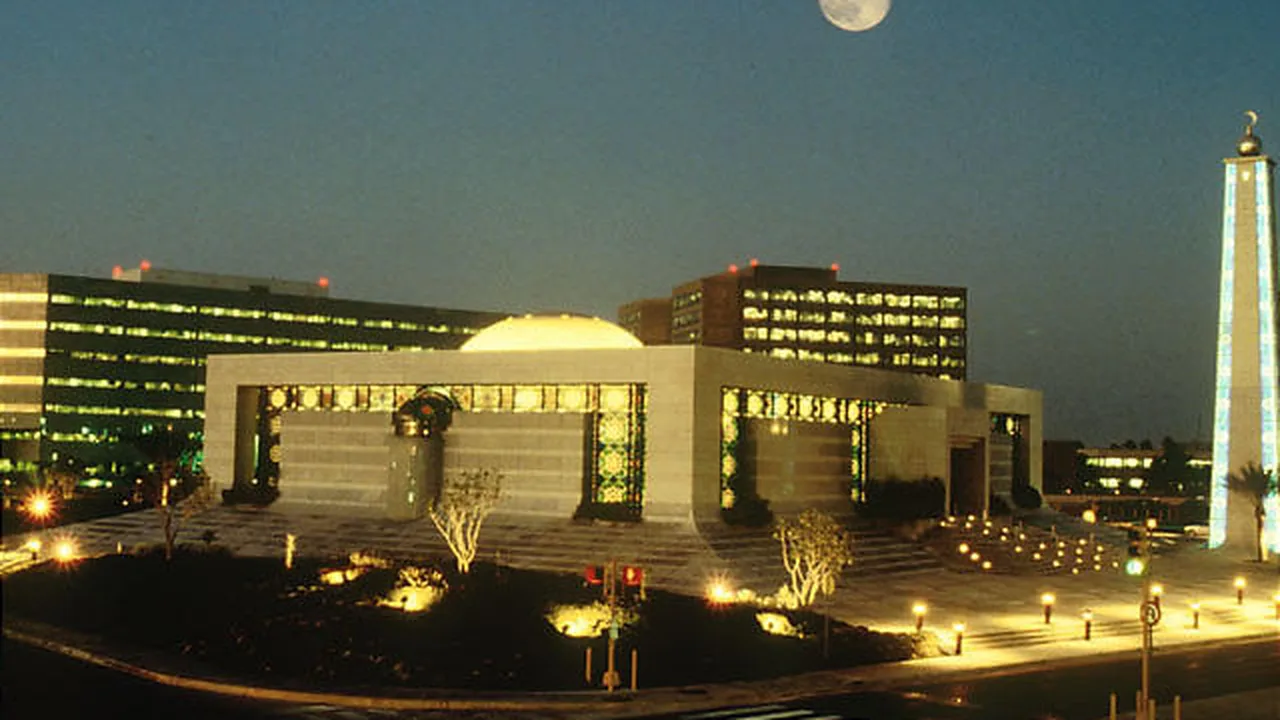
Saudi Aramco's headquarters in Dhahran suffered extensive damage in Tuesday night's attack, with a fire spreading across several floors of the office complex, three people with direct knowledge of the matter told Reuters on Wednesday, while the Houthis vowed to press on with attacks on Saudi airports and oil facilities and the Saudi-led coalition said it had intercepted a ballistic missile fired toward Riyadh on Wednesday. Two of the Reuters sources said operations at the complex were continuing normally, with some employees asked to work from home. The account of extensive damage goes well beyond the Saudi Energy Ministry's statement that the attack caused a limited fire with no injuries or deaths, and Aramco did not immediately reply to Reuters' request for comment.
How badly was the Aramco headquarters damaged?
By the account of Reuters' sources, the damage was extensive: a fire that began on the ninth floor of the office block's south wing spread between the sixth and tenth floors, and the top three floors — where the office of Aramco chief executive Amin Nasser is located — were severely damaged, with part of the ceiling caved in and windows and doors blown out. A fourth person told Reuters some functions had been shifted to the company's global offices and that the fire was still burning into the early hours of Wednesday, and a company source told Reuters a ballistic missile hit the complex and struck an office tower. The Associated Press, citing two regional officials, independently reported that the strike damaged the building's top three floors, including the offices of the chief executive and other top officials, and that there were no casualties. The facility hosts an operations centre that helps Aramco oversee its onshore and offshore rigs, refineries, export terminals and pipelines, Reuters reported. Whether the building took a direct hit or was damaged by interception debris remained unclear in earlier reporting, and the two public accounts of scale — the ministry's limited fire, and the sources' several-floor fire — had not been reconciled at publication time.
What happened over Riyadh on Wednesday?
Saudi air defences were in action again on Wednesday, and the two wire accounts of the salvo differ in scale. Reuters reported that the coalition intercepted a ballistic missile fired by the Houthis toward Riyadh on Wednesday, that several loud booms were heard in the capital, and that authorities had earlier issued an alert for a possible aerial threat before lifting it. The Associated Press reported a larger tally: the coalition said it had intercepted two Houthi drones, four cruise missiles and one ballistic missile targeting Riyadh, a ballistic missile targeting Dhahran and a cruise missile targeting Al-Kharj, a military and industrial city south of the capital. Saudi civil defence authorities in Riyadh said debris from an intercepted strike left one person injured on Wednesday, AP reported, and the state-run SPA news agency published images of a damaged building and a vehicle with a large cylindrical object, apparently part of a missile, in its hood. The Houthis said they had launched ballistic missiles, cruise missiles and drones at Aramco facilities in Dhahran, King Khalid International Airport in Riyadh and an Aramco refinery in Riyadh, without saying when, and urged international shipping companies, civilians and workers to evacuate airports and oil facilities, which they declared legitimate targets, Reuters reported. The group says its attacks are retaliation for Saudi strikes on Yemen and for the kingdom's backing of Yemeni government forces in the war that restarted last month.
Is there any move toward talks?
A senior Houthi official told the Associated Press that mediation efforts are under way, even as both sides trade strikes. Mohamed al-Bukhaiti, a member of the Houthis' political bureau, told AP that Oman has tried to bring both sides back to the negotiating table and that Russia and China had also tried, via Iran; his account of those efforts is published here as his account, and no Saudi response to it was reported in the sources opened. Regional officials told AP the kingdom is running low on interceptors after a week of daily attacks, an assessment the Saudi authorities have not publicly confirmed. On the ground in Yemen, the International Committee of the Red Cross said front-line hospitals in Marib, Taiz and along the Red Sea coast are admitting unprecedented numbers of weapon-wounded patients — more than 700 casualties in a single week at some facilities — and the UN World Food Programme said fighting has cut off life-saving aid to around 800,000 people in Taiz and other affected areas, Reuters reported.
This is not financial advice. The damage accounts are published as reported by Reuters, citing people with direct knowledge, and by the Associated Press, citing two regional officials, alongside the Energy Ministry's differing account of a limited fire. The Wednesday interception tallies differ between Reuters and AP and are published as each wire reported them. The Houthis' claims and threats, the coalition's interception accounts, and the Houthi official's account of mediation efforts are each published as the claims of the side that made them.