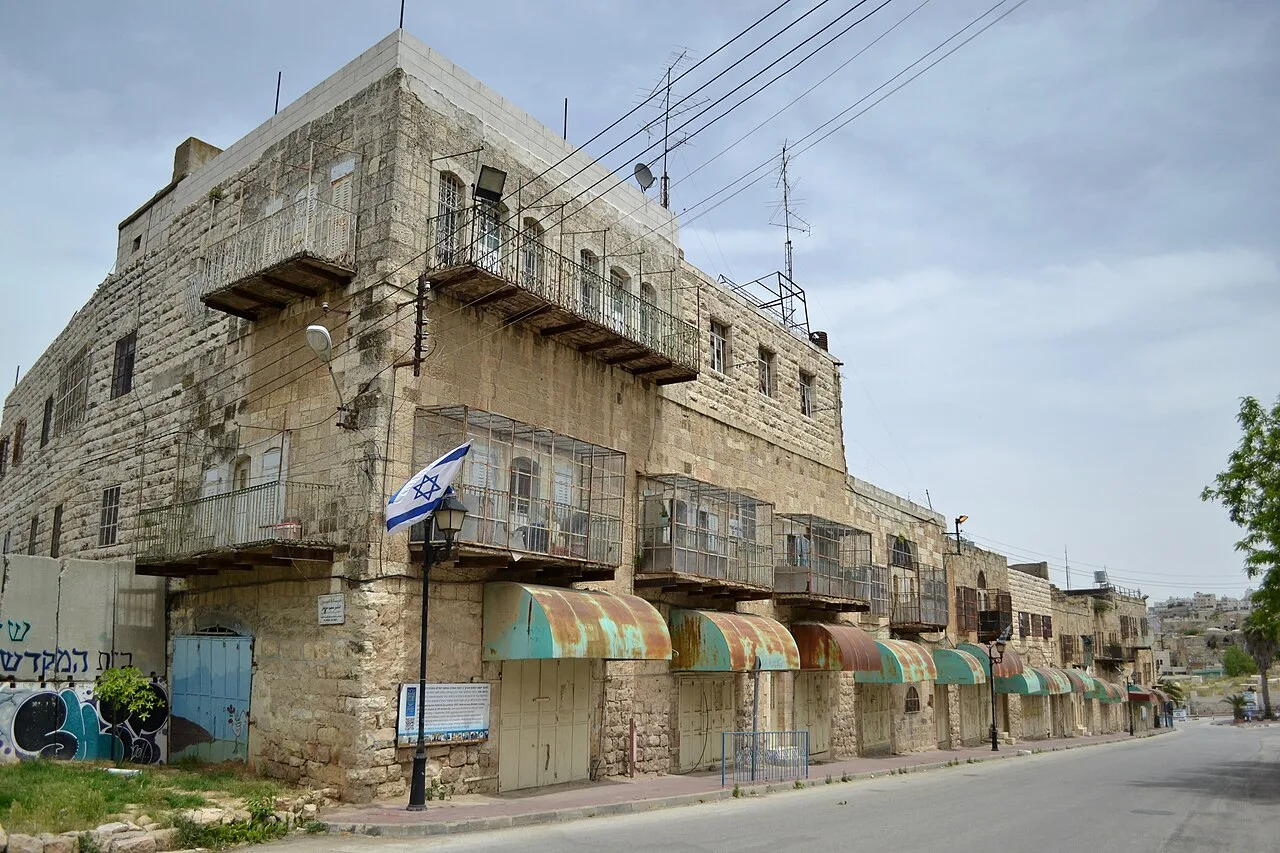
Israeli forces forced about 1,200 Palestinians to leave their homes in Hebron in the occupied West Bank on Saturday, October 24, as the large-scale operation ordered after Friday's checkpoint shooting began, a Palestinian official told Reuters. The operation is centred on the Al-Jaladah and Ein Deir Baha neighbourhoods near the military checkpoint at the entrance of Hebron, where two Palestinian gunmen killed two Israeli soldiers on Friday before being shot dead. The Israeli military said the operation was to search for militants and weapons, and that it would carry out demolitions.
How many people have been displaced?
About 1,200 people had been displaced by Saturday, and about 1,300 more faced losing their homes, according to Yousef Zouhair Al-Jabari, the head of Hebron's municipality, speaking to Reuters. Al Jazeera's live coverage reported the mayor as putting the number forced from their homes at about 2,200 — a higher figure than the one Reuters published from the same municipal leadership; the two counts are reported here as published, unreconciled. The Associated Press, citing a tally from Hebron's municipality via the Palestinian news outlet WAFA, reported that up to 300 families had left Deir Baha, on one of the city's hillsides, and the two adjacent neighbourhoods. AP reporters saw Israeli flags draped over a home seized for military use in Deir Baha.
Residents told Reuters the military expelled many people with no connection to the Palestinian attackers. "We are calling on officials to stand by us because we are not involved in any of this. There are children. We are isolated; we don't do anything. This is all arbitrary," said Majdi Nasser, one of those driven from his home. Residents also told Reuters they saw Israeli soldiers marking homes with a black X after their occupants had been forced to leave; what the mark meant was not immediately clear. Al-Jabari said the military had demolished shops, factories, homes and roads in Hebron, and called the response disproportionate and unjustified. The Palestinian Authority criticised the operation as a "collective punishment." The Palestinian Prisoners' Club, a non-governmental organisation, said Israeli forces had arrested around 70 Palestinians on Friday and Saturday; Israeli officials have not commented on any arrests, Reuters reported.
What closures are in force in Hebron and across the West Bank?
All gates leading in and out of Hebron were closed to vehicles on Saturday, the AP reported, with taxis piling up behind military-controlled gates and Palestinians forced to cross on foot. Across the West Bank, Israel has blocked the entrances to most Palestinian cities and towns, severely curtailing Palestinians' freedom of movement, Reuters reported. Yousef Mur, a resident of the Palestinian town of Yatta, told Reuters the closures meant he was unable to reach Jerusalem with his daughter for her cancer treatment: "When we tried to cross, they fired stun grenades towards us, and my girl got scared on the way." Israel's army did not respond to the AP's questions about the operation on Saturday; on Friday it had said its forces had begun "conducting precise, targeted and thorough searches" in the area from which the gunmen had operated.
Why is the operation happening now?
The displacement is the first full day of the operation Prime Minister Benjamin Netanyahu ordered on Friday, hours after the checkpoint shooting, when he said the military would launch a large-scale operation and demolitions began in another part of the city. Al-Jabari told Reuters he believed the operations were motivated by Israel's parliamentary elections on Tuesday, in which opinion polls show Netanyahu's right-wing coalition may lose its majority: "Netanyahu and the radical ministers in his government are trying to win as many votes as possible from the settlers." That is the municipal head's stated assessment, published as such. Netanyahu's government has presided over a rapid expansion of West Bank settlements, which UN bodies and most countries deem illegal, though Israel disputes this, Reuters noted. How long the operation will run, and whether the displaced residents will be allowed to return, had not been stated by the Israeli military in the reporting opened for this article.
This report is drawn from Reuters' October 24, 2026 report, opened and read in full on reuters.com, and the Associated Press's October 24, 2026 report, opened and read in full via an AP wire carrier, with Al Jazeera's October 24 live coverage read via search. Displacement and arrest figures are attributed to the officials and organisations that gave them; the Reuters figure of about 1,200 displaced and Al Jazeera's figure of about 2,200 forced to evacuate, both attributed to Hebron's municipal leadership, are published unreconciled, as reported.