North Korea is considering deploying additional tactical weapons and restarting loudspeaker broadcasts near its border with South Korea, Kim Yo Jong, the powerful sister of leader Kim Jong Un, said in a statement carried by state media KCNA on Monday. "Now the situation of the southern border is very unstable," she said, accusing South Korea's military of threatening the safety of North Korean personnel by firing warning shots at them. The statement, reported by Reuters, is the latest step in a border confrontation that has been building since Pyongyang began fortifying its side of the Demilitarized Zone in April 2024.
What exactly did Kim Yo Jong say?
That the North's military leadership is examining two escalations and other measures besides. "To cope with the prevailing situation, our military leadership is examining the issues of deploying more tactical strike means along the southern border as a pre-emptive and suppressive measure to deal with contingency, and of resuming loudspeaker broadcasting against the ROK, and considering other necessary and appropriate measures," she said, using the abbreviation for South Korea's official name, the Republic of Korea. Her accusation was specific: "The warmongers of the ROK military are seriously threatening the safety of our service personnel by firing warning shots at them with automatic rifles and large-calibre machine guns," she said. Kim Yo Jong put figures on Seoul's activity as Pyongyang counts it: Seoul had carried out 2,870 rounds of loudspeaker warnings and fired 201 warning shots from August 1 to October 17. Those figures are North Korea's, published here as its account; Seoul has not disclosed data on its activities near the border to counter North Korea's fortification works, Reuters reported, and South Korea's defence ministry was not immediately available to comment on Monday's statement.
What is happening at the border itself?
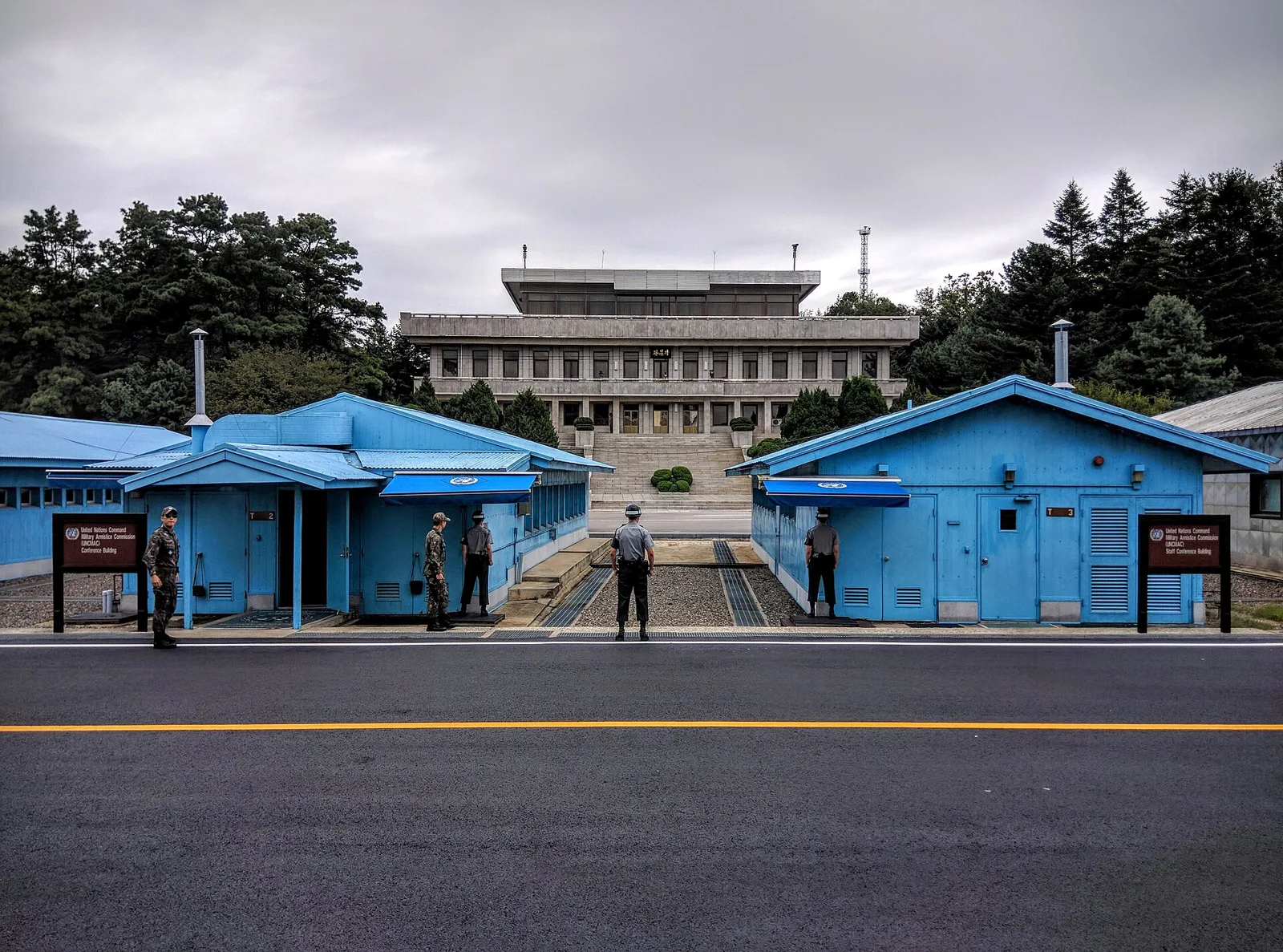
A fortification campaign, on South Korea's account, and the friction it generates. Tensions between North and South Korea have risen since Pyongyang began fortifying its border in April 2024, Reuters reported; the two countries are separated by the Demilitarized Zone established when the Korean War ended in an armistice in 1953 — an armistice, not a peace treaty, which is why the border remains a military line more than seven decades later. South Korea's military said on October 5 that the North had deployed as many as 7,000 workers this year to install mines and fences, with about 50 incidents of crossing the border. North Korean mines caused a border blast last month that seriously wounded two of its soldiers, the South said, and Seoul called on Pyongyang to suspend the fortification work.
Why do loudspeakers matter at this border?
Because sound has been a weapon there for decades, and because Seoul is already using it. "The South Korean military has been on high alert on North Korea's fortification works, firing warning shots and conducting loudspeaker broadcasts," Lim Eul-chul, a professor at Kyungnam University's Institute for Far Eastern Studies in Seoul, told Reuters. "And Pyongyang seems to be worrying that such warning activities by Seoul might escalate tensions near the border or cause a military conflict." Kim Yo Jong's 2,870 figure counts what she called "loudspeaker warnings" — Seoul warning the North's fortification crews away from the line — and her threatened response is to resume the North's own loudspeaker broadcasting against the South, the propaganda counterpart. A restart would therefore not introduce a new instrument so much as answer one: warning shots and warning broadcasts from the South, met, on her account, by more tactical strike weapons and broadcasts of the North's own.
What is the risk in this exchange?
That a worksite confrontation becomes a shooting incident neither capital planned. The elements in Monday's reporting are small in themselves — fences, mines, warning shots counted in the low hundreds over eleven weeks, broadcasts — but they are concentrated on the same few kilometres of border, between soldiers close enough to be warned by loudspeaker, in a zone where a mine blast last month already seriously wounded two North Korean soldiers, on Seoul's account. Pyongyang's framing raises the stakes of the next incident in advance: warning shots are described not as warnings but as threats to its personnel's safety, and the response under examination is pre-emptive — "deploying more tactical strike means along the southern border as a pre-emptive and suppressive measure to deal with contingency." No new weapon was named, no deployment was announced, and no broadcast had resumed in the reporting opened on Monday. What changed is the stated menu: the North has publicly put tactical weapons and loudspeakers on it, and tied both to the warning shots its neighbour says it fires to keep fortification crews on their own side of the line.
This report is drawn from Reuters' October 19 report of Kim Yo Jong's KCNA statement, opened and read in full for this article. The statement's accusations and figures are North Korea's, attributed as such; the fortification, worker and mine-blast figures are South Korea's military's, as reported by Reuters; Seoul had not disclosed its own warning-shot data and its defence ministry was not immediately available to comment, as Reuters reported.