The Soviet-Afghan War, fought from December 1979 to February 1989, began as a Soviet attempt to prop up a collapsing communist government in Kabul and became a grinding counterinsurgency that the Soviet Union could neither win nor sustain. Over nearly ten years it killed around 15,000 Soviet troops, displaced roughly a third of Afghanistan's population, drained an already struggling Soviet economy, and helped define the endgame of the Cold War — earning it the label "Russia's Vietnam."
Key takeaways
- A coup invited an invasion: after Afghanistan's communist government took power in April 1978 and then fractured through purges and coups, the Soviet Union invaded on the night of December 24, 1979 with some 30,000 troops, killing President Hafizullah Amin and installing Babrak Karmal.
- A war of cities against countryside: more than 100,000 Soviet troops held the cities and major garrisons while mujahideen guerrillas controlled the rural areas; repeated Soviet offensives failed to break the stalemate.
- An international proxy war: the mujahideen were armed and funded through Pakistan by the United States and other countries, and Soviet attempts to destroy their rural support base drove millions of Afghans into exile.
- It ended with negotiated withdrawal, not victory: under Mikhail Gorbachev, the Soviet Union signed the 1988 Geneva Accords and completed its troop withdrawal on February 15, 1989 — but the fighting in Afghanistan continued.
Contents
Overview
The road to invasion started inside Afghanistan. In April 1978, left-wing military officers overthrew President Mohammad Daud Khan and handed power to a Marxist-Leninist coalition — the People's Democratic Party of Afghanistan, split between its People's (Khalq) and Banner (Parcham) factions. As Britannica records, the new government had little popular support, forged close ties with the Soviet Union, purged its domestic opposition, and imposed land and social reforms that were bitterly resented by the devoutly Muslim, largely anti-communist population. Islamic insurgencies — collectively called the mujahideen, "those who engage in jihad" — rose across tribal and urban areas, while the Khalq and Parcham factions fought each other through a series of coups.
These uprisings prompted the Soviet intervention. On the night of December 24, 1979, Soviet troops crossed into Afghanistan in a force of about 30,000, toppling the short-lived presidency of Khalq leader Hafizullah Amin — Amin was killed on December 27 — and installing Parcham leader Babrak Karmal. The aim was to stabilize a faltering client state; Karmal, however, never won significant popular support, and the Afghan army was crippled by mass desertions and remained largely ineffective.
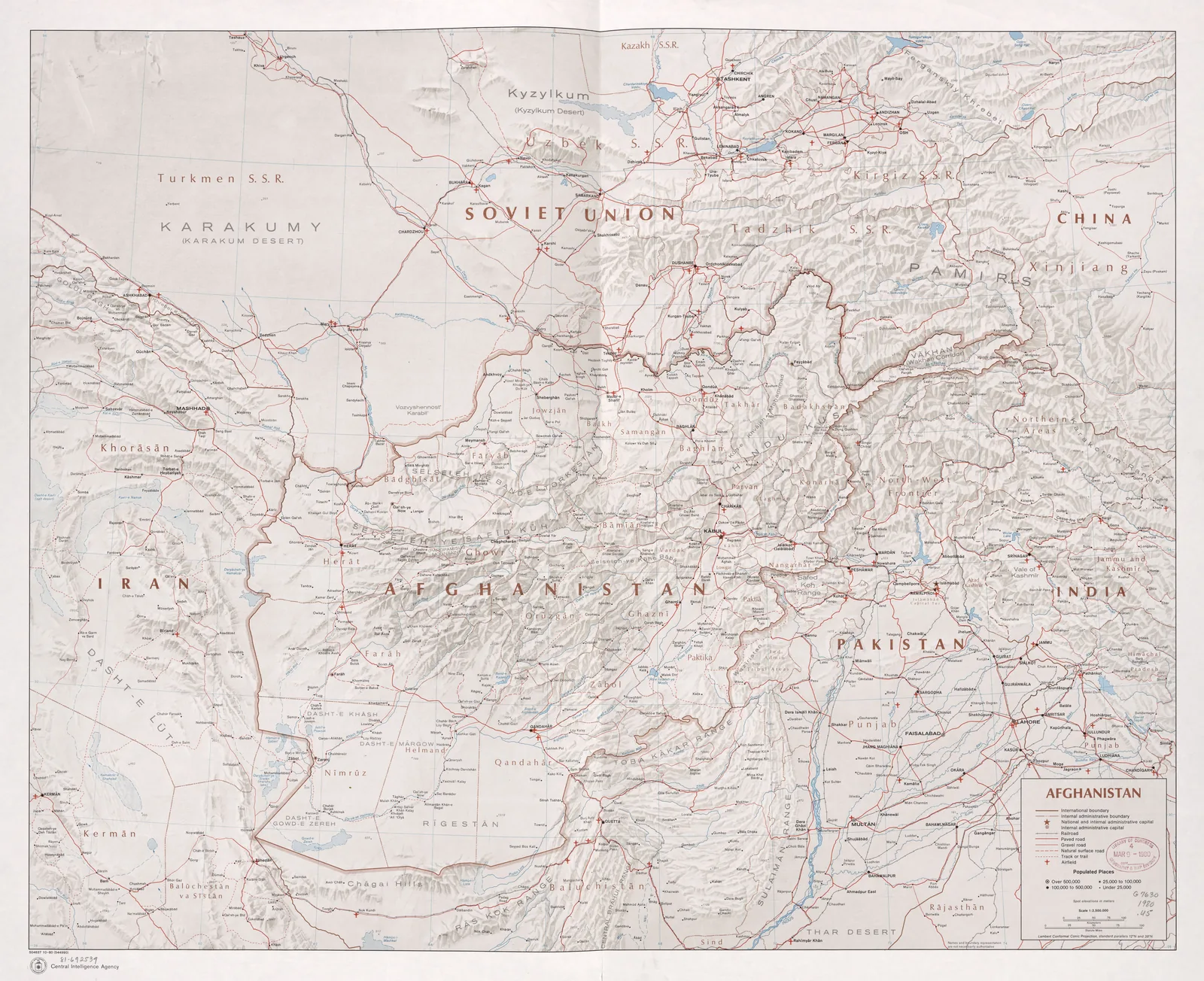
What followed was nearly a decade of stalemate. Soviet troops tried to crush the insurgency with conventional offensives, but the guerrillas generally eluded them; the Soviets then attempted to eliminate the mujahideen's civilian support by bombing and depopulating rural areas, which instead drove the population toward the resistance. Politically fragmented and militarily uncoordinated, the mujahideen nevertheless improved steadily as arms and materiel flowed to them via Pakistan from the United States and other countries — including shoulder-fired antiaircraft missiles that eventually neutralized Soviet air power, and an indeterminate number of foreign Muslim volunteers, the so-called "Afghan-Arabs," who traveled to join the fight.
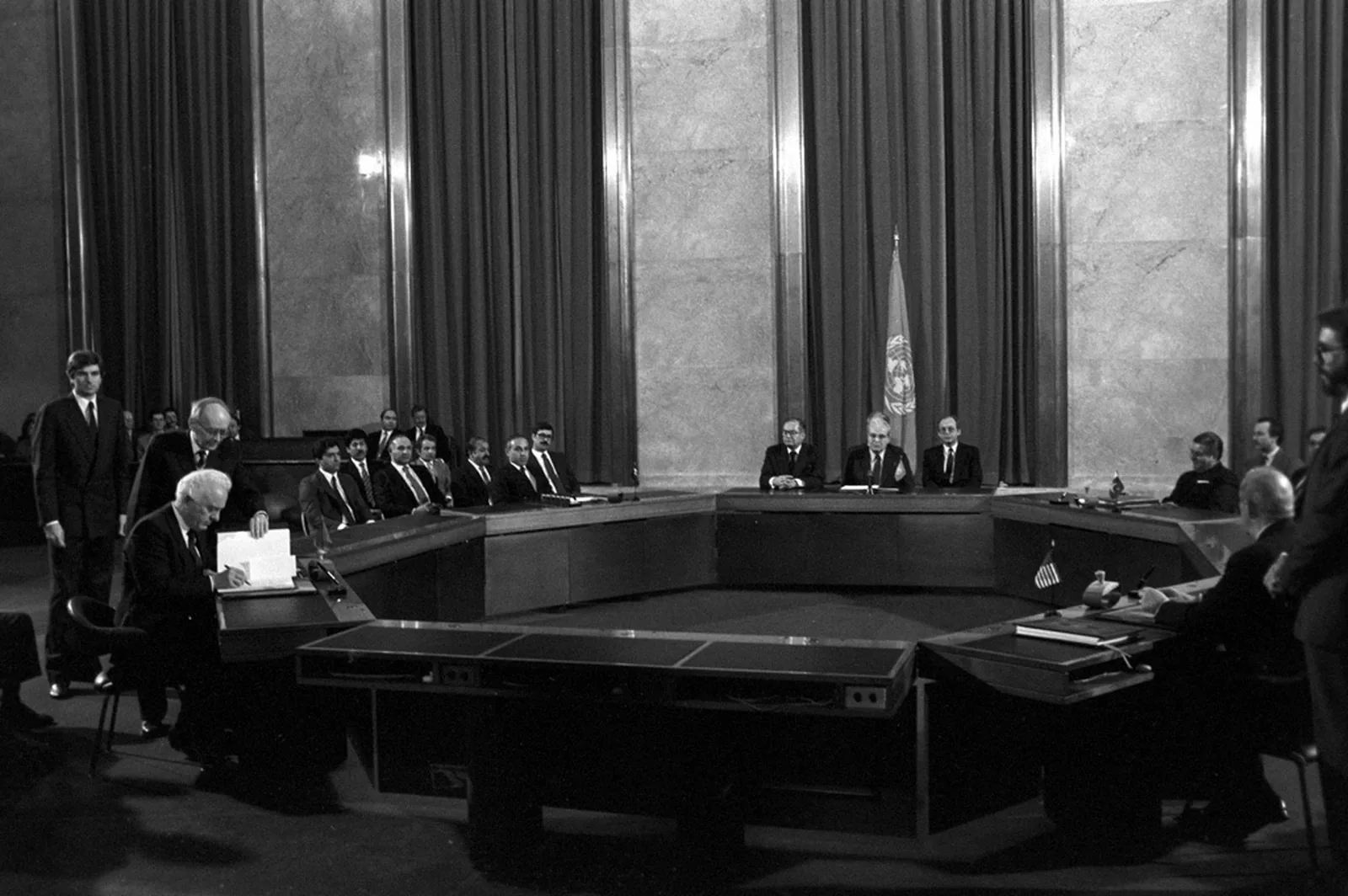
By the late 1980s, Mikhail Gorbachev's Soviet Union was looking for the exit. The 1988 Geneva Accords — signed with the United States, Pakistan, and Afghanistan — set the terms for withdrawal, which began on May 15, 1988 and was completed on February 15, 1989, when Afghanistan returned to nonaligned status. But the withdrawal ended only the Soviet chapter: History.com notes that for Afghanistan, the fighting did not end, and the mujahideen eventually succeeded in establishing control over the country in 1992.
Casualties
The Soviet Union never released official casualty figures for the war. The best-documented numbers are approximate: Britannica reports the Soviets suffered some 15,000 dead and many more injured, while History.com notes that U.S. intelligence sources estimated as many as 15,000 Soviet troops died.
Afghan military and civilian deaths are far less certain. No single authoritative total exists — estimates vary widely depending on the source, the period covered, and whether they count combatants, civilians, or both — so any precise figure should be treated with skepticism. What is documented with confidence is the displacement the war caused. Britannica records that by 1982 some 2.8 million Afghans had sought asylum in Pakistan and another 1.5 million had fled to Iran; by the late 1980s, some 6 million people — probably a third of Afghanistan's population at the time — were refugees, the vast majority in Pakistan and Iran, with more displaced internally. The Soviet tactic of bombing and depopulating rural areas, Britannica notes, was the direct driver of that flight.
Economic effects of the Soviet-Afghan War
For the Soviet Union, the war was a steady financial bleed. History.com reports that "the economic cost to the already struggling Soviet economy ran into billions of dollars," and that Gorbachev came to see the Afghan intervention as an increasing drain on that economy — a central reason for the decision to withdraw. The exact annual cost remains debated in the literature, but there is no dispute about the direction: a stagnating late-Soviet economy was funding a foreign war of choice.
For Afghanistan, the war was an economic catastrophe from which the country never fully recovered. Britannica's survey of the Afghan economy records that the 1979 invasion and the civil war that followed "severely disrupted the country's economic development": agricultural production declined, food shortages were reported, and industrial output stagnated — the only exceptions being natural gas production and other industries the Soviets considered essential. The late 1970s nationalizations had already upended a mixed system of landholdings and private enterprise; the war compounded the damage by destroying infrastructure and scattering the population, with Britannica noting that many Afghans raised in refugee camps grew up lacking even the farming skills needed to survive. After the Soviet withdrawal, the economy sank further: under the subsequent mujahideen and Taliban governments of the 1990s, the formal economy effectively collapsed, and illicit enterprise — including the opium trade, in which Afghanistan became the world's largest producer — filled the vacuum.
How it shaped the world
The invasion froze and then fractured the Cold War's late détente. President Jimmy Carter harshly criticized the Soviet action, stalled arms-limitation talks, imposed economic sanctions, and ordered the U.S. boycott of the 1980 Moscow Olympics — moves that, as History.com records, strained U.S.–Soviet relations "nearly to the breaking point." The war also demonstrated the limits of Soviet power in terms visible worldwide: a superpower army, equipped for war in Europe, spent nine years unable to subdue a rural insurgency, which is why Westerners quickly dubbed the conflict "Russia's Vietnam."
"Russian leader Mikhail Gorbachev saw the Afghan intervention as an increasing drain on the Soviet economy, and the Russian people were tired of a war that many Westerners referred to as 'Russia's Vietnam.'" — History.com
The settlement itself became a template for Cold War exits. The 1988 Geneva Accords — signed by Afghanistan and Pakistan with the United States and Soviet Union as guarantors — combined a Soviet withdrawal timetable with pledges of non-interference, refugee return provisions, and international guarantees. The withdrawal was completed on February 15, 1989, and Afghanistan returned to nonaligned status.
But the war's legacy did not end with the last Soviet soldier's departure. The collapse of the Soviet-installed order, the flood of weaponry into the region, the generation of Afghans raised in exile, and the networks of foreign volunteers who had come to fight — the "Afghan-Arabs" Britannica describes — all shaped the conflicts that followed in Afghanistan through the 1990s. Scholars debate how much the war itself contributed to the Soviet Union's eventual collapse versus its deeper internal causes; what is not in dispute is that the Afghan war became the defining foreign-policy failure of the late Soviet era and a reference point, still invoked today, for the costs of a great power waging a war it cannot end.