The Gulf War (August 2, 1990 – February 28, 1991) was a UN-authorized, U.S.-led coalition war against Iraq after Saddam Hussein's invasion and annexation of Kuwait. Weeks of precision bombing and a 100-hour ground offensive ended with Kuwait liberated and the Iraqi military in ruins — and Saddam still in power. It was, as Britannica notes, "the first major international crisis of the post-Cold War era," and the U.S.-led response set precedents for the use of military force that echo to this day.
Key takeaways
- Debt and oil drove the invasion. Iraq emerged from its 1980–88 war with Iran deeply indebted; Saddam invaded Kuwait on August 2, 1990, to seize its oil reserves, erase what he owed, and expand Iraqi power in the region (Britannica).
- An unprecedented coalition. The UN Security Council authorized force under Resolution 678 — the first such authorization since Korea in 1950 — and some 25 nations had committed troops and weapons by November 1990 (Britannica).
- Air power, then the "left hook." Weeks of bombing neutralized Iraq's air defenses and gutted its ground forces; a flanking ground offensive then destroyed the Iraqi army in Kuwait in 100 hours. Iraq lost 3,008 tanks, 1,856 armored vehicles, and 2,140 artillery pieces (Britannica).
- Lopsided human cost. Coalition deaths numbered in the low hundreds; Iraqi military deaths are estimated anywhere from 8,000 to 100,000 — the historiography has never converged on a single figure.
- An unfinished war. The ceasefire left Saddam in power, leading to sanctions, UN weapons inspections, and no-fly zones — and, twelve years later, the 2003 Iraq War.
Contents
Overview
Why did Iraq invade Kuwait?
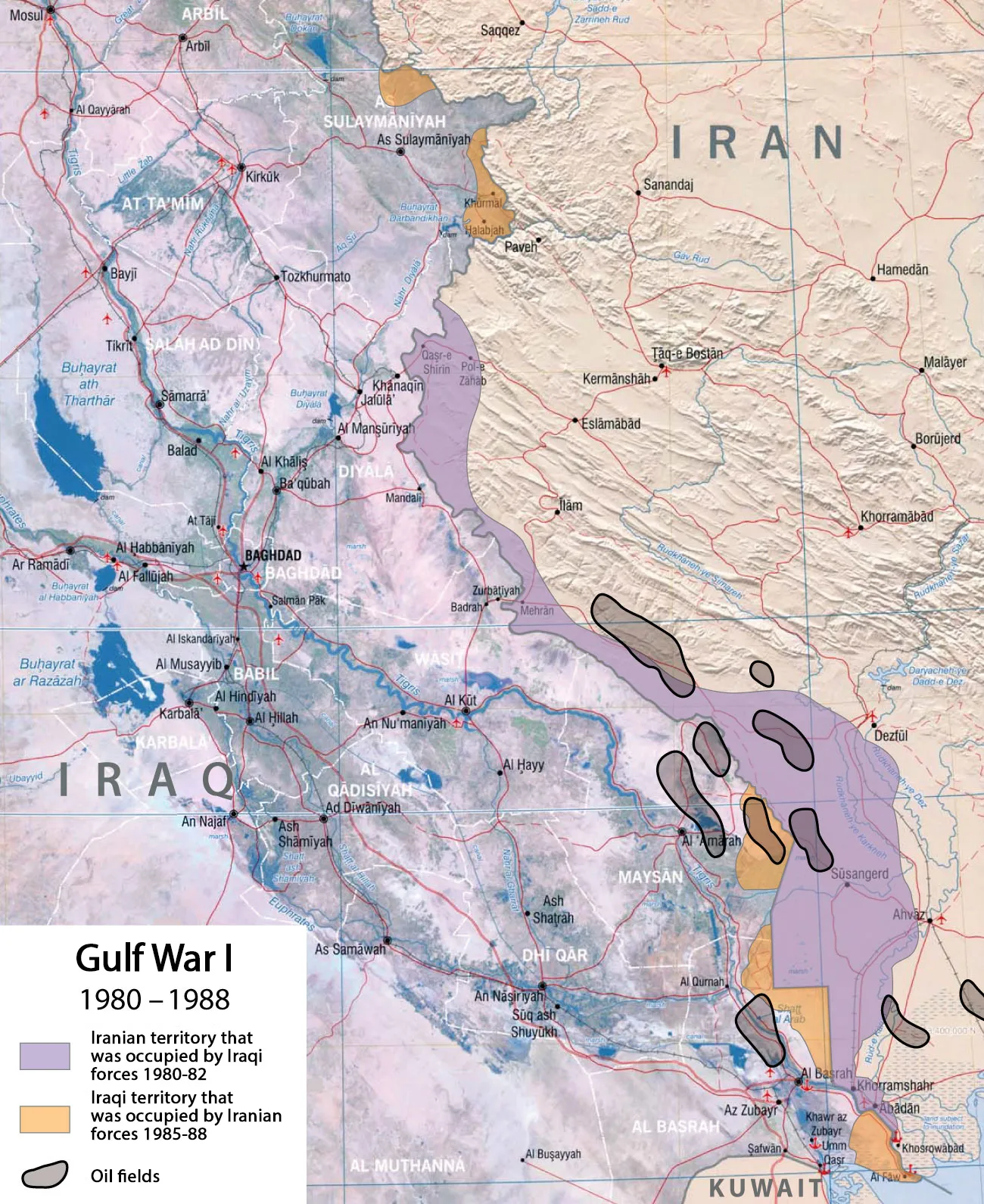
The road to war ran through the Iran-Iraq War of 1980–88, which left Iraq financially exhausted and deeply indebted to its Gulf neighbors. According to Britannica, Saddam Hussein ordered the invasion of Kuwait with the apparent aims of acquiring Kuwait's large oil reserves, canceling a large debt Iraq owed Kuwait, and expanding Iraqi power in the region. Tensions escalated through the summer of 1990: Saddam accused Kuwait and the United Arab Emirates of exceeding OPEC oil export quotas — depressing prices Iraq depended on — and charged Kuwait with slant-drilling into the al-Rumaylah oil field straddling their border. After talks at Jeddah collapsed on August 1, Iraqi armored divisions crossed the border early on August 2, 1990.
Britannica estimates 4,200 Kuwaitis were killed resisting; the emir, Sheikh Jābir al-Aḥmad, fled to Saudi Arabia with his cabinet and control of some $100 billion in overseas assets, while as many as 350,000 refugees followed. On August 28 Saddam formally annexed Kuwait as Iraq's "19th province." Amnesty International later reported hundreds of extrajudicial killings and thousands of prisoners taken during the occupation.
How did the world respond?
The diplomatic response was swift. On August 6 the UN Security Council passed Resolution 661, banning all trade with Iraq; twelve of the 21 Arab League states condemned the invasion. Saudi Arabia's King Fahd, fearing Iraqi troops on his border would move next, invited Western and Arab forces into the kingdom — the first American units a lightly equipped "trip wire" force meant to make Saddam pause.
The buildup then became the largest American overseas deployment since World War II: by mid-November the U.S. had over 240,000 troops in the Gulf and another 200,000 en route, with Britain, Egypt, and France as major contributors (Britannica). The National Army Museum puts the British contribution at about 35,000 servicemen and women with 13,000 vehicles — Britain's largest single deployment since 1945. On November 29, 1990, the Security Council passed Resolution 678 (12–2, Cuba and Yemen against, China abstaining), authorizing force if Iraq had not withdrawn by January 15, 1991 — the first UN authorization of force since 1950.
What was Operation Desert Storm?
Operation Desert Storm, the coalition combat phase directed by U.S. CENTCOM commander Gen. Norman Schwarzkopf, opened on the night of January 16–17, 1991, with a massive air offensive. Coalition pilots had air supremacy by January 28; Iraq lost 35 aircraft in air combat, 100+ destroyed on the ground, and 115 fled to Iran; the coalition lost 39, none in air combat (Britannica). The campaign was where precision warfare announced itself: the F-117A Nighthawk — just over 2 percent of allied attack aircraft — hit more than 30 percent of first-day targets, and experimental RQ-2 Pioneer drones saw their first military use. Britannica estimates the air campaign neutralized 30 percent of Iraq's ground forces in the theater.
Iraq's answer was to widen the war: between January 18 and February 25 it fired 39 modified Scud missiles at Israel — killing at least 3 civilians and injuring up to 200 — hoping to draw Israel in and shatter the Arab coalition. U.S. diplomacy kept Israel out; Patriot batteries were rushed in as the price of restraint. The Patriots' effectiveness stayed disputed for decades — the U.S. Army claimed 40 percent interceptions, but the U.S. Government Accountability Office and Israeli officials argued fewer than 10 percent had destroyed a Scud (Britannica).
How did the ground war end in 100 hours?
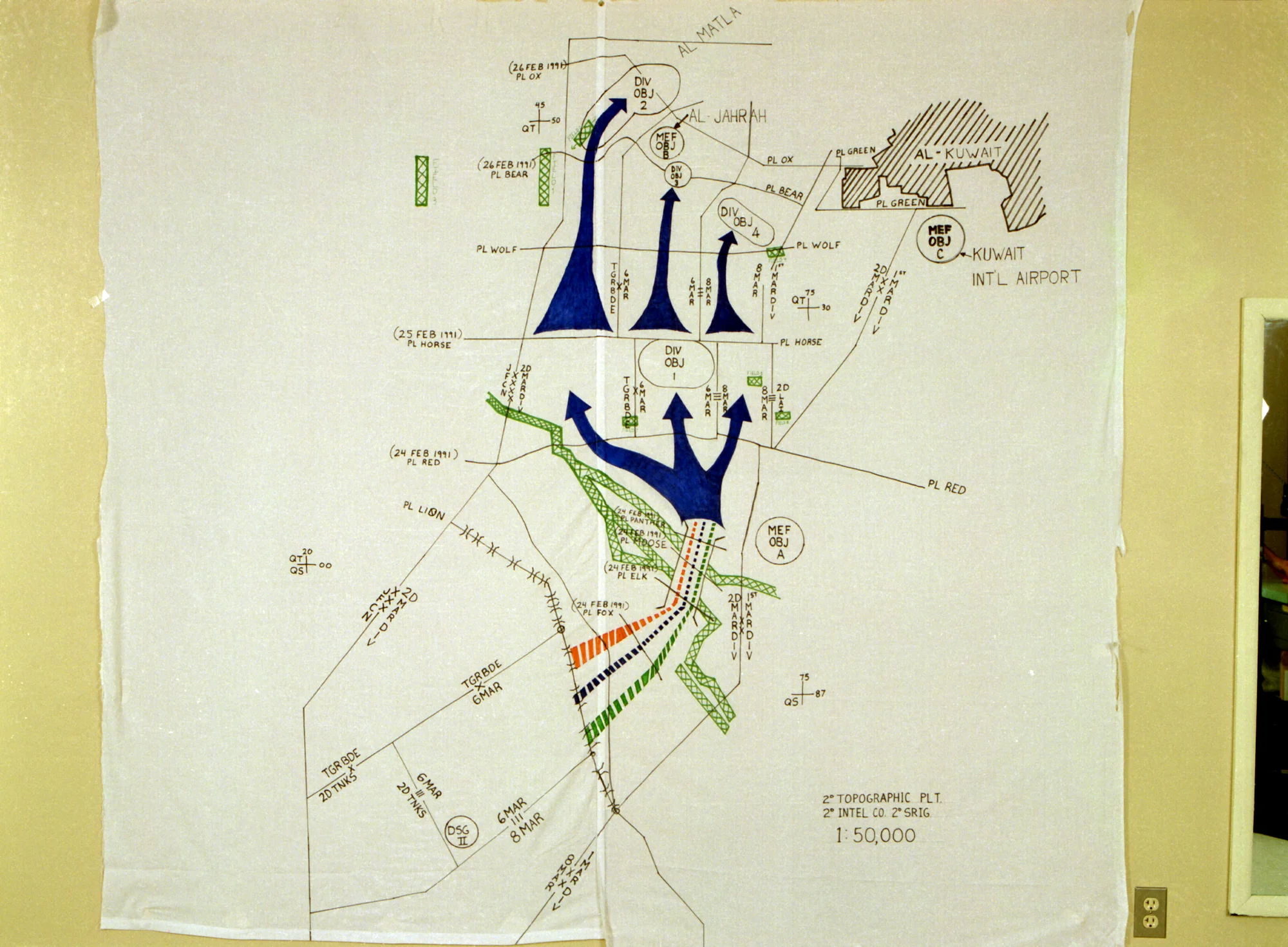
Operation Desert Sabre began on February 24, 1991, with a deception: the Iraqis braced for a seaborne assault on Kuwait's coast while the real attack was a vast flanking maneuver. The XVIII Airborne Corps drove deep into the desert and swung east in a "left hook" toward the Euphrates; the VII Corps — with the British 1st Armoured Division, which advanced 290 km in 66 hours — smashed through Iraqi defenses on the Saudi border. Near Basra, VII Corps destroyed the Republican Guard's armored reserves.
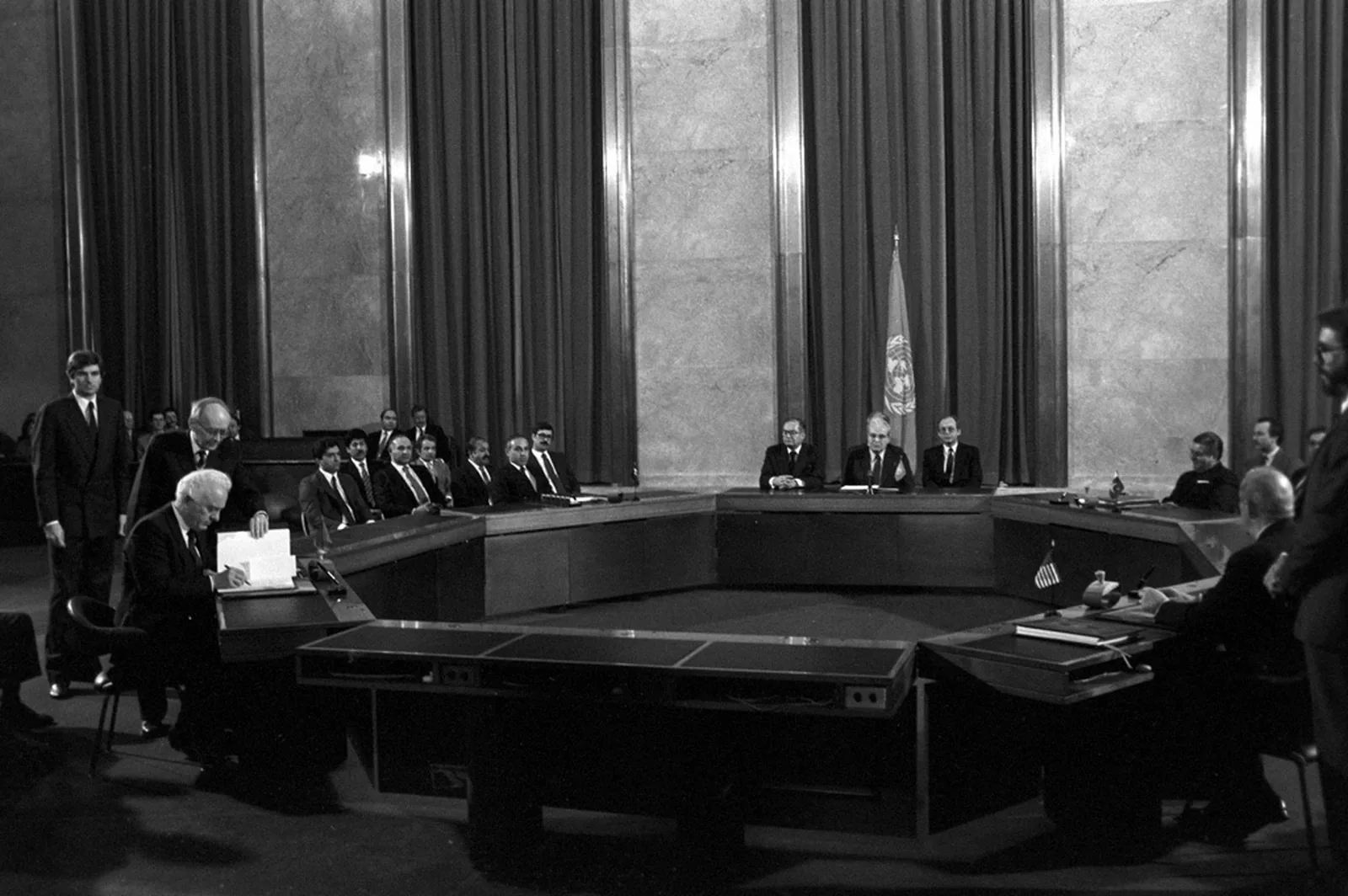
It was over in 100 hours: some 41 Iraqi divisions were effectively wiped out, and on February 27, President Bush declared the ceasefire (Iraq accepted the UN terms on March 3; formal peace on April 6 — National Army Museum).
Casualties of the Gulf War
Casualty figures for the Gulf War are among the most disputed of any modern conflict, and there are no official Iraqi figures — a fact worth remembering whenever a single number is quoted.
Coalition deaths were remarkably light. Britannica reports 147 U.S. personnel and 47 British troops killed in action, with roughly 1,000 coalition troops wounded — and notes that U.S. non-combat deaths during the operations actually exceeded combat fatalities. The National Army Museum gives 345 coalition troops killed and 1,000 wounded overall.
Iraqi military deaths are where the estimates diverge. Britannica gives 8,000 to 50,000; the National Army Museum says Iraqi figures "are not known, but number at least 30,000," with some estimates "as high as 100,000." Demographer Beth Osborne Daponte — a U.S. Census Bureau researcher whose work is summarized in a 2016 PLOS ONE mortality study — estimated 49,000–63,000 Iraqi military deaths plus about 3,500 civilian deaths from direct war effects.
Kuwaiti and civilian deaths complete the picture: an estimated 4,200 Kuwaitis died resisting the invasion, and thousands more were taken prisoner during the occupation (Britannica).
Economic effects
The war was, in one sense, the cheapest major conflict the United States ever fought — because others paid. The Congressional Record (September 2003) puts the total cost of the 1991 war at $61 billion, of which the United States paid only about $7 billion; allies reimbursed the rest.
Oil markets supplied the war's signature economic shock — and its signature lesson. After the invasion, the loss of Iraqi and Kuwaiti production and fear for Saudi Arabia's fields drove prices sharply higher: the Oil & Gas Journal records NYMEX crude setting a then-record $40.42 a barrel on October 11, 1990. Yet the shock unwound almost as fast as it arrived. In the Energy Studies Review (1991), French energy economist Patrick Criqui documents how embargoes and rising output elsewhere contained the damage: prices fell back under $20 a barrel by February 1991 as a quick coalition victory looked certain, and "the third oil shock … did not materialize." The nine-month episode showed that the fear premium on oil could be enormous — and that a decisive, UN-backed military outcome could deflate it just as fast.
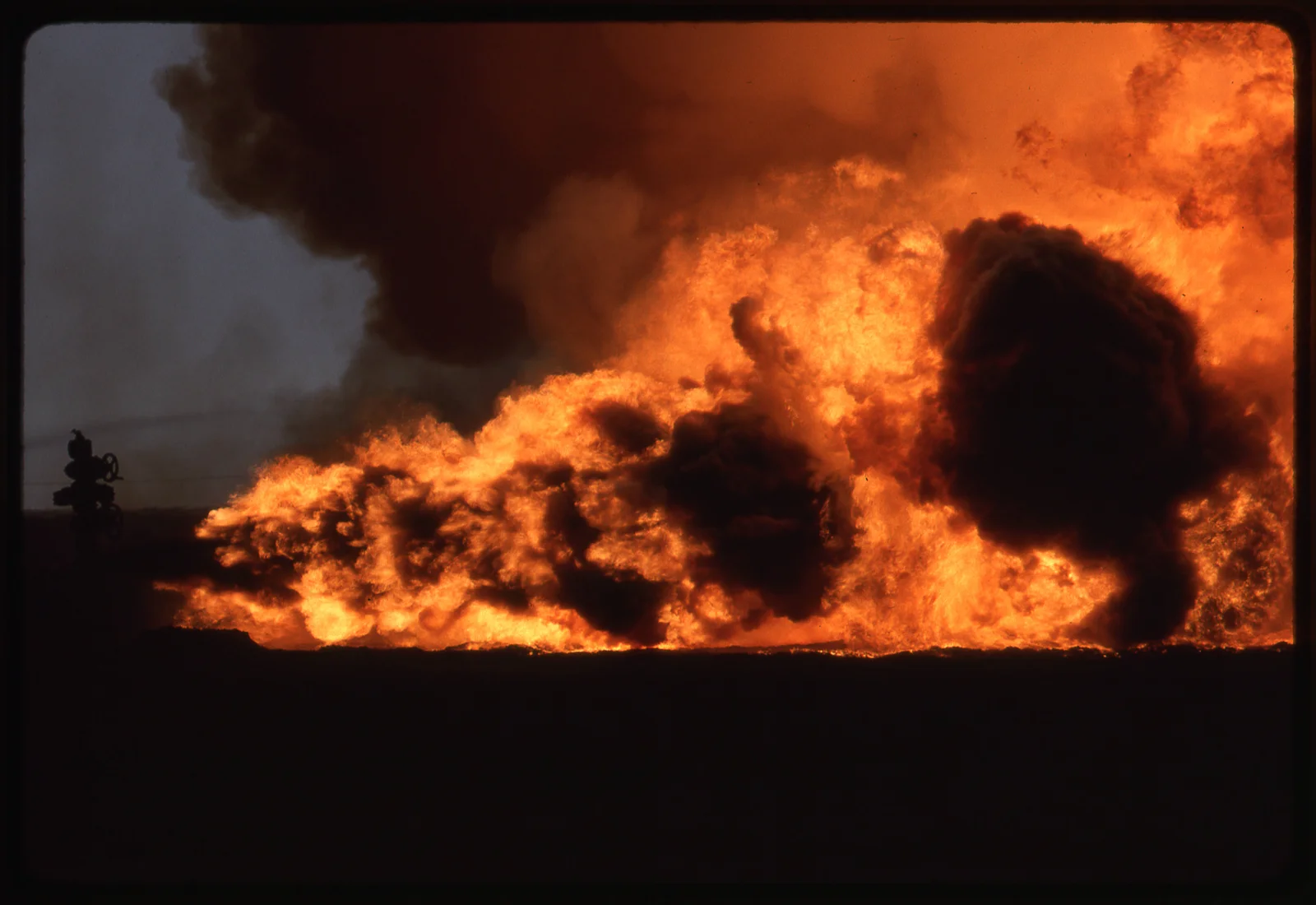
The environmental bill was harder to quantify. Retreating Iraqi troops set fire to more than 700 of Kuwait's 950 oil wells (Britannica; the National Army Museum gives "over 500"), burning some six million barrels of oil per day at their peak; the fires were not fully out until November 1991, and acid rain fell as far as the Black Sea and Pakistan. Iraq remained under UN sanctions through the 1990s, while the coalition's Gulf allies funded reconstruction and a long-term American military presence.
How it shaped the world
Kuwait was liberated in 100 hours of ground combat — but Saddam Hussein survived, and the war's unfinished business led straight to 2003.
It was the first war of the "new world order." With the Soviet Union fading, Resolution 678 was the first UN authorization of force since Korea — and the last time a broad international coalition, including most major Arab powers, fought together against a single aggressor. Lawrence Freedman and Efraim Karsh's The Gulf Conflict, 1990-1991 (Princeton University Press, 1993), described by its publisher as the most authoritative and comprehensive account of the war's diplomacy, traces how the conflict became the founding test case for post-Cold War collective security.
It changed how wars are fought — and televised. Precision-guided munitions, stealth aircraft, and real-time reconnaissance made "surgical" strikes a nightly television spectacle, creating the template of the technology-driven war. The U.S. Army's own official history, Frank Schubert and Theresa Kraus's The Whirlwind War (1995), describes the campaign as the coming-of-age of the post-Vietnam American military.
It ended without ending. The UN mandate covered only Kuwait's liberation, so Saddam survived — and the consequences compounded. Shia and Kurdish uprisings, which the U.S. had called for, were crushed "with great brutality" (Britannica); U.S. and British aircraft patrolled no-fly zones for a decade; UN inspectors spent the 1990s hunting weapons of mass destruction amid Iraqi obstruction; and in 2003 the United States returned "seeking no further UN endorsement" (Britannica). Twelve years of defiance, in the National Army Museum's phrase, led George W. Bush's government to "again invade Iraq in 2003."
It hardened the oil-security doctrine. The 1990 price spike — and its swift reversal — taught policymakers that the real threat was not barrels lost but markets panicked, a lesson revisited in every Gulf crisis since.
---
Research note: Iraqi military casualty figures remain disputed; this article presents the published range with attribution rather than a single figure. Figures on oil production losses and price movements are from the Energy Studies Review (1991) and the Oil & Gas Journal.