The South Sudan conflict is the story of the world's youngest country repeatedly failing to survive its own founders. Fifteen years after independence, South Sudan is once again sliding toward civil war — even as President Salva Kiir presses ahead with December 22 elections that would be the first national vote since independence in 2011. His longtime rival Riek Machar, meanwhile, sits under house arrest and on trial for treason, charges he denies.
A short history: independence, then war
South Sudan became independent from Sudan in July 2011 after a decades-long struggle by the Sudan People's Liberation Movement (SPLM). The celebration was brief. Salva Kiir, an ethnic Dinka, was president; Riek Machar, the most prominent politician from the Nuer, the country's second-largest ethnic group, was his deputy. Both were early guerrilla commanders in the SPLM, formed in 1983, and they had fought each other on rival sides from 1991 until a 2002 reconciliation.
In 2013, Kiir dismissed Machar, and a firefight between ethnic factions of the presidential guard in Juba sparked a civil war that killed hundreds of thousands and displaced millions, largely along Dinka–Nuer lines. A U.S.-backed peace deal in 2015 collapsed within a year; Machar fled on foot to the Democratic Republic of Congo and then South Africa. Only in 2018, under pressure from Uganda (which backed Kiir) and Sudan (which favoured Machar), did the two agree to the Revitalized Agreement on the Resolution of Conflict in South Sudan (R-ARCSS). Machar returned as first vice president in 2020 under a power-sharing government — but the deal's core provisions were never honoured: the rival armies were not unified, no permanent constitution was adopted, and the promised first elections never happened.
The 2025–2026 unraveling
The current crisis began in March 2025, when fighting erupted in Nasir, in the Nuer opposition hotbed of Upper Nile state. The International Crisis Group's analysis describes how the government accused Machar of orchestrating an uprising in which a local White Army militia overran a military base; Kiir placed Machar under house arrest in Juba, cut off his communications, and launched airstrikes on Nuer villages and SPLM-IO positions in Upper Nile and Equatoria.
In September 2025, the government charged Machar and seven allies with treason, murder, terrorism financing and crimes against humanity, and established a Special Court for the sole purpose of trying them. His trial continues. In response, Machar's SPLM-IO declared the 2018 peace deal "abrogated."
In early 2026, opposition forces and aligned militias took up arms and made rapid advances in Upper Nile and Jonglei states — traditional hotbeds of Nuer opposition — with Crisis Group warning that "South Sudan's slide back into civil war continues apace." In Jonglei, opposition forces took the towns of Waat, Yuai and Pajut in December and January and threatened the state capital, Bor. Kiir relies on Uganda, whose soldiers poured into Juba as the peace deal unravelled; the opposition's gains have led many to suspect a new foreign patron, possibly Sudan's armed forces — a suspicion, not an established fact.
Where things stand: elections in December
Despite the fighting, Kiir is pushing toward the December 22 vote. On September 22, he signed amendments to the election law removing requirements that had linked elections to completing a permanent constitution and a national census — changes rejected by the main opposition coalition, which said they were made without adequate consultation. Parliament had passed the bill the same day; voter registration has not begun. A week earlier, Kiir had replaced the head of the elections commission without giving a reason.
On September 23, Kiir dissolved the transitional government entirely — the national and state legislative assemblies, the five vice-presidents, ministers and local administrators — ending the power-sharing arrangement established under the 2018 peace agreement. A caretaker administration now runs the country through the electoral period, with Kiir retaining full constitutional powers until a newly elected president is sworn in. The Reconstituted Joint Monitoring and Evaluation Commission (RJMEC) described the country as entering a critical phase and urged political parties to reach agreement on a credible electoral process.
Regional diplomacy is scrambling to keep up. On September 29, South African President Cyril Ramaphosa convened the African Union's C5 — South Africa, Algeria, Chad, Nigeria and Rwanda — alongside IGAD representatives to assess the transition ahead of the vote. The C5 had called in February for full implementation of the 2018 peace agreement, an immediate end to hostilities, inclusive dialogue, the release of political detainees including Machar, and elections in December without another extension of the transitional period.
The stakes
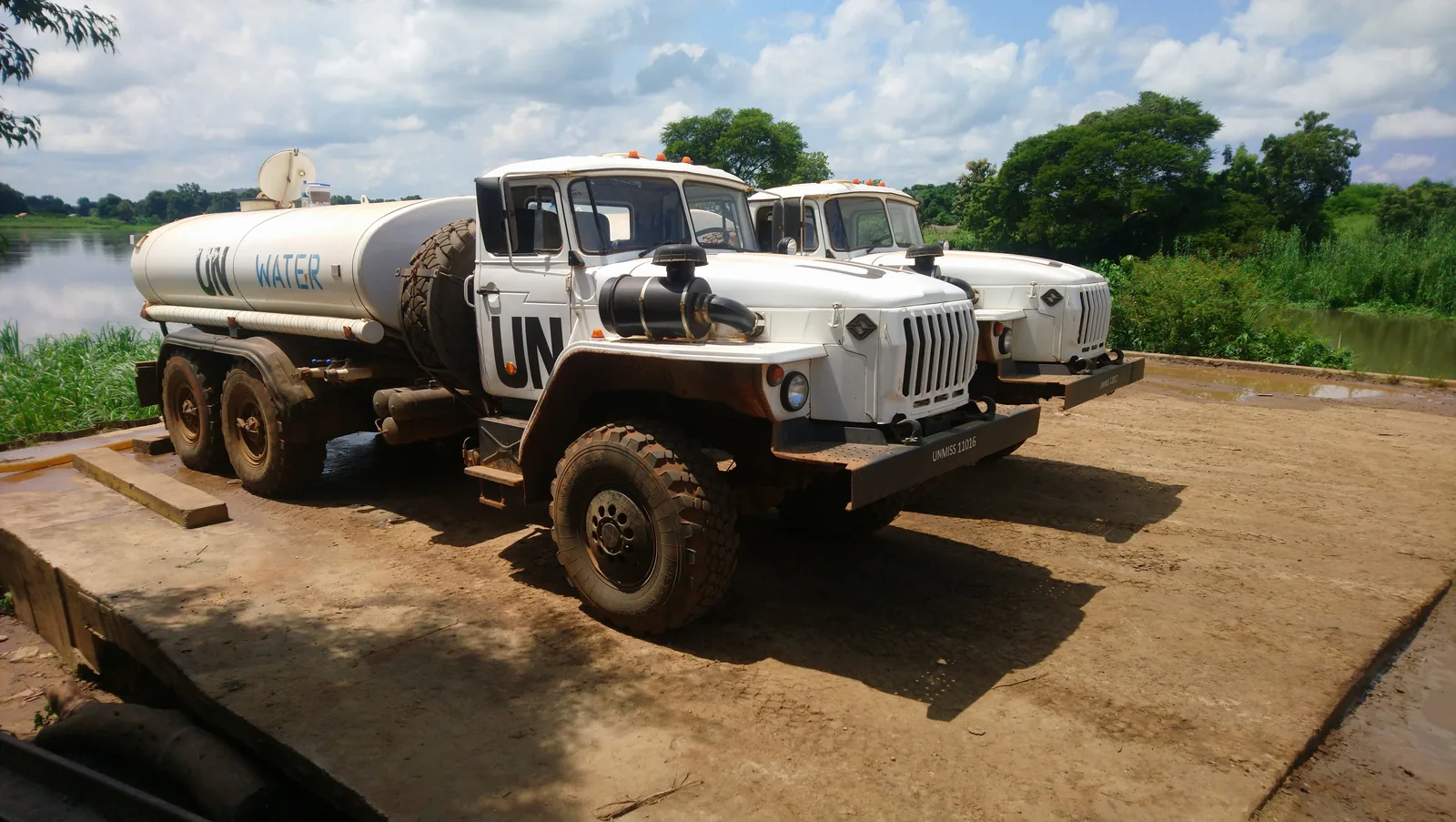
The risks go beyond the ballot box. An estimated 9.3 million South Sudanese — nearly 70 per cent of the population — require humanitarian assistance, with 7.7 million facing acute food insecurity, according to the UN figures cited by Crisis Group. The war in neighbouring Sudan halted South Sudan's oil exports — its main revenue source — for more than a year, and oil now flows only at reduced rates. With security forces unpaid for months, attacks on civilians by frustrated soldiers have increased.
Whether December 22 brings an election, another postponement, or open war will depend on whether Kiir, Machar's fractured movement, and the region's mediators can reach a political settlement. As Crisis Group's Daniel Akech framed it, without negotiations, "the threat of a return to conflict will loom ever larger" over a country that has never held a national election in its fifteen years of independence.