The Mozambican Civil War explained in one line: two years after winning independence from Portugal, Mozambique's Marxist government was fighting an insurgency its neighbours had built — RENAMO, created by Rhodesian intelligence and then sustained by apartheid South Africa, waged a fifteen-year war of destruction against FRELIMO's socialist state that neither side could win, killed about one million people in a country of some thirteen million, and ended in Rome in 1992 only after the Cold War that fed it had ended too. The war ran from 30 May 1977 to 4 October 1992. Its deepest pattern, the Cambridge scholar Corinna Jentzsch argues in Violent Resistance, was that it became "a war over people": unable to take each other's territory, both sides fought to control, move and punish the population itself. This site has covered the war's regional twin in the Angolan Civil War, which began the same year Mozambique became independent.
Key takeaways
- RENAMO was created by Rhodesia's Central Intelligence Organisation before independence and inherited by South Africa after 1980; FRELIMO's own socialist transformation supplied the grievances that let it grow.
- The toll most often cited is about one million dead — fighting, famine and disease together — with about five million displaced; no exact count exists.
- The 1988 Gersony Report attributed 94 percent of refugee-reported murders to RENAMO; Michel Cahen and others dispute that asymmetry.
- The war ended by negotiation, not victory: the Rome General Peace Accords of 4 October 1992, followed by multiparty elections in October 1994.
Contents — What was the Mozambican Civil War? · Why did the war start? · How was the war fought? · How many people died? · What did the war cost economically? · How did it shape the world?
What was the Mozambican Civil War?
The Mozambican Civil War was a fifteen-year war between Mozambique's ruling front and a foreign-built insurgency, fought from 30 May 1977 to 4 October 1992. Mozambique had formally gained independence from Portugal on 25 June 1975, with FRELIMO — the Front for the Liberation of Mozambique, which had fought the Portuguese since 1964 — taking power under President Samora Machel and setting out to build a socialist one-party state. Against it stood RENAMO, the Mozambican National Resistance, and a shifting set of smaller factions. Three neighbouring states — Zimbabwe, Tanzania and Malawi — eventually deployed troops inside Mozambique in support of the government, while Rhodesia and then South Africa armed, trained and supplied RENAMO. Whether the superpowers fought it as a proxy war is itself disputed: BlackPast frames it as "in fact a proxy war between the Soviet Union which backed the Mozambican government and the United States which supported the insurgents," while the compiled record states flatly that "the United States was not involved in the conflict" — Washington conservatives lobbied to support RENAMO, but the State Department defeated them after reports documented RENAMO's brutality. Both versions are carried here because the sources disagree.
Why did the war start?
Because Rhodesia needed a weapon against Mozambique, and FRELIMO's revolution gave that weapon recruits. Rhodesia's white-minority government faced Zimbabwean guerrillas of ZANLA operating from Mozambican territory, and its Central Intelligence Organisation, under Ken Flower, founded the Mozambican National Resistance before independence as an intelligence group; Rhodesian forces freed André Matsangaissa, a former FRELIMO official held in a re-education camp, trained him and installed him as leader. When Matsangaissa was killed in RENAMO's failed 1979 attack on Vila Paiva, Afonso Dhlakama succeeded him — and after Zimbabwe's independence in 1980 removed Rhodesia from the board, South Africa became RENAMO's main supporter, from 1981 in the Cambridge account's dating, because Mozambique sheltered the African National Congress. But an externally built movement grew because of what FRELIMO did at home. The new state nationalised abandoned Portuguese enterprises, ousted traditional chiefs, sent dissidents to re-education camps and pressed peasants into communal villages — a restructuring that, Jentzsch writes, produced "popular discontent with Frelimo's restructuring of economic, social, and political relations, in particular in the northern provinces," which "fueled the ensuing war." RENAMO's programme promised the opposite: abandon socialism, adopt a free market and restore traditional leaders.
How was the war fought?
As a war against infrastructure and population rather than a contest for ground. RENAMO, operating from remote camps, raided towns, roads, railways, schools and clinics almost anywhere except the major cities; FRELIMO, despite far superior numbers, could by the mid-1980s defend little beyond the cities and three heavily guarded corridors — Beira, Tete and Limpopo — whose railways carried landlocked Zimbabwe's trade. Zimbabwe intervened directly in 1982 to protect those corridors; Malawi, after expelling 12,000 RENAMO fighters in 1986, deployed its own troops from April 1987 to defend the Nacala rail line. Both sides conscripted the population. RENAMO filled its ranks by mass abduction — an estimated one-third of its forces were child soldiers — and ran the Gandira system, forcing villagers to grow food for RENAMO, carry its supplies and, in the case of women, serve as sex slaves. FRELIMO answered with fortified communal villages into which rural people were often moved at gunpoint. Diplomacy ran behind the fighting: under the Nkomati Accord of 16 March 1984, Pretoria promised to end support for RENAMO in exchange for Mozambique expelling the ANC — but documents captured at Gorongosa in August 1985 showed South African support had continued and extended. On 19 October 1986 Machel died when his Soviet-piloted aircraft crashed in the Lebombo Mountains just inside South Africa after an unexplained 37-degree turn; a South African-sponsored investigation blamed crew error, a conclusion never universally accepted, and Foreign Minister Joaquim Chissano succeeded him on 6 November. By 1988–89, in the Cambridge account's phrase, there was "an apparent military stalemate": RENAMO could not take a city, FRELIMO could not clear the countryside.
How many people died?
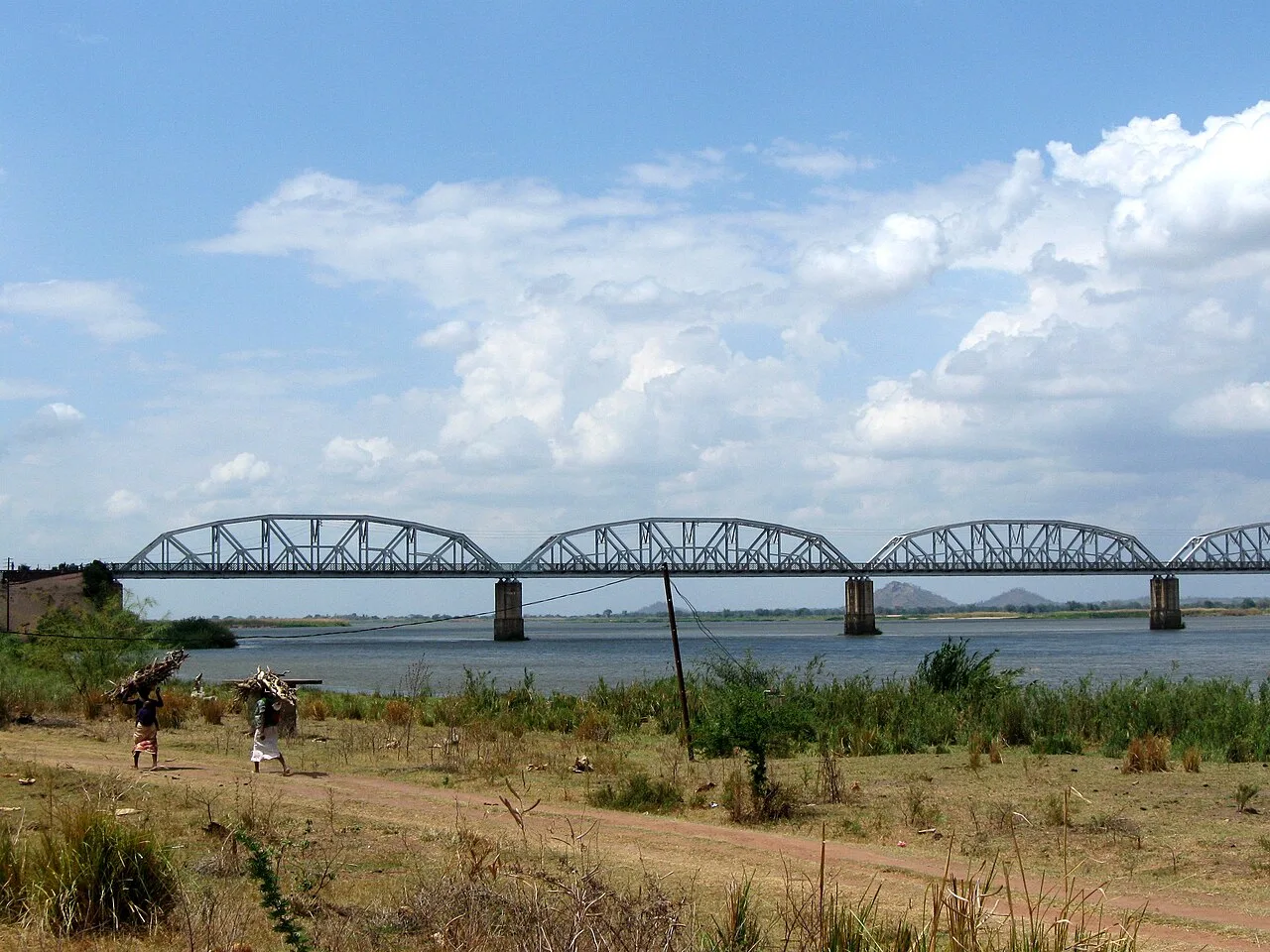
About one million, on the estimates most often cited — a figure that counts famine and disease alongside fighting, which is why it is published here as an attributed estimate and not a count. Joseph Hanlon's 1996 figures, carried in the Cambridge analysis, put the cost at "over one million lives" and "almost five million people" displaced "of a total population of about thirteen million at the end of the war, both as a consequence of fighting and war-induced famine and disease." The compiled record's total is likewise 1,000,000 or more; its aftermath section counts 5.7 million internally displaced and 1.7 million refugees out of 13–15 million people — a different displacement total from Hanlon's because it separates refugees from the internally displaced. Hundreds of thousands of the dead died in the famine of 1984, caused by adverse weather "significantly worsened by the conflict." Foreign losses are narrower and firmer: Zimbabwe lost 296 soldiers and 24 pilots between 1984 and 1990, Tanzania 99 soldiers, Malawi 100 or more, and the Soviet Union 8 advisers on official data. Responsibility for civilian killing is the war's sharpest dispute. The Gersony Report, commissioned by the US State Department from Robert Gersony and submitted in April 1988 after the Homoine massacre of 424 civilians, recorded refugees attributing 94 percent of murders, 94 percent of abductions and 93 percent of lootings to RENAMO; Mahmood Mamdani, citing it, estimates as many as 100,000 people were killed by RENAMO. Michel Cahen disputes the asymmetry: "the war was equally savage on both sides," he argues, even if FRELIMO's media domination led observers to attribute most atrocities to RENAMO. The compiled record documents grave FRELIMO abuses — forced conscription, forced removal into communal villages and re-education camps in which an estimated 30,000 inmates died — and notes that no commander was ever prosecuted, under a general amnesty covering 1976 to 1992.
What did the war cost economically?
It destroyed the rural state Mozambique was trying to build. By 1992, on Hanlon's figures, 60 percent of primary schools and 40 percent of health clinics had been destroyed; RENAMO made schools and clinics deliberate targets, Britannica notes, burning the government's presence out of the countryside. The corridors war consumed the transport system: even armed convoys were attacked, railway bombings on the Beira line cost the government millions, and Zimbabwe's and Malawi's armies ended up guarding Mozambican railways to keep their own trade moving. The economy Machel inherited was already in chaos — the Portuguese exodus left a country in which, on the compiled record, over 95 percent of the population was illiterate — and the war left the government "economically devastated." The concessions peace required began before peace: Mozambique joined the World Bank and the IMF in 1984 and adopted their structural-adjustment programme, scaling back the socialist project the war was being fought over, and Chissano's post-1990 constitution ended the one-party state. No single agreed monetary total for the damage exists in the sources opened for this article, and none is invented here; the physical ledger is agreed — schools, clinics, railways, roads and up to two million land mines, on Britannica's figure, which took until September 2015 to clear.
How did it shape the world?
It produced one of the Cold War's most studied peace settlements. Direct talks began around 1990, mediated by the Mozambican Church Council, the Italian government and the lay Catholic Community of Sant'Egidio, as Soviet support for FRELIMO and South African support for RENAMO collapsed with the Cold War itself. The Rome General Peace Accords, signed by Chissano and Dhlakama on 4 October 1992 and effective from 15 October, demobilised RENAMO's fighters or integrated them into a new army, and a UN force of 7,500 oversaw the transition to the multiparty elections of 27–28 October 1994, which international observers considered free and fair: Chissano won the presidency, RENAMO took a strong bloc in the National Assembly, and an insurgency became a political party — Stephen A. Emerson's The Battle for Mozambique: The Frelimo-Renamo Struggle, 1977–1992 (Helion, 2014) remains a standard military history of how the stalemate was reached. The settlement's limits showed later: RENAMO abrogated the Rome accord in October 2013 and fought a low-level insurgency until a new peace agreement in 2019, after Dhlakama's death in 2018. Alex Vines documented the slower legacy in Still Killing: Landmines in Southern Africa (Human Rights Watch, 1997); Mozambique was declared mine-free only in 2015. For the region, the war demonstrated the destabilisation strategy in its purest form — a neighbour's intelligence service could build an insurgency that outlived its creator, its sponsor's apartheid system and the Cold War itself, and could be ended not on any battlefield but at a negotiating table in Rome.
Sources: the compiled record (Wikipedia, 'Mozambican Civil War', read in full) for the chronology, strengths, foreign losses, the Gersony–Cahen dispute and the aftermath figures; Corinna Jentzsch, 'A War over People' in Violent Resistance (Cambridge University Press, read in full), for the war-over-people argument and Joseph Hanlon's 1996 toll, displacement and infrastructure figures; Encyclopaedia Britannica, 'Mozambique: Civil War, Peace, Reconciliation' (read in full), for the 1984 World Bank/IMF turn, the 1994 elections and the landmine and post-2013 record; BlackPast.org (read in full) for the proxy-war framing, which is published here alongside the compiled record's contrary statement on US involvement rather than reconciled with it; EBSCO Research Starters (read in full) for the detail of Machel's final flight and Chissano's succession. Where the sources disagree — above all on the American role and on the distribution of atrocities — both positions are stated with their attribution.