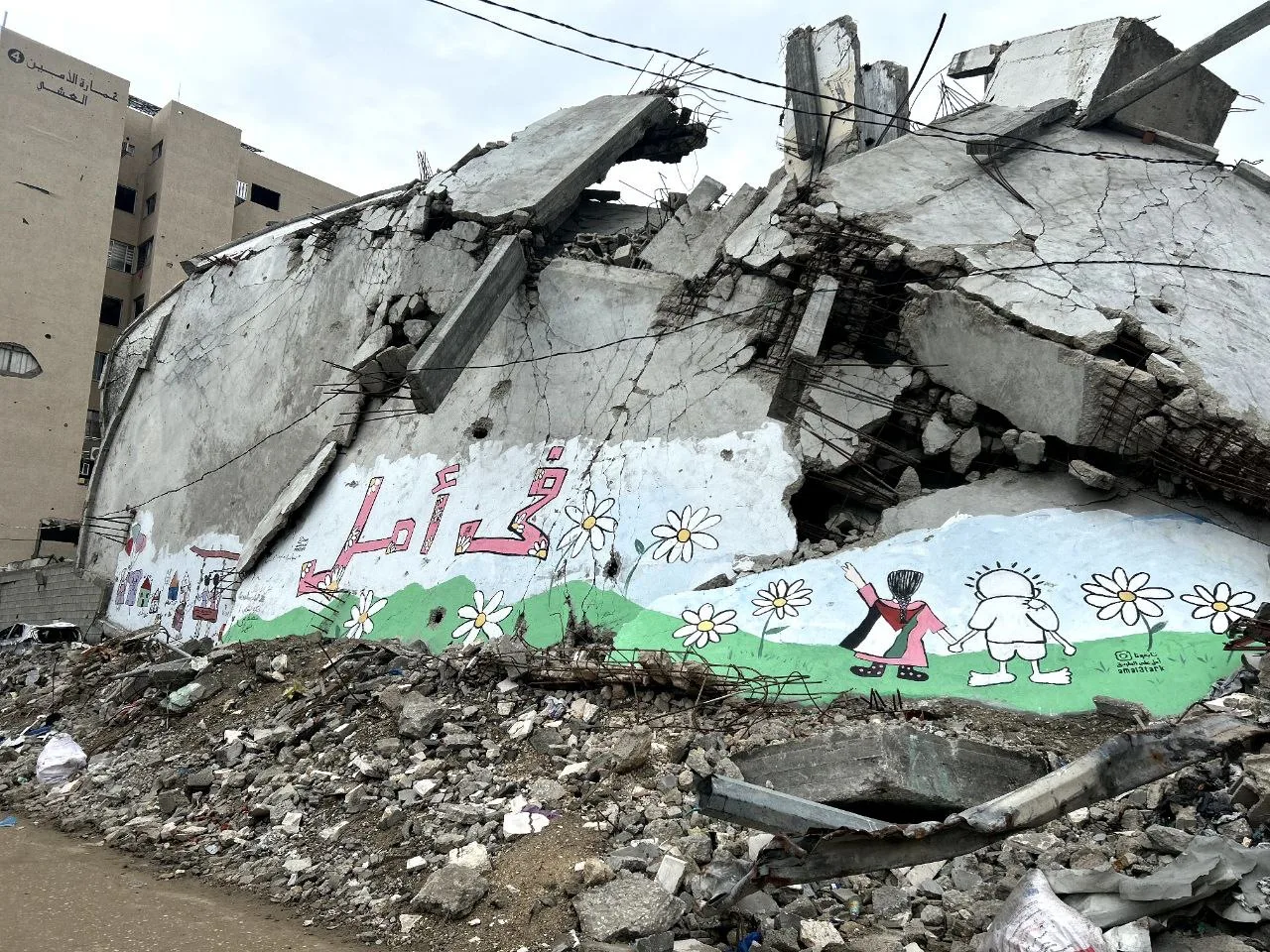
Gaza aid access became an open dispute between Israel and four of its Western partners on Sunday, when the foreign ministers of Australia, Canada, Italy and the United Kingdom said 150,000 tents and other vital supplies are being held at the border and prevented from entering Gaza — and told Israel to stop the delays now. "As winter takes hold in Gaza, the humanitarian situation on the ground is dire," the ministers said in their joint statement. "The recent floods have brought further suffering — and this was only the first storm of the winter." Their demand — immediate, rapid and unimpeded humanitarian access throughout Gaza — is an unusually direct public demand from four Western governments, and it arrives a year into the US-brokered ceasefire — in effect since October 2025 — under which more than 1,600 Palestinians have been killed, according to Gaza's health authorities; no independent verification of that toll, and no Israeli figure for it, was available in the reports opened for this article. This site's November 14 report covered the UN's winter appeal and the first cold death of the season; what changed on Sunday is who is now making the demand, and in what terms.
What exactly did the four ministers say?
That the shortage is a choice, and a reversible one. "People in Gaza desperately need shelter and humanitarian assistance. Yet 150,000 tents and other vital supplies are being held at the border and prevented from entering Gaza. This situation is entirely reversible — and there is still time to act before the winter fully sets in." The statement's demands are specific: the crossings must be opened, the tents allowed in, and dual-use items necessary for humanitarian operations and early recovery granted entry "before it is too late". It closes by calling on all parties to implement the Comprehensive Plan for Gaza, respect the ceasefire and meet their obligations under international humanitarian law. The statement sets no deadline and names no consequence — its force is that four Western governments have put the border delays on the record as Israel's responsibility.
What does Israel say has actually entered Gaza?
A different count, and a condition. Israel said last week that more than 91,000 tents had entered Gaza ahead of winter, CNN reported — while refusing to allow in the heavy equipment needed for large-scale clean-up and rubble removal. Its Coordinator of Government Activities in the Territories tied the wider question to disarmament: "The reconstruction of Gaza can only begin after Hamas fully disarms." The two tent figures are published here side by side and not reconciled: the ministers count 150,000 tents held outside; Israel counts more than 91,000 delivered inside. What neither account disputes is the ground truth both describe — seasonal rains last week swamped tens of thousands of tents across Gaza, where nearly two million Palestinians remain displaced, and winter has only just begun.
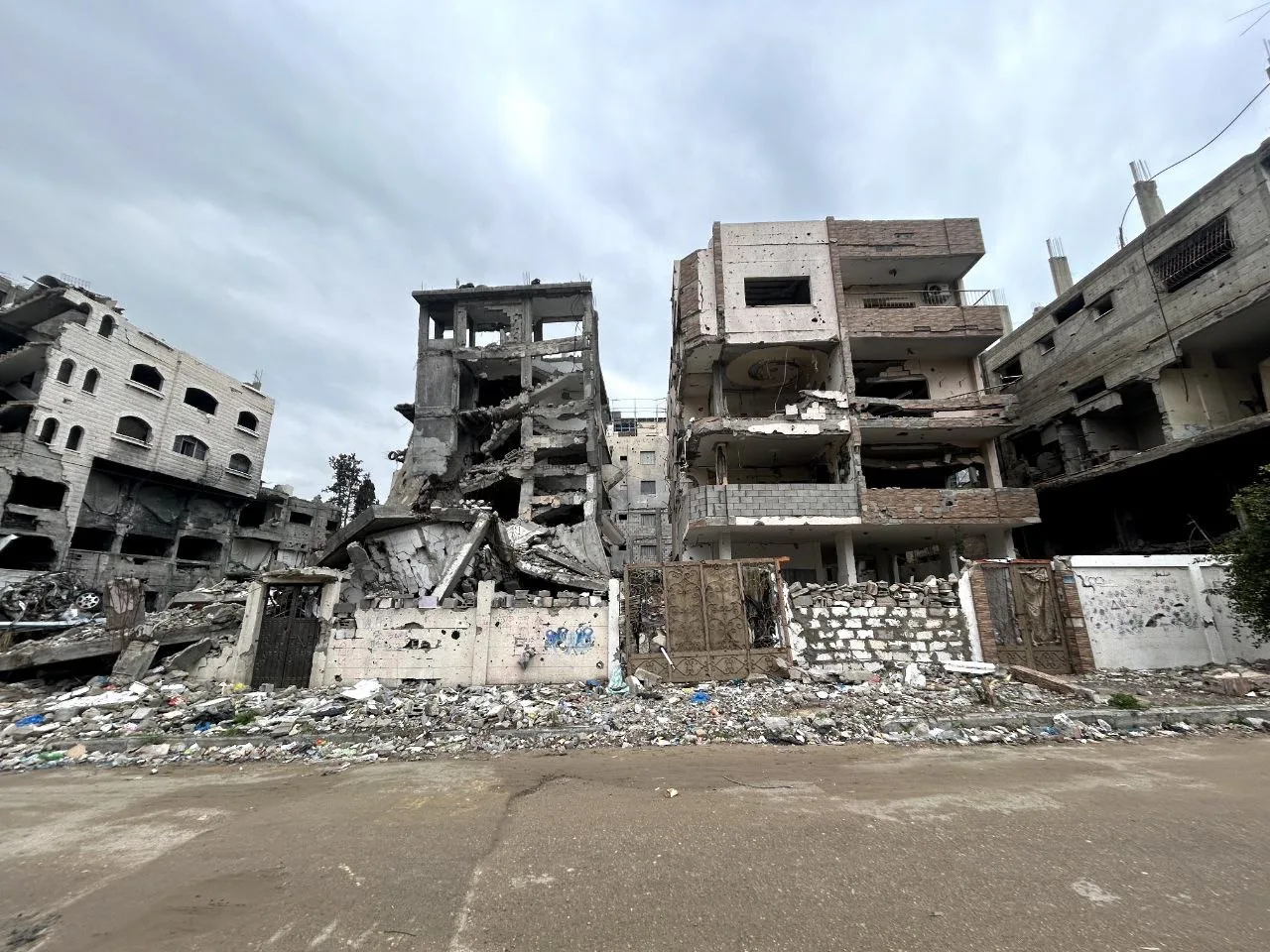
Why is a ceasefire entering its second winter still killing people?
Because on the record of the past week, it is a ceasefire in name more than in practice. Israel killed Samir Mahmoud Abu Younis, the commander of Hamas' Rafah Brigade, in a strike in southern Gaza overnight Saturday — the third man to hold that command to be killed, after Nael Abu Obeid in September and Mohammad Sabaneh in May 2025, as this site reported in its Rafah commander report. Days earlier, an Israeli strike on Nasser Hospital in Khan Younis killed at least six people, including a doctor and a 13-year-old boy awaiting surgery, according to Palestinian officials; the IDF said it had targeted a Hamas brigade commander inside the hospital and did not answer when pressed on whether he was killed. Defence Minister Israel Katz stated the policy plainly: "The offensive policy that I am leading together with the Prime Minister and the IDF in Gaza will continue — until Gaza is demilitarized and there is no Hamas." More than 1,600 people have been killed in near-daily strikes since the ceasefire was signed, according to the Palestinian Ministry of Health.
Who is supposed to make the ceasefire plan work?
The Board of Peace — and by CNN's account it is not working. The body created by the Trump administration with United Nations backing to oversee the plan remains sidelined, unable to make substantive progress on the 20-point plan agreed in October 2025. On Friday it reported "very constructive discussions" with 17 countries about a civilian Gaza police force, but the Palestinian technocratic committee that was supposed to run Gaza has yet to enter the enclave, and the international security force meant to stabilise it has yet to materialise. That vacuum is the context for Sunday's statement: with the plan's own machinery stalled, four foreign ministers went public. The ceasefire's first year is assessed in this site's Gaza ceasefire status explainer. The full Gaza file is tracked on this site's Gaza hub.
Sources: the joint statement of the foreign ministers of Australia, Canada, Italy and the United Kingdom (15 November 2026, primary document read in full on GOV.UK) for the 150,000-tents figure and the access demands; CNN (15 November 2026, read in full on cnn.com) for Israel's 91,000-tents figure and rubble-equipment refusal, the COGAT disarmament condition, the Nasser Hospital strike accounts from both sides, the Rafah Brigade succession, the Katz statement, the Board of Peace's status and the health-ministry toll. The two tent figures come from opposing parties to the dispute and are published unreconciled. Gaza editorial directive applied to framing; sourcing discipline unchanged.