On the documented record of this war, three major institutions have reached the same conclusion: Amnesty International, the UN Commission of Inquiry and the International Association of Genocide Scholars all find that Israel is committing genocide in Gaza. Israel, the United States and dissenting legal scholars reject that conclusion categorically — and the International Court of Justice, the only body whose answer would be legally binding between states, has not decided. This explainer lays out each position as its holders state it and the legal test the argument turns on. War Info Hub's position is stated openly: we stand with the victims of this war, and with the conclusion the evidence has led those three bodies to.
What does the law require for a finding of genocide?
The 1948 Genocide Convention defines genocide as acts — killing members of a group; causing them serious bodily or mental harm; deliberately inflicting conditions of life calculated to bring about the group's physical destruction; imposing measures to prevent births; forcibly transferring children — committed "with intent to destroy, in whole or in part, a national, ethnical, racial or religious group, as such." Two elements must both be proven: at least one listed act, and the specific intent to destroy the group as such. In Gaza, the scale of killing and destruction is extensively documented and the listed acts are the subject of wide reporting. The contested element, in almost every serious treatment on both sides, is intent.
What has the ICJ actually decided?
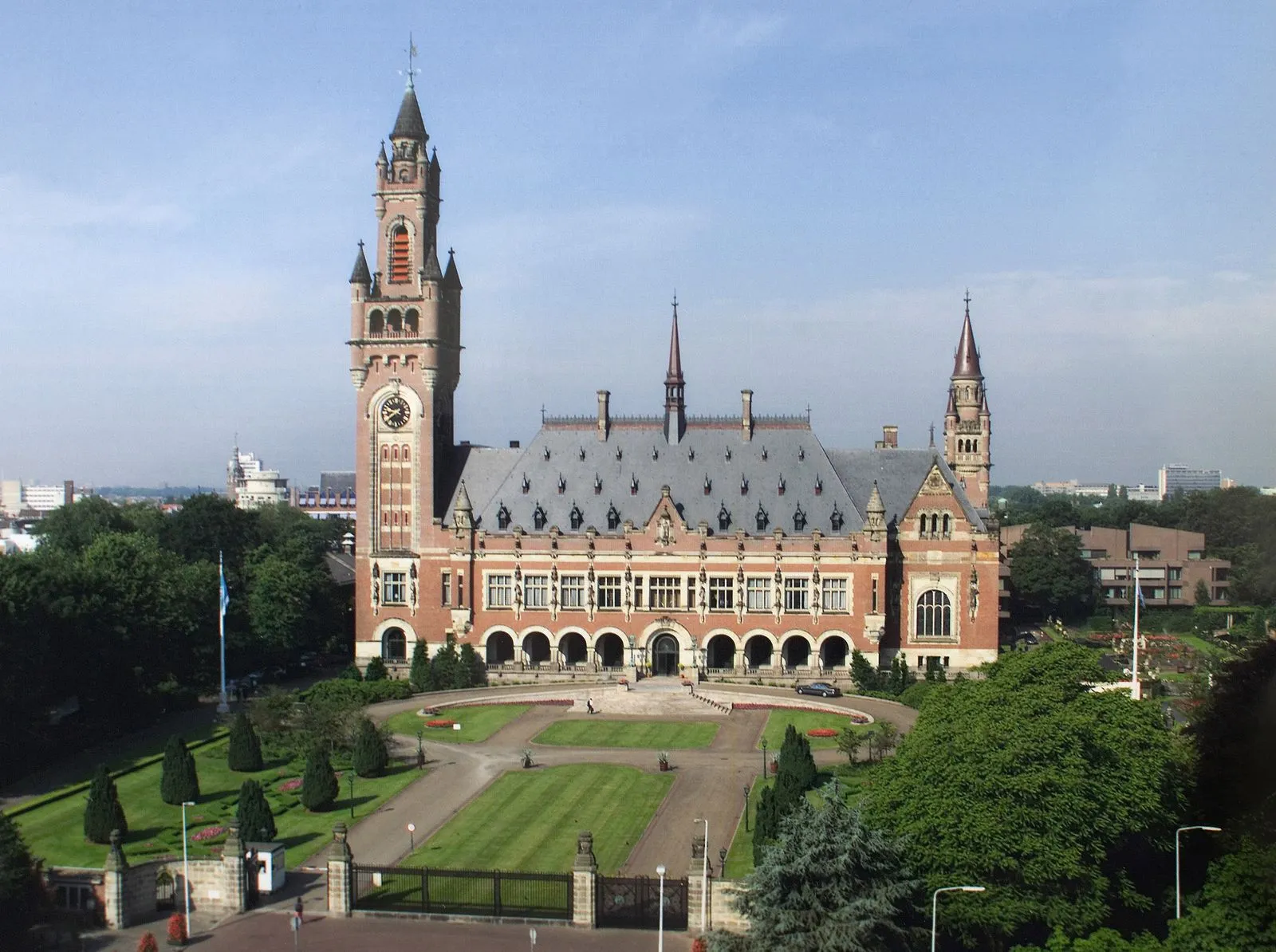
South Africa instituted proceedings against Israel on 29 December 2023. The Court's docket records three rounds of provisional measures: on 26 January 2024 it ordered Israel to take all measures in its power to prevent genocidal acts, to prevent and punish incitement, and to enable humanitarian assistance, finding that Palestinians' rights under the Convention were plausibly at risk; on 28 March 2024 it indicated additional measures as famine took hold; and on 24 May 2024 it reaffirmed its measures and ordered Israel to halt military action in Rafah that could inflict conditions of life capable of bringing about the group's physical destruction. Provisional measures are not a merits ruling: they preserve rights while the case proceeds. The Court has not found that genocide has occurred, and the merits phase — with states including the United States, Germany-aligned and South Africa-aligned governments intervening on how the Convention should be read — will run for years. A former ICJ president, Joan Donoghue, later clarified publicly that the January 2024 order concerned the plausibility of the rights claimed, a point critics of the genocide characterisation cite against readings of the order as a preliminary genocide finding.
Who has concluded that it is genocide?
Amnesty International, on 5 December 2024, published a 296-page report concluding that Israel is committing genocide in Gaza, finding three prohibited acts — killing, causing serious bodily or mental harm, and deliberately inflicting conditions of life calculated to bring about physical destruction — committed with the specific intent to destroy Palestinians in Gaza. The International Association of Genocide Scholars, the field's largest professional body with about 500 members, passed a resolution on 1 September 2025 stating that Israel's policies and actions in Gaza meet the Convention's legal definition; 86 percent of members who voted backed it, Reuters reported. The UN Independent International Commission of Inquiry, chaired by former ICC judge Navi Pillay, concluded on 16 September 2025 that Israeli authorities and security forces had committed four of the five listed acts and that statements by Prime Minister Benjamin Netanyahu and other officials were "direct evidence of genocidal intent," with intent to destroy the group, in the commission's words, "the only reasonable inference" from the totality of the conduct.
How do Israel, the US and dissenting scholars answer?
Israel categorically rejects the characterisation. Its stated position is that it is exercising self-defence against Hamas after the 7 October 2023 attack — 1,200 killed and 251 hostages taken, per Israeli tallies — and that civilian harm is a consequence of Hamas embedding among civilians. Ambassador Daniel Meron called the Commission of Inquiry report "scandalous" and "fake"; President Isaac Herzog said it misinterpreted his words; the Foreign Ministry called the scholars' resolution "disgraceful" and based on Hamas's "campaign of lies." The United States has rejected the genocide characterisation and condemned UN reporting feeding it. Among scholars, dissent is also on the record: legal analysts Amichai Cohen and Yuval Shany published detailed criticisms of Amnesty's legal method, arguing it adopted a cramped or adjusted reading of the intent standard; a dissenting member of the genocide scholars' association argued its resolution relied on biased sources and ignored Israel's civilian-harm mitigation measures. The critics' common core: mass civilian harm, even if it involves other grave crimes, is not genocide without proof of intent to destroy the group itself — and they argue the evidence shows a war against Hamas, however destructive, not that specific intent. Those are the answers set against three institutional findings. Readers can weigh which the documented record supports.
What happens next?
The ICJ merits case continues, with the docket showing interventions filed through 2026 — including by the United States in March 2026 — and Colombia's withdrawal in September 2026. Separately, the International Criminal Court has issued arrest warrants in the situation, on war crimes and crimes against humanity charges, not genocide. For now, the institutional map is this: the world's court seized but undecided; Amnesty International, the genocide scholars' association and a UN commission concluding genocide on the documented record; Israel, the US and a dissenting scholarly camp rejecting the term. War Info Hub reports the findings as findings and the rejections as rejections — and stands with the victims whose treatment produced them.
Every position in this article is attributed to the body or person holding it. The ICJ procedural facts are from the Court's own case page, opened for this article; the Commission of Inquiry and scholars' resolution findings and the Israeli responses are from Reuters reporting opened for this article; Amnesty's conclusion is from Amnesty International; the dissent is from the critics named in the text. The site's editorial position is stated openly in the text; its sourcing discipline is unchanged.