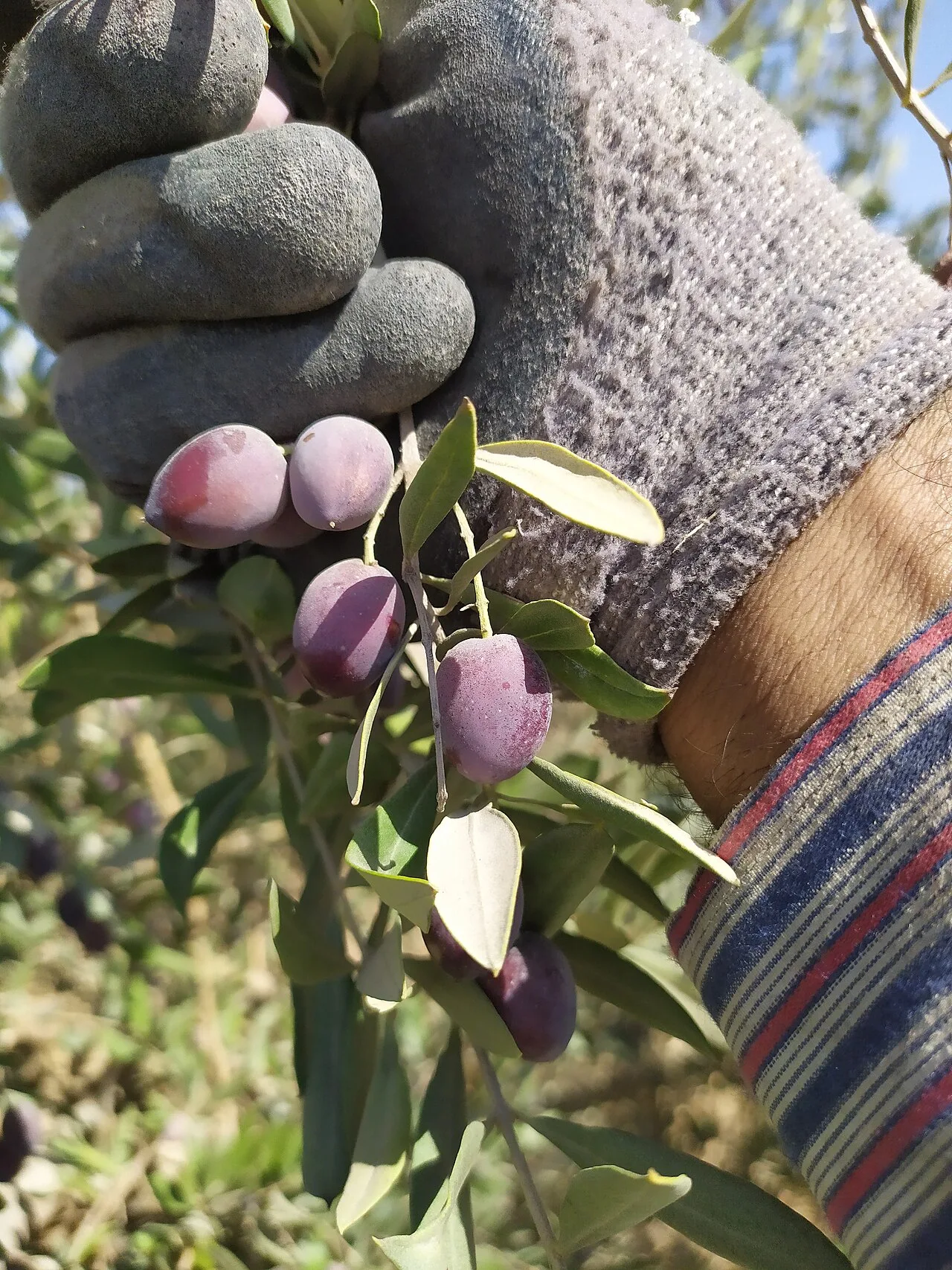
Ali Hassan Yusor al-Bazzari, 44, went out on October 7 to harvest his olives near Burqa, in the occupied West Bank. He did not come home. The Israeli military says both its soldiers and Israeli settlers opened fire during the attack on the harvesters; the Palestinian health ministry identified al-Bazzari as the man killed. Whose bullet killed him is still not clear. His son Danial is 12 years old, and wept over his father's body at the funeral, wrapped in a Palestinian flag.
What happened at Burqa?
The attack came in the first days of the olive harvest, which runs from October to November and on which thousands of Palestinian families depend for income. According to Reuters, the harvest has seen settlers fire live ammunition at farmers, attack journalists and damage trees. The military said its soldiers were responding to a report of a Palestinian throwing a rock at a settler; it did not say why the settlers were in the area. Reuters journalists themselves witnessed, in the two weeks before the killing, several incidents in which the Israeli military and settlers prevented Palestinians from reaching their olive groves at all.
Al-Bazzari was not the first farmer killed this year, and the Palestinian Authority's count is not close to one: Israeli settlers have killed at least 30 Palestinians in 2026, according to figures the Palestinian Authority gave Reuters. The same reporting records the war on the trees themselves — more than 45,000 trees cut down or damaged across the West Bank in the first half of 2026, including more than 26,000 olive trees. Tayseer Al-Sheikh, a 64-year-old farmer from the outskirts of Rantis, northwest of Ramallah, was kept from his own groves for a full year by fear of settler violence; this harvest he reached them only accompanied by activists providing a protective presence. "For us, the olive tree is life," he told Reuters.
What happened in Mikhmas?
A week after Burqa, on the night of Wednesday October 14, settlers set fire to the mosque in Mikhmas, a village between Ramallah and Jerusalem. Atta Kanaan, who lives 50 metres from the mosque, told AFP he heard glass breaking shortly after midnight and ran to the building: "A fire was burning fiercely, and we called the fire brigade. Young men rushed to help us with fire extinguishers, and we managed to contain part of the fire before the flames engulfed the entire mosque." AFP's video shows the mosque's interior carpeting burned away and its walls blackened. On the exterior walls, slogans were sprayed in Hebrew — one of them, translated in full: "just because we are quiet doesn't mean we are asleep". A car was also torched. Villagers had already formed night-watch patrols in recent weeks, fearing settlers would torch homes on the village outskirts.
Haaretz reported that the arson came five hours after the village announced a civil lawsuit in the United States over settler attacks — a timing the village's residents did not treat as coincidence. The Israeli military told AFP that soldiers were dispatched after a report of graffiti and arson, that "no suspects were identified", and that an investigation had been opened. Rouhi Fattouh, president of the Palestinian National Council, called the arson "a barbaric act and a dangerous escalation in settler terrorism".
What does the September ledger show?
Zoom out from two villages and the incidents become a system. UN OCHA counted more than 2,000 attacks on West Bank Palestinians in September alone — 1,404 by the Israeli military and 647 by settlers — according to OCHA's figures republished in the Mondoweiss and Jewish Voice for Peace health digest. Settlers killed three Palestinians that month, taking the year's settler toll to 29 by the digest's count, and attacks damaged 14,600 trees, including 9,334 olive trees, in a single month — on the eve of the harvest.
The figures the UN put to the Security Council on October 15 run in the same direction over the year: more than 1,600 Israeli settler attacks recorded in 2026 as of mid-September, and more than 4,300 Palestinians displaced from their homes. The Council's open debate took place with the olive harvest under way and UN partners trying to protect farmers in the groves.
What is the "Elimination Project"?
On October 1, the Israeli human rights organisation B'Tselem published "The Elimination Project", a report built on more than 2,000 interviews, arguing that the items in the ledger above should not be read as separate abuses at all. Violence, movement restrictions, economic strangulation, the destruction of Palestinian institutions and the seizure of land are, the report argues, parts of a single strategy: to make Palestinian collective life in the occupied West Bank impossible to sustain, and Israeli control permanent. Human Rights Watch, carrying the report into the debate over Israel's October 27 elections on October 12, summarised B'Tselem's conclusion as demonstrating Israel's crimes of apartheid and persecution — and added the running totals the strategy produces: nearly 50,000 Palestinians displaced and 1,333 killed by settlers or soldiers since the start of 2023, on OCHA figures.
The harvest has weeks left to run. Al-Bazzari is buried, the Mikhmas investigation has no suspects, and the September ledger is already being added to. That — not any single incident — is the story the numbers tell.