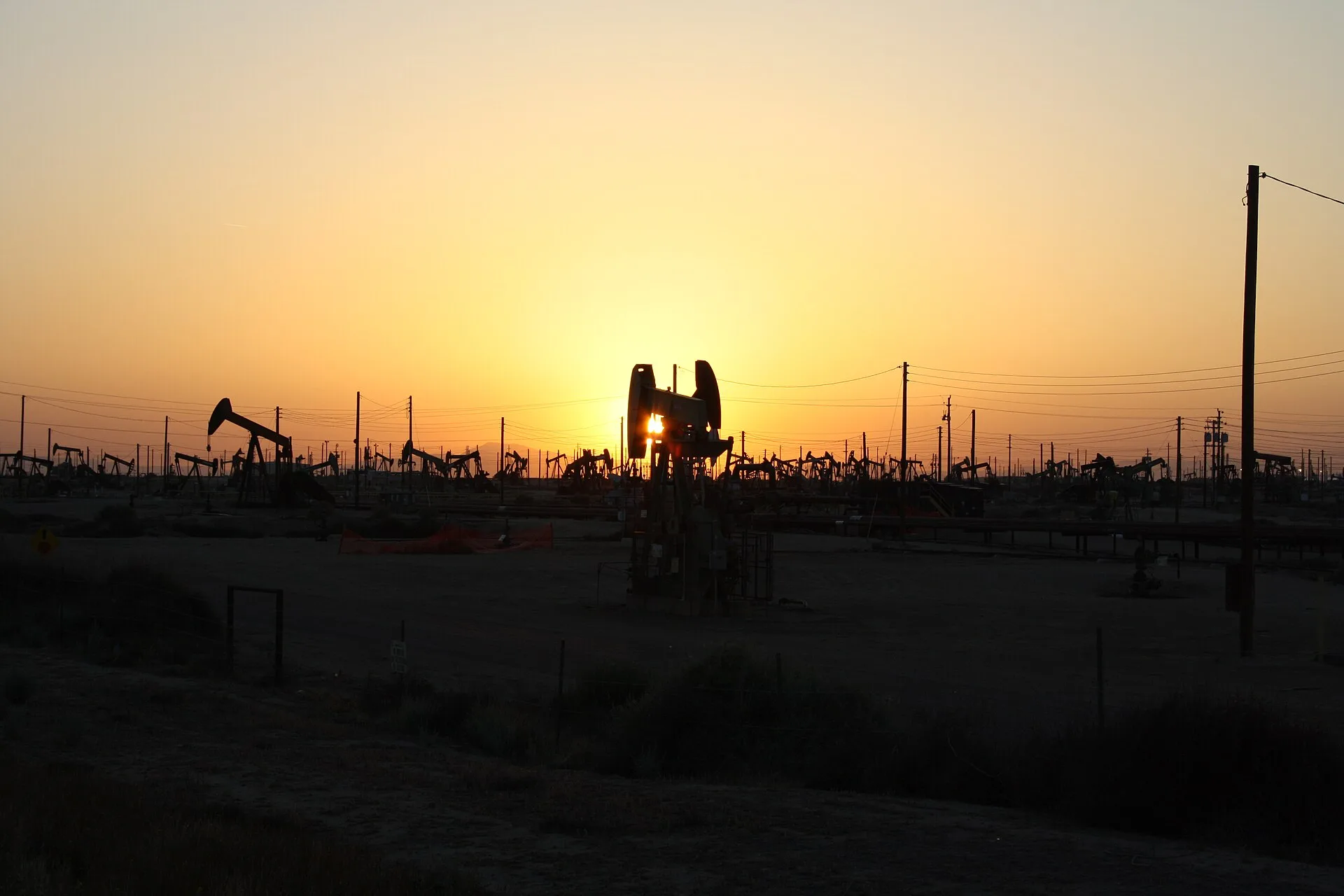
This week's war impact on markets was the second act of crude's post-midterm collapse: January Brent settled up 2 cents on Friday, November 13, 2026, at $95.84 a barrel, but down $2.48, or 2.52%, on the week — and down $21.80, or 18.53%, over two weeks, the largest two-week percentage decline since the week ending April 24, 2020, according to Dow Jones Market Data. West Texas Intermediate for December delivery closed down 18 cents, or 0.20%, on Friday at $88.56, down from the $90.83 settlement recorded in this series last Friday, per Barchart. The week's story was a war settling into blockade and stalemate rather than escalation or peace: the IEA forecast that global oil markets will swing to a surplus of about 2 million barrels a day this quarter — the first surplus since the Iran war began — gold fell 4.55% in its worst week since June, defense stocks rebounded about 5%, wheat broke a ten-week losing streak, and the S&P 500 rose 2.5% on the week to close at 7,561.67. Figures below were checked Friday, November 13, 2026, at 4:20 PM Central Time — snapshots, not live prices, and not financial advice.
Why did oil fall for a second straight week?
Because neither escalation nor a deal is arriving, and the balances are loosening. Oil prices edged down on Friday and were headed for a second weekly decline as the US focus on its blockade of Iran and other economic pressure eased fears of renewed direct conflict, though shipping attacks remained a supply risk, Reuters reported. President Trump said on Truth Social that a deal with Iran was not necessary to end the war. "The market is range-bound post midterms," Jeff Currie of Real Macro told Reuters, with "little prospect either of more hostilities or of a peace deal." The fundamental backdrop turned on Friday: the IEA cut its 2026 global demand forecast by 90,000 barrels a day to 102.29 million and said global markets will swing to a surplus of about 2 million barrels a day this quarter — the first surplus since the start of the Iran war — while the dollar index climbed to a 1.5-year high, Barchart reported. US crude and fuel inventories also rose last week on softer demand, the EIA said Thursday, per Reuters. The war still set the floor: Brent rose three straight sessions to Thursday's $95.82 settlement as tanker attacks continued, and Friday's losses were limited after US Central Command said it shot down two attack drones launched by Iran's IRGC toward a US base in Bahrain, Barchart reported.
How did defense stocks perform this week?
They rebounded, retracing roughly half of last week's post-midterm selloff without any single new contract headline driving the move. Lockheed Martin closed at $596.04, down 1.33% on Friday but up from the $567.08 close recorded in this series last Friday — a weekly gain of about 5%, according to Finnhub closing data. RTX closed at $198.58, up 0.11% on Friday and up from $189.53 a week earlier. Northrop Grumman closed at $550.43, up 0.24% on Friday and up from $525.01 last Friday. The prior week's fall had been a de-escalation trade — a Congress expected to press for an end to the Iran war — and this week's partial recovery tracked the week's harder news flow: continued Hormuz tanker attacks, Houthi claims against Saudi energy sites, and Friday's drone interception over Bahrain. The reporting opened for this briefing did not attribute any single defense move to a specific conflict headline, and none is claimed here.
What happened to gold and natural gas?
Gold fell for reasons that had little to do with the battlefield. Front-month Comex gold settled at $3,879.70 an ounce on Friday, up $1.30, or 0.03%, on the day but down $184.80, or 4.55%, on the week — its largest weekly decline since the week ending June 5, 2026, per Dow Jones Market Data; Thursday's $3,878.40 close was the lowest settlement of 2026. The break came Thursday, when gold fell about 3% after a hot October consumer-price print: CME FedWatch priced a December Federal Reserve rate hike at 100%, the InvestorIdeas daily gold report noted, and the 10-year Treasury yield ended Friday at 5.15%, per Investopedia. Gold held its ground in choppy Friday trading as a below-estimate producer-price reading eased the inflation concerns that had sunk the metals the previous session, the Wall Street Journal reported.
US natural gas had its strongest week in this series despite a soft Friday. December Henry Hub futures settled down 3.3% at $3.23 per MMBtu after the EIA reported a larger-than-usual storage build of 61 billion cubic feet for the week ended November 6, leaving inventories at 3,862 Bcf, roughly 2% above the five-year norm, Finimize reported. Against last Friday's $2.998 settlement recorded in this series, the week was still up about 8%, built on Thursday's 3.9% settlement rise to $3.340 on colder forecasts for the eastern United States.
How did food and shipping markets move?
Wheat rose on the week for the first time since late August. December soft red winter wheat settled at $5.93¼ a bushel on Friday, up 9 cents, or 1.54%, on the day and up 2 cents, or 0.3%, on the week from last Friday's $5.91¼, per Farmbucks settlement data — ending a run of ten consecutive weekly losses. The week was two-sided: on Thursday December wheat fell 2.54% to $5.8425 as the US dollar strengthened to a 19-month high, weakening the competitiveness of American grain in international markets, UkrAgroConsult reported; Friday's rebound came on technical support at oversold levels. The US wheat balance sheet barely moved in the November 10 WASDE report, with ending stocks put at 743 million bushels, per Farmbucks' summary. The war's Black Sea channel stayed a European story this week: Euronext milling wheat held a premium over Chicago on reduced Russian export flows and Black Sea logistics uncertainty, while expectations of a near-record global crop capped Chicago prices.
Shipping remains the war's most direct market channel, even in a falling week for crude. Iran's military said on Thursday that four oil tankers were hit by explosions in the Strait of Hormuz after ignoring warnings — a claim Reuters said it could not immediately verify — and the Houthis said the same day they had attacked a pumping station on the Saudi East-West pipeline, an oil facility at Yanbu and an Aramco building in Riyadh, Reuters reported, carrying both as the groups' claims. The verified tempo underneath is high: consultant Verisk Maplecroft counted 36 confirmed attacks on commercial vessels across the Persian Gulf, the Strait of Hormuz and the Gulf of Oman in October, the highest total since the Iran war began, Barchart reported. Yet oil is still moving: combined exports from Saudi Arabia, the UAE, Iraq and Kuwait climbed 10% to 15.53 million barrels a day in October, roughly in line with levels shipped at the start of the year, according to tanker-tracking data compiled by Bloomberg and reported by Barchart. On the war's other front, Ukraine has attacked nine Russian oil refineries since the start of November, including the Omsk facility, Russia's largest, and Russian refinery runs in the first ten days of November stood at 4.2 million barrels a day, down from 5 million in late October, Barchart reported, citing Rystad Energy.

What happened to the broader stock market?
US equities posted their best week since early August, then fell for a second straight day on Friday. The S&P 500 closed at 7,561.67, down 0.40% on Friday but up 2.5% on the week; the Nasdaq Composite fell 0.91% on Friday to 25,136.27, up 2.3% on the week, and the Dow Jones Industrial Average added 0.10% on Friday to 52,347.55, up 2.1% on the week, according to Investopedia. The week's drama was corporate, not geopolitical: Nvidia chief executive Jensen Huang resigned on Thursday after the company's board launched an investigation, Nvidia shares shed 13% of their value over the week and fell a further 2% on Friday, and Advanced Micro Devices tumbled 9% on Friday to lead S&P 500 decliners, Investopedia reported. The war's footprint in the index ran through the energy complex and the defense rebound rather than the headline level: the index rose on the week in which oil completed its sharpest two-week fall since 2020.
War & Markets publishes weekly. Figures are snapshots checked at the time shown above — not live prices, and not financial advice. Nothing here is a recommendation to buy, sell, or hold any security or commodity.