Somalia's long war against Al-Shabaab is entering its most uncertain phase in years. The al-Qaeda-linked group has clawed back territory across southern and central Somalia — including ground Somali forces seized in a 2022–2023 offensive — just as the United States moves to wind down the United Nations logistics office that keeps the African Union mission alive. The Al-Shabaab comeback now meets an AU drawdown, and what replaces nearly two decades of multilateral security in Somalia is an open question.
Key takeaways
- The African Union Support and Stabilisation Mission in Somalia (AUSSOM), authorised at up to 11,826 uniformed personnel, has its UN mandate only until December 31, 2026. Washington will no longer fund the UN Support Office in Somalia (UNSOS) — but agreed in September 2026 to a 12-month drawdown beginning January 2027 instead of an abrupt cutoff.
- UNSOS provides the AU mission's food, water, fuel, medical services and transport at a budget of nearly half a billion dollars a year, and is already managing a funding shortfall of about $130 million. Privately, AU officials have called the US decision "life-threatening" to the mission.
- Al-Shabaab controls swathes of rural southern and central Somalia; Somali media report the group retook nearly all the ground it lost in 2022–2023 and advanced to within roughly 45 kilometres of Mogadishu during a 2025 counter-offensive.
- Crisis Group's assessment: the likely future is not a single multilateral mission but a patchwork of bilateral arrangements — Kenyan, Ethiopian and Ugandan forces already in-country, Turkish drones and air power, and the US drone program — with Mogadishu's Somali National Army expected to shoulder the main burden.
Contents
What changed this month
The multilateral security architecture that has protected Somalia's government from Al-Shabaab since 2007 may be coming to an end. In early July 2026, the United States informed the African Union that it would not back an extension of UNSOS beyond the end of its current mandate in December. In September, Washington softened the blow: according to a US diplomatic note seen by Reuters, the administration agreed to a "12-month drawdown followed immediately by liquidation" of UNSOS, with the clock starting in January 2027.
The reprieve defers rather than eliminates the crisis. The US State Department says Washington will no longer fund or support the support office, whose budget runs to roughly $500 million. The UN Security Council has authorised AUSSOM — which replaced the African Union Transition Mission in Somalia (ATMIS) in January 2025 — only through December 31, 2026. UNSOS keeps AU troops supplied with food, water and fuel, sustaining nearly 50 bases across southern Somalia, and provides transport for deployments; it also supports Somali soldiers operating alongside AU personnel when funds permit.
The financial picture was already dire before Washington's decision. A May 2026 report by the UN secretary-general put UNSOS's funding shortfall at about $130 million, forcing cuts to aviation, mine-action activities and infrastructure repairs. The proposed budget of about $551 million for the 2026/27 financial year is down from $588 million the year before. Earlier, in 2025, the US blocked a proposal for the AU mission itself to receive funding through UN assessed contributions, and shelved planned contributions to the UN peacekeeping budget, including for UNSOS.
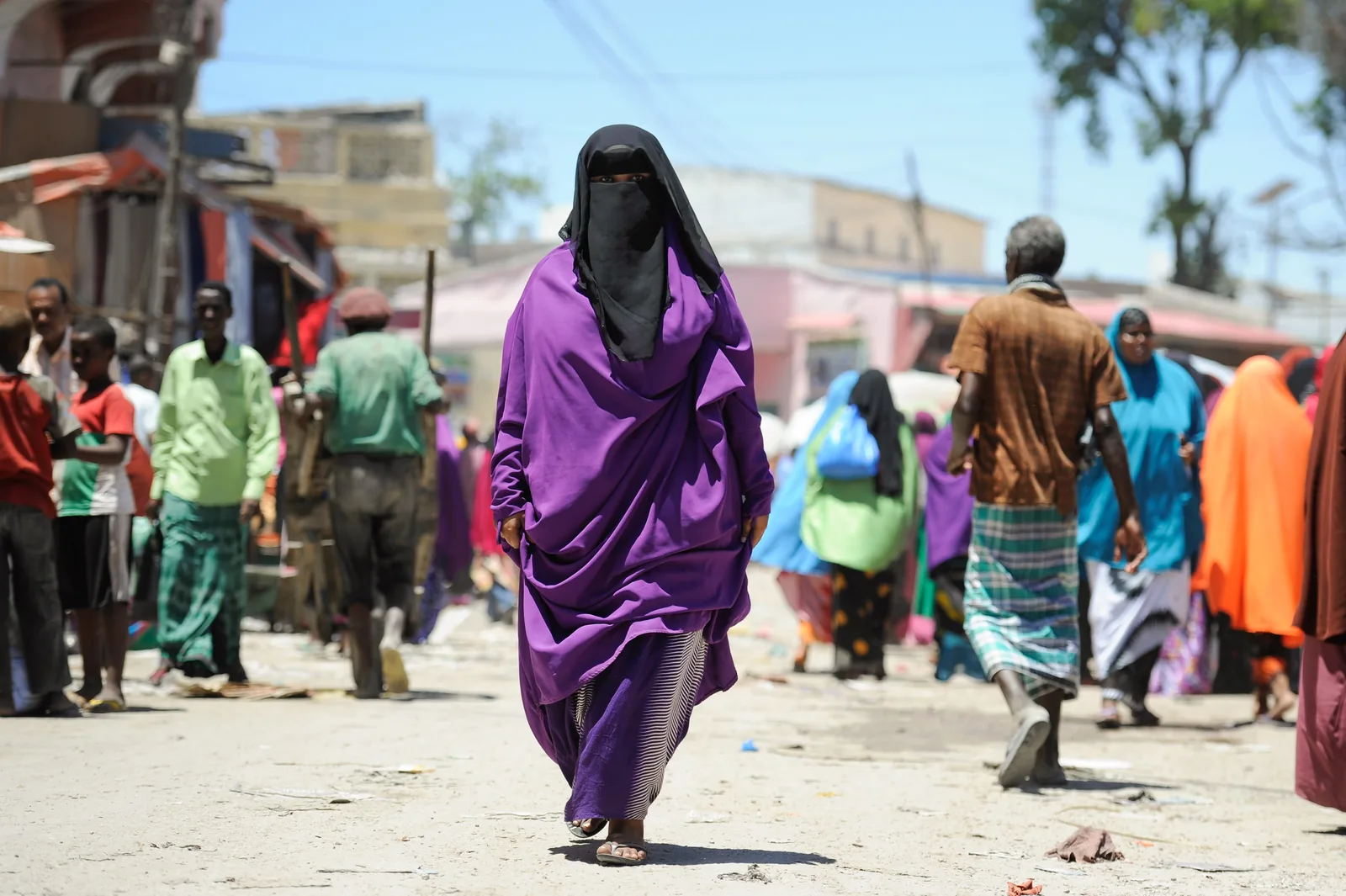
The AU mission has been in a long, slow retreat long before this. Long-time donors like the EU have whittled down contributions and pushed for the exit door, and troop numbers have dwindled from about 22,000 in the mid-2010s to around 12,000 today. The mission has largely stopped launching offensive operations deep in Al-Shabaab-held hinterlands, retrenching to protect the urban areas it holds while playing a supporting role in Somali army campaigns.
Al-Shabaab's comeback
While the mission has shrunk, the enemy has not. Al-Shabaab remains a major threat to the Somali government and controls swathes of southern and central Somalia — largely confined to rural areas, but entrenched there. The government holds most urban centres, and security in Mogadishu has improved sharply in recent years, but the countryside is the group's domain, and it has been expanding it.
According to Somali media reporting, Al-Shabaab has retaken nearly all the territory it lost during the Somali army's 2022–2023 campaign, and during a 2025 counter-offensive advanced to within roughly 45 kilometres of the capital — close enough to force Mogadishu's allies to respond. Türkiye, already Somalia's most important bilateral partner, reportedly deployed additional troops including drone operators, and has become the backbone of Somali air power alongside its training of thousands of Somali soldiers. The US maintains its own bilateral counter-terrorism drone program.
Crisis Group's analysis of the moment is unsparing about Washington's position:
"Much as Washington has no wish to see an Al-Shabaab resurgence, it seems to be pulling the plug on a setup that has done much to keep the group in check."
US officials argue the status quo is untenable — the missions are less effective than they once were, the model of UN funds flowing to a non-UN mission sets an undesirable precedent, and the Somali government should bear primary responsibility for fighting Al-Shabaab. US diplomats believe Somali elites are "skirting their duties, preoccupied with pursuing political vendettas rather than combating jihadists," as Crisis Group put it.
Mogadishu pushes back. Defense Minister Ahmed Moallim Fiqi said in September that Somali forces are prepared to continue the fight on their own, whether or not AUSSOM remains deployed. National Security Adviser Aweys Haji Yusuf has said the AU mission "will not leave the country" abruptly and that any drawdown will follow a planned transfer of responsibilities.
The record gives both sides ammunition. The Somali National Army has generated upward of 10,000 new troops under training schemes supported by Türkiye, the United Arab Emirates and Eritrea. But, as Crisis Group notes, the army remains ill-prepared to fully replace the AU mission: areas handed over by the mission in recent years have in some cases later fallen into Al-Shabaab's hands, and even Somali-led operations — such as those in Lower Shabelle in 2025–2026 — have remained dependent on external support. Political rifts between the federal government and leaders in Puntland and Jubaland continue to weaken the national security apparatus.
What comes after AUSSOM
Crisis Group argues that predictions of government collapse and an Al-Shabaab victory are "wide of the mark" — but warns that a mismanaged transition "could spell trouble." The options for replacing UNSOS are all flawed: an AU-run logistical mission is beyond the AU's experience; subcontracting to a private company would take up to two years and the money isn't there; a smaller AU mission funded from EU scraps would sacrifice operational clout; and a reconfiguration under a new regional mechanism still doesn't solve logistics or funding.
The most likely outcome, in Crisis Group's judgment, is a patchwork. Key AU troop contributors have interests that will keep them in Somalia regardless: Kenya and Ethiopia are motivated primarily by border security and the desire to maintain a buffer against Al-Shabaab; Uganda's President Yoweri Museveni reportedly views his country's deployment around Mogadishu as a legacy commitment, with roughly 2,000 Ugandan troops stationed in and around the capital. Mogadishu has already signed bilateral security agreements with Uganda, Kenya and Ethiopia. Add Turkish drones and F-16s, US counter-terrorism strikes, and Gulf-state money, and the shape of Somalia's future security looks less like a multilateral mission and more like a coalition of bilateral interests.
The pattern should sound familiar to readers of our [Sahel coverage](/articles/2026-09-28-sahel-conflict-explained): as multilateral counter-terrorism structures retreat across Africa, bilateral and transactional security deals fill the vacuum — less accountable, less coordinated, but more durable precisely because they serve their sponsors' interests.
What to watch
Three things matter most. The December mandate: the UN Security Council's December deliberations will set the actual UNSOS drawdown timetable — the 12-month extension from January 2027 is the current plan, but nothing is voted until it is voted. The Somali army's real readiness: watch whether Somali forces can hold territory without AU backing — recent history of handed-over areas falling to Al-Shabaab is the warning. The bilateral track: the Kampala meeting in July endorsed 18–24 months of uninterrupted support and gradual drawdown; watch whether Kenya, Ethiopia, Uganda and Türkiye formalise their bilateral footprints into something that actually replaces AUSSOM's logistics — or merely guards their own interests while the countryside goes to Al-Shabaab.