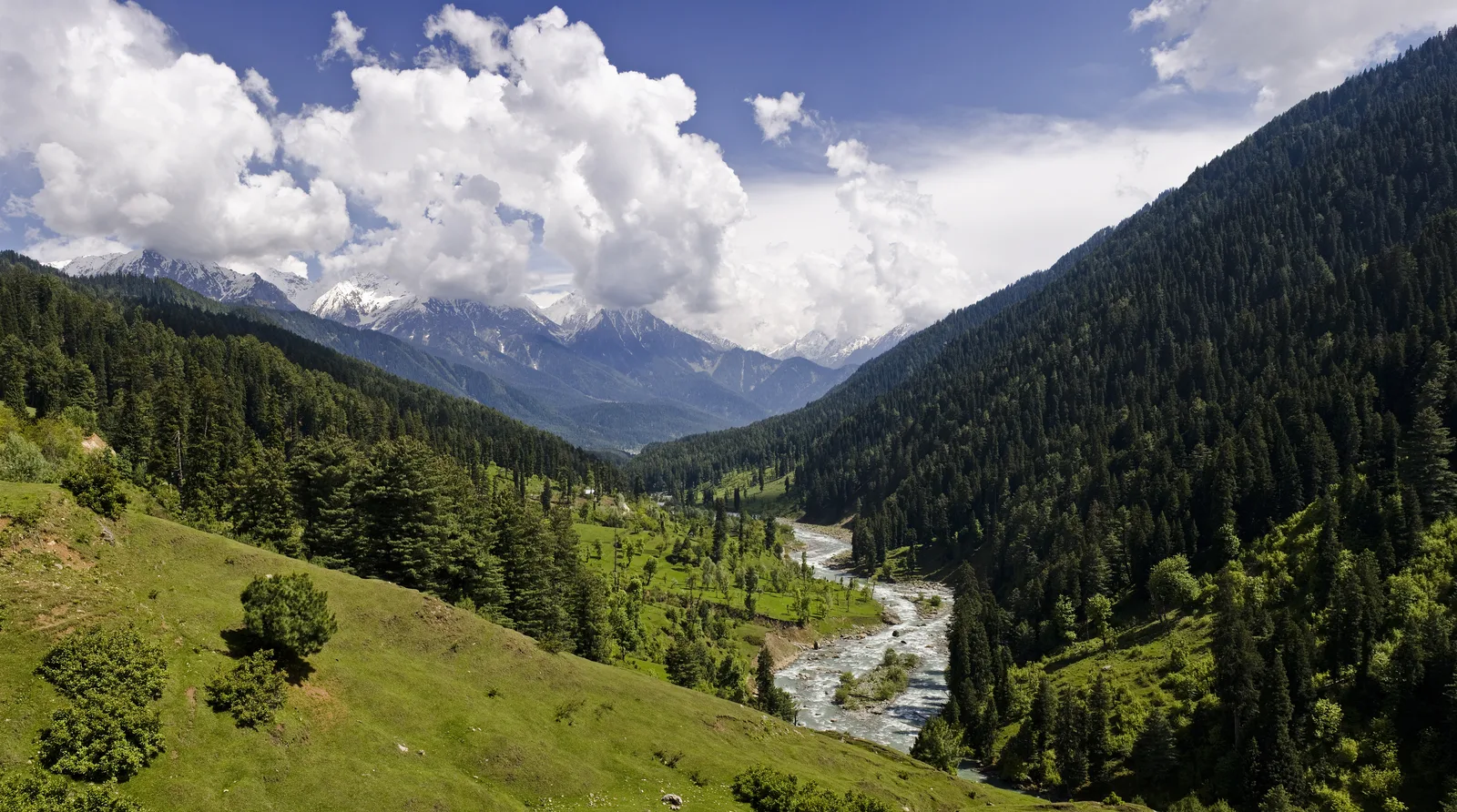
The Kashmir flashpoint is the world's most dangerous unresolved territorial dispute: a Himalayan region claimed in full by both India and Pakistan, divided between them by one of the most militarized borders on earth, and shadowed by the nuclear arsenals both countries built in 1998. The two neighbors have fought two full-scale wars over the territory since their 1947 independence from British rule, according to AFP — and in May 2025 they came closer to a third than at any point since 1999.
The trigger was a massacre of tourists. The result was four days of tit-for-tat missile, drone and fighter-jet attacks that killed dozens, downed combat aircraft, and ended only when a ceasefire took hold. A year later, the underlying dispute is exactly where it was — which is why Kashmir keeps exploding.
Key takeaways
- The April 22, 2025 attack in Pahalgam killed 26 people, mostly tourists. India blamed Pakistan for backing it; Islamabad denied the charge and called for an independent probe.
- India's Operation Sindoor and Pakistan's retaliation produced four days of missile, drone and fighter-jet combat — the worst India-Pakistan fighting since the 1999 Kargil conflict, per AFP.
- The casualty claims are disputed: Pakistan's army said 40 of its civilians and 13 service members died; India said 15 civilians and five soldiers died on its side. Pakistan claimed five Indian jets downed; India has not disclosed aircraft losses.
- The Kashmir flashpoint has no resolution mechanism. Both sides claim the whole region, cross-border militancy continues, and each crisis ends in a ceasefire that leaves every core issue untouched.
Contents
- The roots of the Kashmir flashpoint
- May 2025: four days that shook South Asia
- The disputed numbers
- Why the Kashmir flashpoint keeps reigniting
The roots of the Kashmir flashpoint
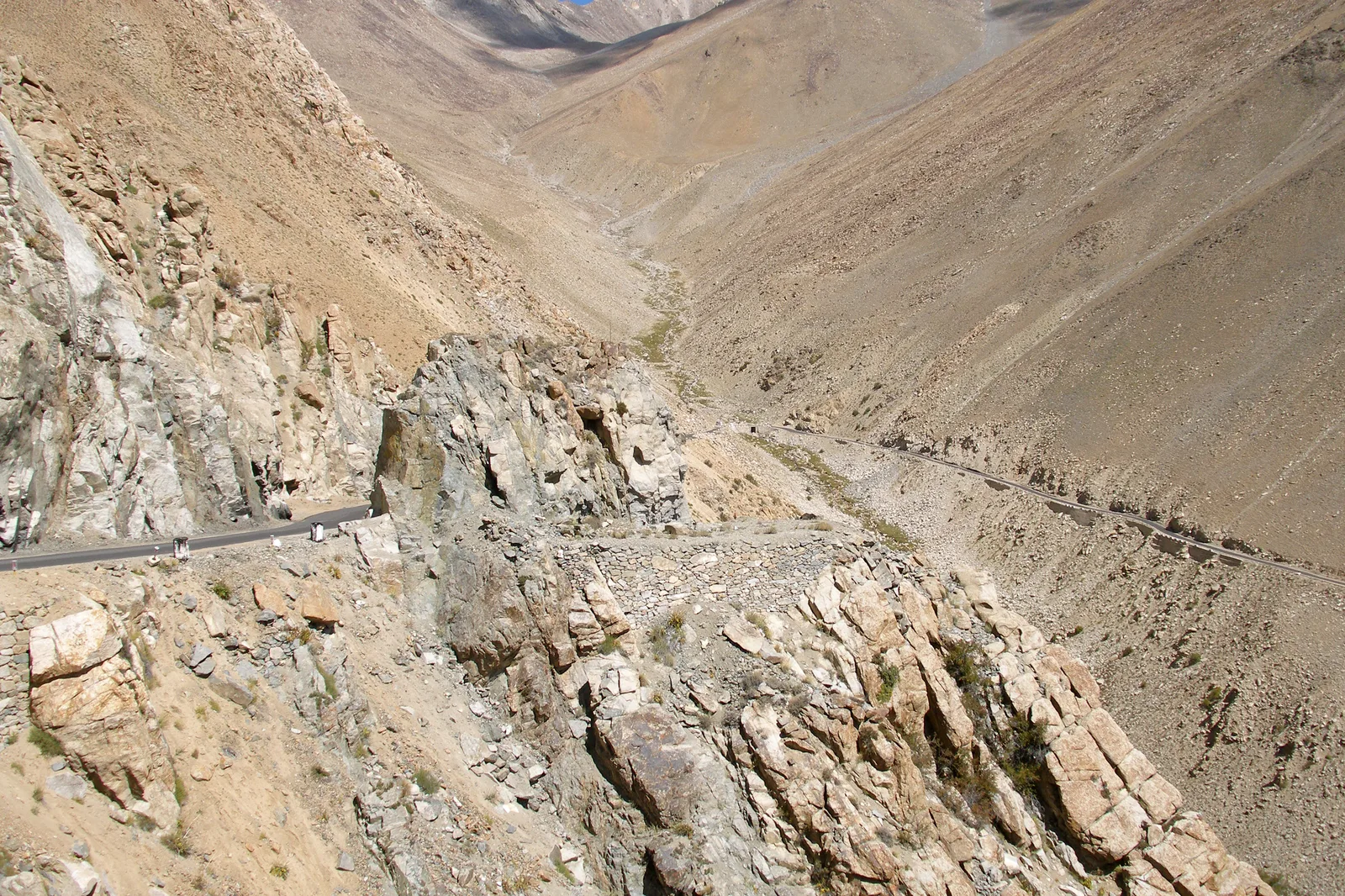
Kashmir's division dates to 1947, when British India was partitioned and the princely state of Jammu and Kashmir acceded to India under contested circumstances. Pakistan rejected the accession. The result, after the first India-Pakistan war, was a divided, Muslim-majority territory: India administers Jammu and Kashmir and Ladakh; Pakistan administers Azad Kashmir and Gilgit-Baltistan; China holds a slice in the east. Both India and Pakistan claim the region in full.
The Line of Control (LoC) — the de facto border running through Kashmir — is among the most heavily fortified frontiers in the world, garrisoned by hundreds of thousands of troops. India has fought an armed insurgency in the Kashmir Valley since 1989, which New Delhi blames on Pakistan-backed militant groups and Islamabad describes as an indigenous uprising.
The modern escalation cycle began in August 2019, when Prime Minister Narendra Modi's government revoked Jammu and Kashmir's limited constitutional autonomy and imposed direct rule from New Delhi, splitting the state into two federally administered territories. AFP reported that militants "stepped up operations on the Indian side of Kashmir" after 2019 — setting the conditions for the Pahalgam attack six years later.
May 2025: four days that shook South Asia
On April 22, 2025, gunmen attacked tourists at Pahalgam, a resort town in Indian-administered Kashmir, killing 26 people. No group claimed responsibility, but India blamed Pakistan for backing the attack — a charge Islamabad rejected while calling for an independent investigation.
India's response was Operation Sindoor: strikes on what New Delhi described as terror infrastructure in Pakistan and Pakistan-administered Kashmir. Pakistan retaliated with its own missile and drone strikes. What followed, AFP reported, was "tit-for-tat missile, drone and fighter jet attacks" — four days of direct combat between the two militaries, the most intense since their last open conflict in 1999.
The fighting stopped with a ceasefire that both sides confirmed. Its authorship remains contested to this day: addressing the UN General Assembly in September 2026, Pakistan's Prime Minister Shehbaz Sharif credited U.S. President Donald Trump, saying his "timely intervention came at a decisive juncture when two nuclear-armed neighbors stood at the brink of an all-out war." New Delhi, ANI reported, "has consistently maintained that the May 2025 ceasefire between India and Pakistan was reached through direct communication between the two sides, with no role played by any third party."
In the immediate aftermath, small gestures of de-escalation followed: Pakistan returned a captured Indian border guard, Purnam Kumar Shaw — seized on April 23, a day after the Pahalgam attack — in a handover India's Border Security Force said was "conducted peacefully and in accordance with established protocols."
The disputed numbers
As with every India-Pakistan crisis, the two sides' accounts diverge sharply — and independent verification is scarce.
Pakistan's army announced that India's "unprovoked and reprehensible dastardly attacks" killed 40 civilians — half of them women and children — and 13 military service members. India said 15 civilians and five soldiers died on its side. Neither claim has been independently verified.
The air war's scorecard is equally contested. Pakistan's military said it downed five Indian jets without losing any of its own. India has not disclosed losing any aircraft — though a security source told AFP that at least three fighter jets had crashed on Indian territory. What is undisputed is that this was the first fighter-jet combat between the two air forces in decades, and that both sides employed drones and missiles at a scale neither had used against the other before.
"If another terrorist attack against India is carried out, a strong response will be given," Prime Minister Narendra Modi said in a televised address to the nation, accusing Pakistan of choosing "to attack rather than help it fight 'terrorism.'"
Why the Kashmir flashpoint keeps reigniting
The May 2025 crisis ended the way every Kashmir crisis ends: with a ceasefire that resolves nothing. The structural drivers are all still in place:
The terrorism attribution trap. India holds Pakistan responsible for attacks on its soil; Pakistan denies involvement and demands proof. After Pahalgam, India struck across the border within weeks — and Modi's warning of a "strong response" to any future attack effectively institutionalizes rapid retaliation as doctrine. In the same week as the Shaw handover, the Indian army reported killing three men it alleged were Lashkar-e-Taiba members in a gun battle about 65 kilometers from Pahalgam — a reminder that the militancy grinds on regardless of ceasefires.
Water as a weapon. In the wake of the Pahalgam attack, India suspended the Indus Waters Treaty, the 1960 agreement governing shared rivers. Sharif called the treaty his country's "red line": "Don't even think of touching the water treaty." Turning water into leverage adds a slow-burning, existential dimension to the next crisis.
Nuclear deterrence that enables risk. Both countries' nuclear arsenals make full-scale war unthinkable — and, paradoxically, make limited clashes more thinkable. Each side calculates it can strike below the nuclear threshold, as India did with Operation Sindoor and Pakistan did in reply. The May 2025 fighting tested exactly where that threshold sits.
No political process. There is no active dialogue on Kashmir's status, no back channel known to be functioning, and no international mediation both sides accept — India insists the issue is strictly bilateral. Without a political track, the LoC remains a tripwire: any major militant attack in Kashmir can, within days, become another four-day war.