The war in eastern Congo has entered a new diplomatic phase without leaving the battlefield. In recent weeks, the Democratic Republic of Congo's government and the M23 rebels have signed a Qatari-brokered framework for a comprehensive peace deal, agreed to exchange hundreds of prisoners, and activated a ceasefire-verification mechanism — while both sides simultaneously accuse each other of violating the very truce they signed. This M23 ceasefire update separates what has actually been agreed from what is happening on the ground.
Key takeaways
- Kinshasa and M23 have signed the Doha Framework for a Comprehensive Peace Agreement, negotiated in Qatar with US diplomats present. Washington's regional envoy Massad Boulos told Reuters it contains eight protocols — but only two, prisoner exchanges and ceasefire monitoring, are partially underway.
- At follow-on talks in Montreux, Switzerland, the parties agreed to release 311 AFC/M23 prisoners and 166 government-held prisoners within ten days, and to guarantee unimpeded humanitarian access in the conflict zone.
- Fighting continues: M23 accuses Congolese forces of attacking Chambombo, Kumadepo and Bulengero in Kalehe territory, while Kinshasa and M23 trade blame for ceasefire violations in North and South Kivu, where more than 2 million people have been displaced this year alone.
- A monitoring mechanism — the Expanded Joint Verification Mechanism Plus (EJVM+), run with the International Conference on the Great Lakes Region and MONUSCO logistical support — is being operationalised, but verification missions have yet to change the facts on the ground.
Contents
- What happened this week
- The Doha framework and the eight-protocol plan
- Can the M23 ceasefire hold?
- What to watch
What happened this week
The diplomatic track accelerated in September 2026 with delegations from Kinshasa and M23 arriving in Doha for direct talks, four sources told Reuters. That round produced the Doha Framework for a Comprehensive Peace Agreement, signed in the presence of Qatari mediators and US diplomats — the most substantial attempt yet to halt nearly three years of conflict in eastern Congo.
A subsequent five-day round in Montreux, Switzerland — relocated from Doha because of the Middle East crisis — produced the week's most concrete outcome. AFC/M23 permanent secretary Benjamin Mbonimpa announced that the two sides would release prisoners within ten days: 311 AFC/M23 prisoners and 166 prisoners held by the government. The parties also agreed to "facilitate rapid, unimpeded, safe, and sustained humanitarian access," committing under the joint statement to comply with international humanitarian, human rights and refugee law, and to refrain from attacking objects indispensable to civilian survival — food supplies, agricultural areas, water installations, hospitals, schools and energy services.
On the ceasefire machinery, the parties and the International Conference on the Great Lakes Region (ICGLR) signed a memorandum of understanding to operationalise the Expanded Joint Verification Mechanism Plus (EJVM+), enabling a Ceasefire Oversight and Verification Mechanism to begin surveillance, monitoring and reporting on the permanent ceasefire. Initial verification missions were to be planned within a week, with support from the UN peacekeeping mission MONUSCO. Qatar's foreign ministry confirmed backing for the process from the United States and the International Committee of the Red Cross.
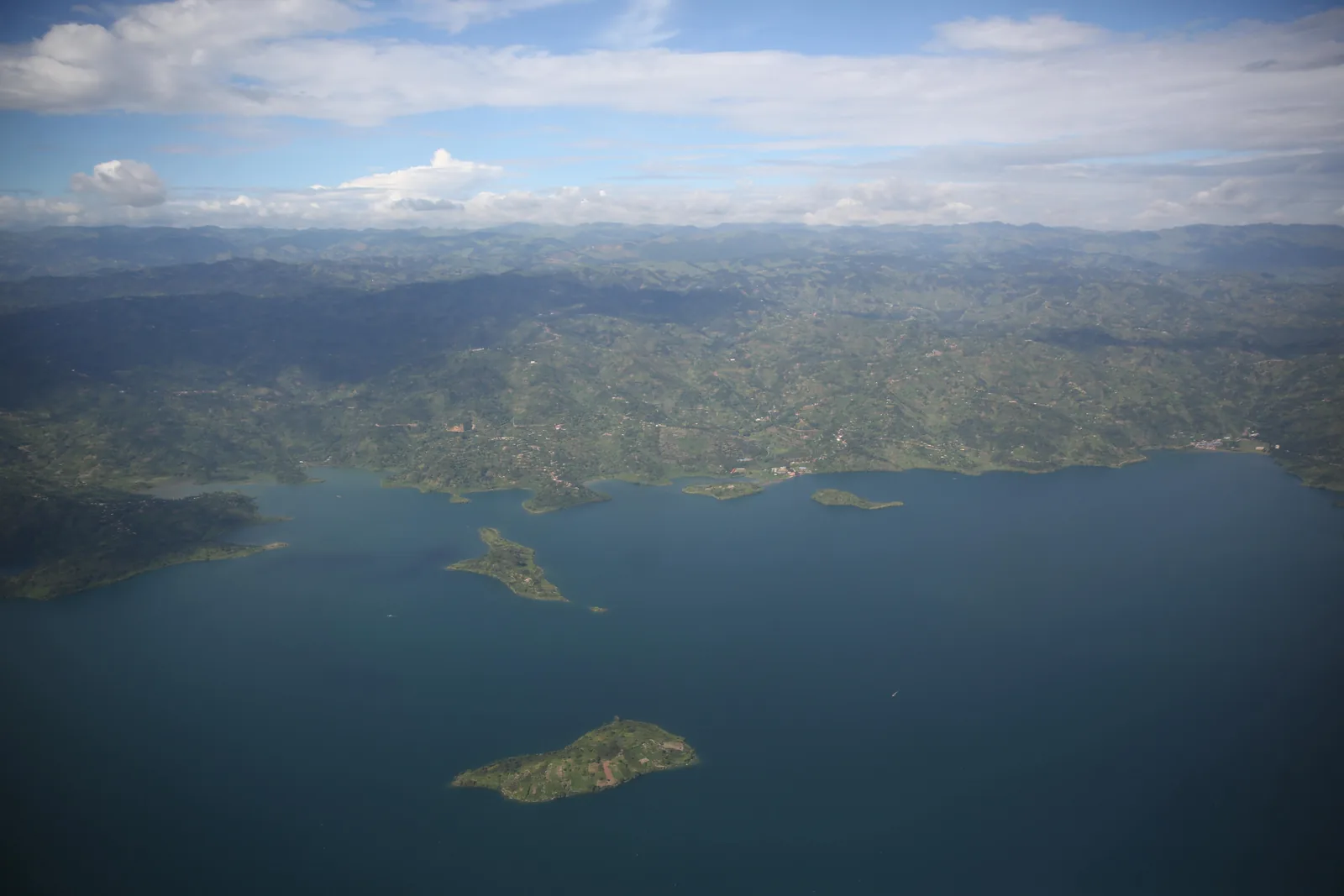
But the battlefield told a different story on the very same day the joint statement was released: M23 spokesperson Lawrence Kanyuka reported that government coalition forces had attacked densely populated areas of Chambombo, Kumadepo and Bulengero in Kalehe territory at around 6:20 a.m. on Friday.
"These repeated agreements that the Kinshasa regime signs with blatant cynicism amount to nothing more than a vast deception designed to mislead the national and international community."
Kanyuka's statement, which could not be independently verified, called the attacks "a deliberate and irresponsible escalation" that had caused deaths, massive displacement and property destruction. The pattern is by now familiar: each round of signatures is followed within hours by mutual accusations of bad faith.
The Doha framework and the eight-protocol plan
The framework sits atop a mediation architecture that Qatar has been building since April, when it began hosting direct DRC–M23 rounds, and builds on the Doha Declaration of Principles of July 19, 2025. An earlier Qatari-brokered truce quickly unravelled, with both sides accused of violating it almost immediately — which is why this iteration tries to institutionalise the ceasefire rather than merely declare it.
According to Massad Boulos, the US regional envoy, the accord contains eight protocols. Implementation, he said, has barely begun:
"People were expecting immediate results on the ground, but this is a process."
Qatar's chief negotiator, Mohammed Al-Khulaifi, hailed the framework as "historic," while cautioning that lasting peace would require "confidence, mutual respect and sincere commitment." North Africa Post reporting notes that Congolese President Félix Tshisekedi has voiced dissatisfaction with the current draft proposal — a reminder that the deal's political core remains contested.
That core is the reason the war started. M23 — formally the March 23 Movement, now operating within the broader AFC (Alliance Fleuve Congo) coalition — is backed by Rwanda according to UN reports, an allegation Kigali denies. Kinshasa accuses Rwanda of supporting the rebels to secure influence and mineral-rich territory in a region holding tin, gold and coltan. The rebels' capture of Goma earlier this year demonstrated their strength and deepened regional alarm. Amnesty International has warned that ethnically targeted abuses on the ground may constitute crimes against humanity.
Can the M23 ceasefire hold?
The honest answer is that nothing about the current arrangement has yet stopped the shooting. The fighting has intensified in North and South Kivu despite the July agreement, displacing over two million people this year alone, according to North Africa Post. The conflict has killed thousands of civilians and displaced hundreds of thousands more, raising fears of a broader regional confrontation — a risk amplified by the region's mineral economy, which gives every armed actor reasons to keep fighting.
There are structural reasons for scepticism. Earlier Doha ceasefires collapsed within days of signing. The verification mechanism — equal representation from both sides, ICGLR participation, AU, Qatari and US observers, MONUSCO logistics — is designed precisely to break that cycle through independent monitoring, but it has not yet conducted verification missions, and both sides' incentives to defect remain intact. M23 has rejected a separate US-mediated deal between Kinshasa and Kigali, insisting on direct talks with the Congolese government over its political grievances; Kinshasa, for its part, accuses the rebels of using negotiations as cover.
The same dynamic of externally backed, resource-fuelled attrition is visible across the continent — from the [Sahel conflict](/articles/2026-09-28-sahel-conflict-explained), where jihadist groups tax and strangle territory, to Sudan's war economy. Eastern Congo's version is distinguished by one thing: a mineral prize large enough to make every ceasefire a transaction rather than a settlement.
What to watch
Three near-term signals matter. Prisoner releases: the 311-for-166 exchange is the first hard deadline in the framework — whether it happens within the promised ten days will test both sides' commitment. Verification missions: the EJVM+ is supposed to begin planning missions within a week; if monitors deploy and report publicly, the information environment changes. The political core: until Kinshasa and M23 settle the rebels' political demands — and the Rwanda question behind them — every protocol is scaffolding around an unresolved dispute. Watch Doha: if Tshisekedi's reported dissatisfaction hardens, the framework could stall at the drafting table while the Kivus burn.