Pakistan's military said on Sunday that its forces had killed more than 71 militants during multiple operations in southwestern Balochistan province over the previous 96 hours, targeting hideouts of groups it calls "Fitna al-Khawarij" and "Fitna al-Hindustan" — Islamabad's terms for the Pakistani Taliban (TTP) and the outlawed Baloch Liberation Army (BLA). The announcement is the latest chapter in a separatist insurgency that has burned for more than two decades — and escalated sharply in 2026 with the largest coordinated militant attacks the province has ever seen.
This explainer covers who is fighting in Balochistan, what the insurgents want, and why Islamabad's strategy has not ended the war.
Key takeaways
- The Baloch Liberation Army (BLA), a US-designated terrorist group, has waged a separatist insurgency against Pakistan for more than 20 years; experts believe it has several thousand members.
- On January 31, 2026, the BLA launched dozens of simultaneous attacks across the province — police stations, military installations, banks — the "largest-ever coordinated" assaults, an unprecedented scale for the group.
- Casualty claims from the January attacks conflict and could not be independently verified: the government said at least 30 civilians and 18 soldiers were killed with 170+ BLA fighters dead; the insurgents claimed 200+ security personnel killed and 34 fighters lost.
- Pakistan's military is widely accused of enforced disappearances, extrajudicial killings, arbitrary arrests, and torture in the region — tactics analysts say have deepened resentment and fuelled recruitment.
- Around 65% of Balochistan's 15 million people are under 30.
Contents
- A province at war with its capital
- The January 2026 escalation
- A more lethal insurgency
- Why Islamabad's approach has not worked
A province at war with its capital
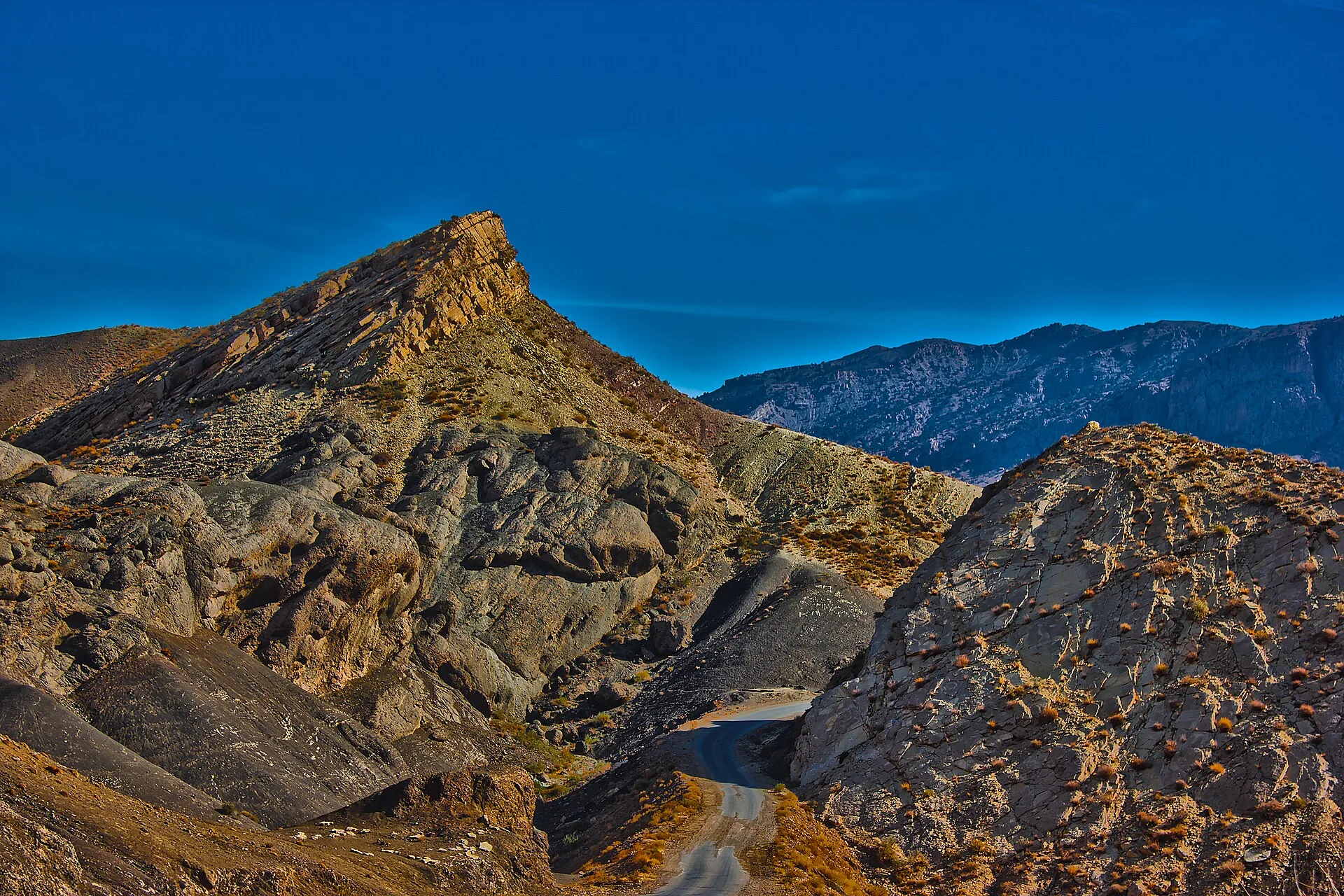
Balochistan is Pakistan's largest and poorest province — a vast, mineral-rich region bordering Afghanistan and Iran, home to the marginalized Baluch minority. The BLA, the largest armed group operating there, is fighting for Balochistan's secession from Pakistan. It is a secular group, distinct from the Islamist militants — chiefly the Pakistani Taliban — also active in the region.
The insurgency's roots lie in grievances that long predate the current fighting: locals accuse the state of exploiting the region's natural resources while giving little back, and of political exclusion backed by brutal security tactics. For some Baluch, "militancy is the only remaining way to resist political marginalization and repression," as Norway-based Pakistani journalist Kiyya Baloch — who tracks militancy in the region — told RFE/RL.
The January 2026 escalation
On January 31, the BLA launched dozens of simultaneous attacks in cities and towns across the province, storming police stations, military installations, and banks. Some of the attacks lasted for days. The unprecedented attacks highlighted, in the words of experts cited by RFE/RL, "Pakistan's failed policy of using violence and political repression to stamp out the decades-old insurgency."
The casualty figures are bitterly disputed. The government said at least 30 civilians and 18 soldiers were killed in the attacks, and that authorities killed over 170 BLA fighters. The insurgents said they killed over 200 government security personnel and lost 34 fighters. RFE/RL could not independently verify the conflicting claims in the sparsely populated region, which is largely inaccessible to journalists — and the government imposed an internet shutdown in the province, making verification even harder.
Pakistan's security forces retook Nushki, a town of some 50,000 people, from separatist militants on February 4 after three days of fighting, using drones and helicopters against the militants, the authorities said.
A more lethal insurgency
The BLA has waged its insurgency for more than 20 years, carrying out mostly small-scale attacks against government forces. But the group has become a more organized and increasingly potent fighting force in recent years — adopting tactics previously associated with Islamist militants, including suicide bombings, improvised explosive devices, and complex multi-attacker assaults.
The group is believed to have obtained American weapons and military equipment left behind by US and international forces who departed neighbouring Afghanistan in 2021, according to RFE/RL. And it has been successful in recruiting Baluch youth — a deep pool in a province where around 65 percent of the 15-million population are under 30.
"This level of rebel operational capacity marks a dramatic escalation," said Kiyya Baloch, noting that the scope and scale of the January attacks had "not been witnessed before" in a province where separatists had typically relied on classic guerrilla hit-and-run tactics.
Why Islamabad's approach has not worked
Experts say the growing strength of Baluch armed groups has exposed the limits of Islamabad's heavy-handed approach. Pakistan's military has been widely accused of using brutal tactics — including enforced disappearances, extrajudicial killings of political activists and suspected separatists, arbitrary arrests, and torture — to pacify the region.
"Years of contested resource control, political exclusion, and crackdowns have left space for violence to persist," said Imtiaz Baloch, a Balochistan researcher in Islamabad. "Dialogue is the only way to resolve this issue," added Ishaq Baloch, a leader of the National Party, a Baluch nationalist parliamentary political party — though Sarfaraz Bugti, Balochistan's chief minister, appeared to rule out talks with the BLA in February, accusing the group of seeking "to impose their ideology through the barrel of a gun."
The weekend's operations — 71+ militants killed over 96 hours, per the military — show the state can still hit the insurgency hard. But with the BLA operating at an unprecedented scale, the TTP also active in the province, and the Afghanistan border heating up again after the weekend's Nuristan clash and Pakistani airstrikes, 2026 is shaping up as the insurgency's most dangerous year.