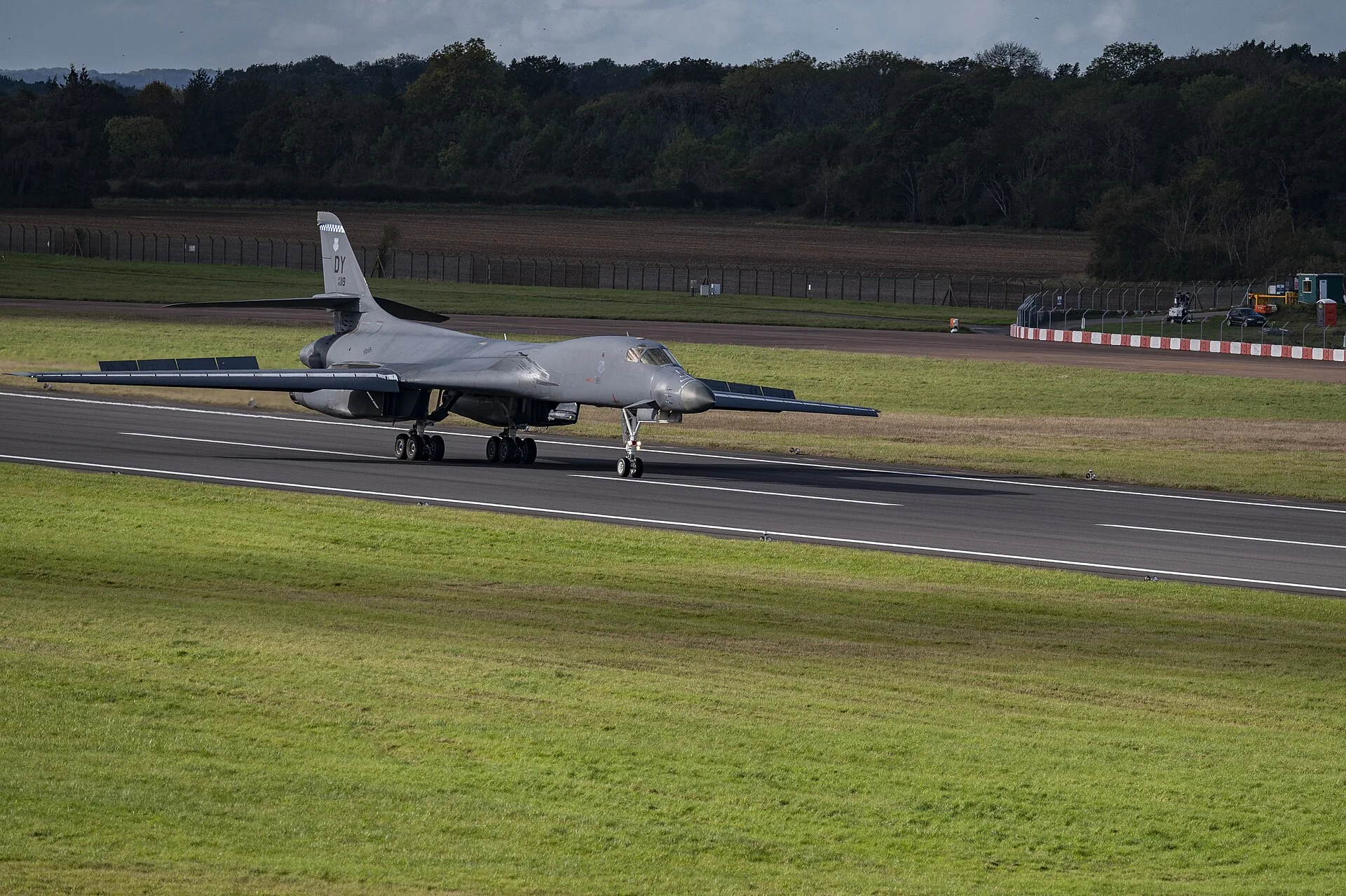
The United States removed all of its B-1 bombers from RAF Fairford in England on Sunday, October 4 — a major force-posture shift in the US-Iran war — one week after British police foiled a suspected terror plot targeting the base. The Pentagon confirmed the redeployment to Reuters, saying "all US bombers that were deployed to RAF Fairford have re-deployed to their home stations in the United States," while stressing the aircraft remain ready to carry out strikes launched from the continental US.
What happened at the base?
RAF Fairford, about 100 miles west of London in Gloucestershire, was the US Air Force's only European forward operating location for heavy bombers and had been used extensively for strikes on Iran since the war began in February, Reuters reported. A dozen B-1 Lancers were stationed there; The Wall Street Journal first reported that the aircraft were removed amid security concerns, and they were filmed leaving the base on Sunday.
The departure followed the foiled plot that British authorities uncovered a week earlier. In the early hours of Sunday, September 27, police arrested five British men near the base's perimeter after a farmer reported masked men and three suspicious vans; police found petrol but no explosives, and all five were released on bail under what Prime Minister Andy Burnham called the strictest possible conditions. On October 1, counter-terrorism police arrested a sixth person — a dual British-Iranian national — on suspicion of preparing terrorist acts; he was also released on bail. Police say all six remain under investigation.
Who is accused of being behind the plot?
The question of responsibility is contested. Burnham said on September 30 that there were "strong indications that Iran played a part" in the incident. A senior US official told the Wall Street Journal that a branch of Iran's Islamic Revolutionary Guard Corps had recruited UK nationals to carry out the plot, which reportedly involved multiple steps including a diversion in the nearby neighborhood. President Donald Trump said those involved had planned to do "big damage" at the base, and Secretary of State Marco Rubio pointed to the "hands of a foreign actor."
Iran has rejected all of this. Tehran called the accusations linking it to the plot "baseless" and "fabricated speculations," denied any involvement, and summoned the British ambassador in Tehran over the issue, Reuters reported. Some UK officials, meanwhile, have questioned the level of sophistication of the planned attack, according to the Journal — a reminder that the investigation is still unfolding.
Why does this matter?
The withdrawal removes the forward-deployed strike force Washington had been using against Iran at a moment of sharp escalation. It comes alongside new shipping attacks in the Gulf — at least two vessels were reported struck over the weekend near Oman and in the Strait of Hormuz, according to UKMTO advisories — and Iran's Sunday restatement that the strait will not reopen until its conditions are met. The Pentagon's message was aimed at reassurance: a department official said the bomber force remains ready "to deliver precision global strike capabilities … anywhere, anytime," including from home stations in the United States.