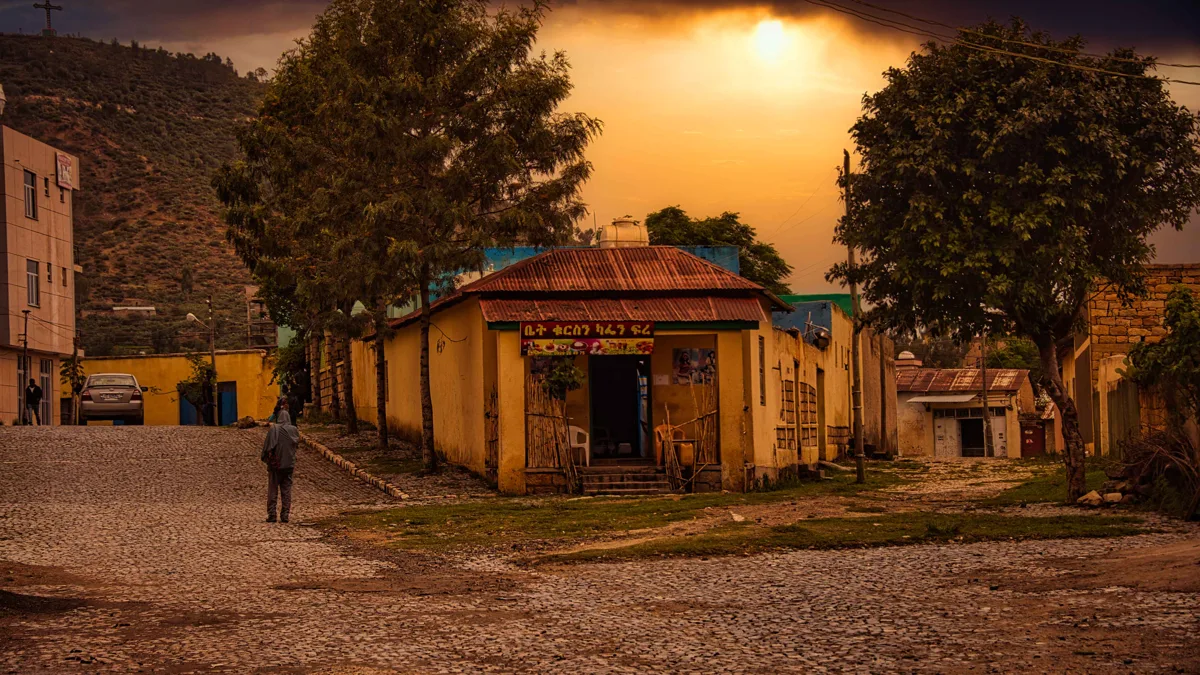
Ethiopian government forces closed in on Mekelle, the capital of the northern rebel stronghold of Tigray, on Friday, residents and a diplomat said, as fears grew that fighting could spill into a wider war days after Ethiopia and Eritrea cut diplomatic ties.
Banks and shops in the city were closed, with the Ethiopian National Defence Force and allied militiamen reported to be within striking distance, two residents, who asked not to be named for security reasons, told Reuters. The pro-government Tigray Peace Forces militia said Thursday its fighters had captured a town about 75 km (50 miles) south of Mekelle; one of the Mekelle residents told Reuters the forces were now within 30 km. Reuters could not independently confirm the distances, and spokespeople for Ethiopia's military and government did not respond to requests for comment.
The worst escalation since the 2020–2022 war
Pro-government forces have made quick advances into Tigray since combat erupted last week with a rebel alliance led by the region's ruling party, the Tigray People's Liberation Front — the worst escalation of violence since the 2020–2022 civil war. While the TPLF and allied fighters made some initial gains in the neighbouring Amhara and Afar regions, pro-government forces say those have been largely reversed.
In a statement Thursday, TPLF chairperson Debretsion Gebremichael acknowledged that federal forces had occupied some parts of the region but said his forces would counter-attack "in due course." "We should ensure that Tigray is their graveyard, not their playground," he said.
The TPLF formed an alliance with six other Ethiopian armed groups last month that say they aim to overthrow Prime Minister Abiy Ahmed's government. Analysts fear the current conflict could spread beyond Ethiopia's borders in an increasingly fragile region where competing powers are seeking influence. Tigray has Ethiopia's longtime foe Eritrea to its north, and Sudan — caught up in a more than three-year-old civil war — to its west. Ethiopia's government has accused Eritrea, Sudan and Egypt of supporting the opposition alliance, an allegation all three countries deny.
Diplomacy collapses, capitals on edge
The battlefield gains came a day after the sharpest diplomatic rupture in the Horn of Africa in years. On Thursday, Ethiopia said it was closing its embassy in Eritrea "in response to Eritrea's direct and indirect acts of hostility and belligerence" and ordered 10 Eritrean diplomats to leave Ethiopia within 48 hours. Eritrea responded by severing all diplomatic ties with Ethiopia. The two countries fought a border war from 1998–2000 and only restored diplomatic relations in 2018; they then fought together against the TPLF during the 2020–2022 war, in which hundreds of thousands of people were killed. Relations have since soured, in part over landlocked Ethiopia's insistence that sea access is vital for its security and economy — which Eritrea says it fears means a bid to take its Assab port by force.
Also on Thursday, Ethiopia's foreign ministry expelled an Egyptian diplomat, prompting Cairo to respond in kind by expelling an Ethiopian embassy counsellor. The African Union Commission urged Ethiopia, Eritrea and Egypt to exercise "maximum restraint."
Meanwhile, suspected drone attacks on the Ethiopian capital, Addis Ababa, earlier this week suggested the TPLF and its allies might have better striking capability than previously thought. Explosions were heard late Wednesday night in Addis Ababa; a source linked to the opposition alliance said they were drone attacks targeting the ENDF headquarters there and other sites, which Reuters could not independently verify.
Whether the severed ties remain a diplomatic standoff or harden into a wider regional war may now be decided in the hills around Mekelle.