The death toll from Saturday's Russian glide-bomb strike on residential buildings in the southeastern Ukrainian city of Zaporizhzhia rose to 20, including three children, President Volodymyr Zelensky said, according to the Australian Associated Press. CNN later reported Zelensky had put the toll at 23, including four children. The attack was the third mass-casualty strike on Ukraine this week, the AAP reported.
What happened in Zaporizhzhia on Saturday?
Russia launched five guided aerial bombs at residential neighbourhoods in the city early Saturday morning, according to Ukrainian officials. Two of the bombs struck residential buildings, and one reduced part of an apartment block to rubble. Zelensky said in a social media statement quoted by the AAP: "Today, Russia expressed its thanks for the lifting of sanctions on diesel exports by dropping five glide bombs on residential buildings in Zaporizhzhia."
Emergency services pulled people from the rubble through the day. In that same statement, Zelensky said 12 people had been confirmed killed and 14 injured — two in critical condition — with another 12 unaccounted for. As rescue work continued, the toll rose: The Times reported 17 killed including three children, and the AAP later reported Zelensky's figure of 20 killed including three children. CNN reported 23 killed including four children.
Why do the reported tolls differ?
The figures moved through Saturday as search-and-rescue operations continued, and the accounts come from different points in that process. Zelensky's own Saturday statement cited 12 confirmed dead with 14 injured and 12 people whose status was still being verified; later tallies from the same day ran from 17 (The Times) to 20 (the AAP's report of Zelensky's statement) to 23 (CNN's report of Zelensky's remarks). All of the figures are Ukrainian officials' accounts, and no independent verification of the toll had been reported by publication time.
The AAP separately reported that nearly 80 civilians were killed in Russian strikes on Wednesday and Thursday, including at least 30 killed by a bomb in the eastern garrison city of Kramatorsk and 22 by a missile in the town of Pryluky. Those figures, if confirmed, would revise upward the tolls reported earlier in the week — including the Kramatorsk toll of 12 killed and 14 wounded reported by Reuters. The AAP figures are single-sourced to the wire's own reporting and have not been independently confirmed.
What did Zelensky say about the US-Russia diesel deal?
Zelensky explicitly linked the Zaporizhzhia strike to Washington's diesel agreement with Moscow. "Last night confirmed once again that in Russia, they take any easing of pressure to mean they can keep fighting, to mean they can keep dropping bombs on cities," he said, according to the AAP. "Different signals are needed."
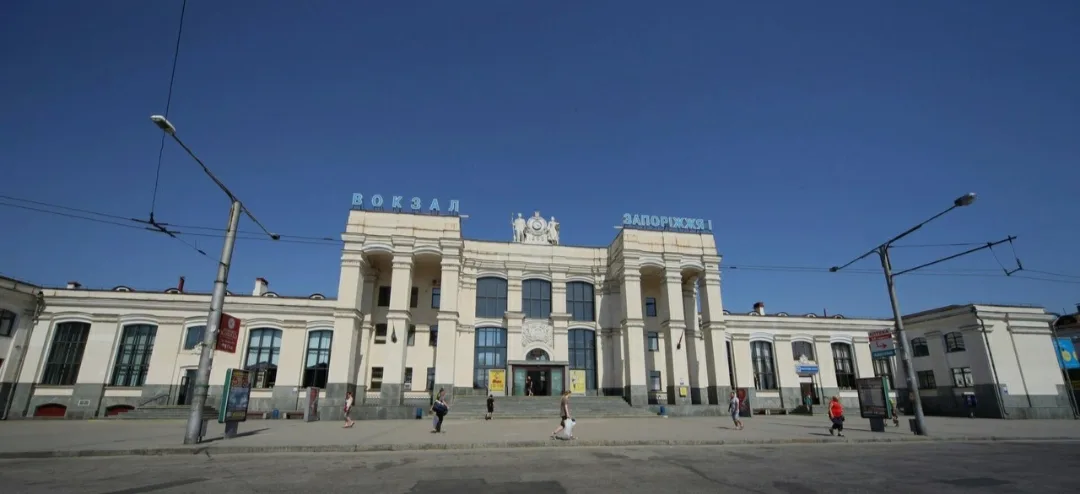
The Russian government said on Saturday it had partially lifted its ban on diesel exports with immediate effect, the AAP reported — the ban Trump had agreed with Putin to ease. Zelensky has called the diesel arrangement "a weak decision of strong partners," arguing that easing sanctions gives Moscow more revenue for its war. Trump, for his part, has said Ukraine's strikes on Russian refineries — which he blames for high global diesel prices — must stop.
What else was hit this weekend?
Zelensky said 13 Ukrainian regions came under attack overnight, with residential buildings, infrastructure and railway facilities damaged, according to the AAP. The Times reported major power outages in Kyiv on Saturday after Russian attacks across the country. "Right now, it is our long-range capabilities that are ensuring this," Zelensky said, promising Ukraine would "respond to Russian strikes," the AAP reported.
Casualty figures are Ukrainian officials' accounts as reported by the AAP, CNN and The Times; no independent verification was available at publication time. The link Zelensky drew between the diesel deal and the strike is his stated position, not an independently established causal claim.