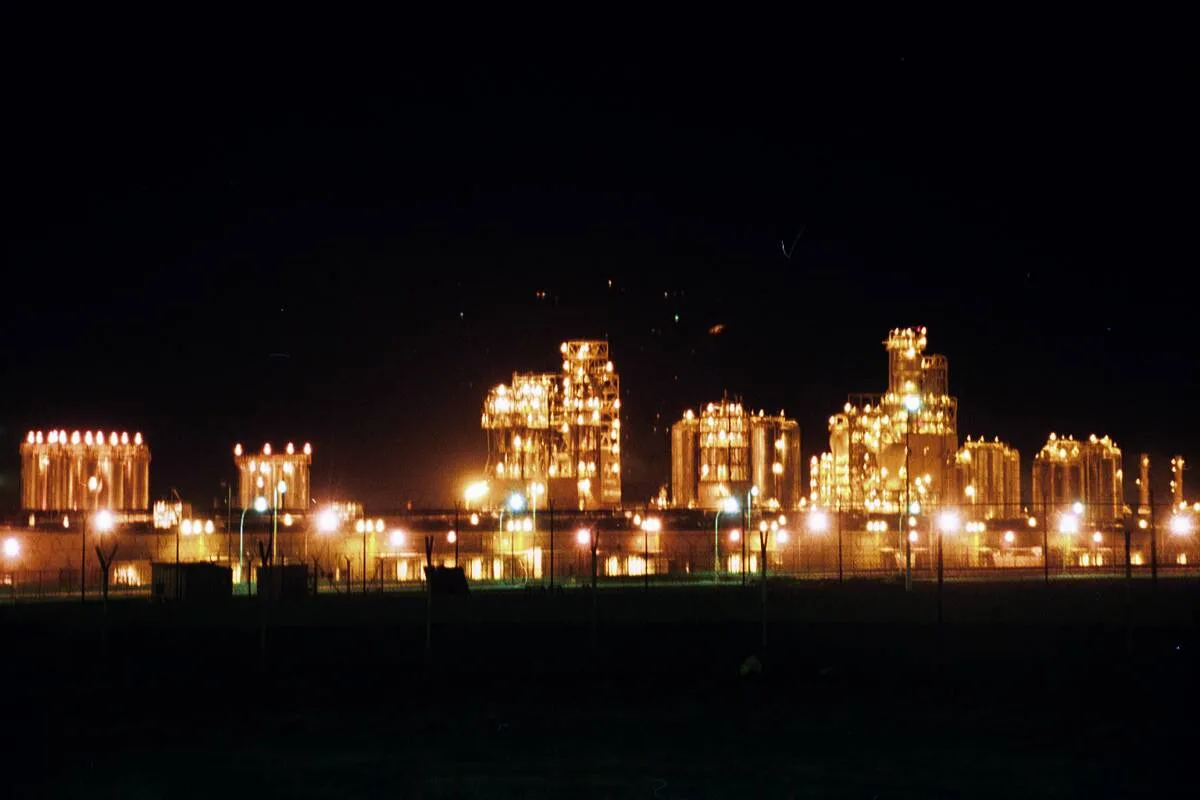
President Volodymyr Zelensky told Reuters on October 3 that Ukraine will double down on attacking Russian oil refineries in response to what he described as a new Russian doctrine of airstrikes designed to force people to abandon Kyiv and other cities — but will not target civilians. The interview came as Russia escalated its campaign against the Ukrainian capital: on October 4, a Russian drone struck Kyiv's North Bridge for the second straight day, hitting it shortly after German Chancellor Friedrich Merz arrived in the city on an unannounced solidarity visit, CNN reported.
What did Zelensky tell Reuters?
In an exclusive interview conducted as air raid sirens sounded outside the presidential offices, Zelensky said Ukraine's intelligence services had obtained documents showing that Russian President Vladimir Putin had issued a "new doctrine" of military attacks on a much broader range of civilian targets ahead of winter. "We saw documents and we know that they allow them to attack infrastructure, logistics, and especially to attack in the cities, in the villages, everywhere, roads, schools, hospitals," Zelensky told Reuters. "To pressure people to leave the capital, leave different cities: this is the goal of the operation."
Zelensky said Putin's motivation, in his view, was the desire to appear strong at a time when Russia's military was losing ground in a key frontline region and sustaining higher casualties. The Kremlin was not available to comment on the claim. In a statement urging foreign nationals to leave Kyiv, the Russian Foreign Ministry said Moscow would continue to systematically hit targets in what it described as retaliatory strikes for Ukrainian attacks on Russia in recent months. Both sides deny deliberately targeting civilians.
On the retaliation question, Zelensky was explicit: "We have to respond in any way we can. With their attacks on our energy, we have to respond on their energy. First of all, oil refiners: what gives money to them for this war. But we will not respond, of course, just like them, on any civilian objects."
What happened during the Merz visit?
German Chancellor Friedrich Merz arrived in Kyiv on Sunday morning in an unannounced visit, accompanied by his Minister for Economic Affairs and Energy, Katarina Reiche, according to CNN. Video footage showed the moment a Russian drone slammed into the city's Northern Bridge, sparking a huge plume of fire and black smoke while cars were still traveling across. It was the second time the bridge had been hit in as many days: on Thursday and Friday, Kyiv's Southern Bridge — which carries ground transportation and the city's subway system — was hit five times in less than 24 hours, CNN reported.
The visit came despite warnings from Russia on Saturday that foreign visitors and dignitaries in Kyiv were not safe amid the onslaught. "Ukraine is facing decisive weeks ahead," Merz wrote on X on Saturday. "Therefore I have traveled to Kyiv today with the message: You can rely on us."
According to the CNN wire, Zelensky and Merz were finalizing a defense and industrial partnership for drone and missile production, and German officials said Berlin would release €1 billion in military aid plus €350 million for repairs to Ukraine's damaged energy infrastructure.
How is Ukraine's air defense holding up?
Zelensky painted a strained picture of the winter fight ahead. Since the summer, Moscow has begun launching dozens of fast, relatively cheap jet-powered Shahed drones a day at Ukraine, he said, and Ukrainian air defenses have struggled because the previous generation of interceptor drones was too slow to catch them. Ukraine has been forced to rely heavily on fighter aircraft — F-16s and MiGs — to down around 60% of the jet-powered drones, but supplies of 20mm ammunition for the planes are running low.
Kyiv is urgently working on alternatives, including jamming capabilities, a first shipment in mid-October of small, cheap air defense missiles capable of hitting the new Shaheds, and five models of new interceptor drones under development — tests on two showed a modest success rate of around 30%. Ukrainian officials also warn Russia has stockpiled hundreds of ballistic missiles ahead of an expected winter onslaught against electricity and water infrastructure; last winter, the worst of the war, Russian strikes left swathes of the country without electricity and heating for days.
Zelensky also confirmed Ukraine's first combat use this week of its domestically made FP-7 ballistic missile, with a range of around 250 km, and said he had pressed the manufacturer to finish a longer-range FP-9 model — which the company has said could hit Moscow — this autumn.
Where does diplomacy stand?
Zelensky said he had received no indications that Putin was interested in peace talks or in discussing a ceasefire on energy infrastructure. The Trump administration has sought to revive talks to end what Reuters called the four-year-old conflict, Europe's bloodiest since World War Two, with a US proposal for trilateral talks in the UAE in the coming weeks — though no date or location has been set. Trump last month urged Ukraine to refrain from hitting Russian oil installations, saying it was sending global diesel prices surging.
Zelensky also pushed back on Washington's recent posture toward Moscow: after the Trump administration invited Putin to a G20 summit in Miami in December and discussed business deals with Russian envoys, Zelensky urged the US not to normalize relations with Russia before securing peace, and warned against "illusions" that Russia would end hostilities if it gained control of Donbas. He said Ukraine's counteroffensive, code-named "Vivaldi," had recaptured around 140 sq km of the eastern Donbas and was ongoing — while Russia has said it must control Donbas in its entirety as a condition for any peace deal.
What is the market picture?
The refinery pledge lands directly on energy markets. Trump told Reuters last month that Ukrainian strikes on Russian oil installations were sending global diesel prices surging — the one sourced causal claim connecting the campaign to prices. Front-month Brent crude traded around $101.93 per barrel, unchanged over the previous 24 hours, and WTI around $91.11. No outlet has tied specific price moves to Zelensky's October 3 statement; the figures above are snapshots, not evidence of market reaction.
Not financial advice. Figures are snapshots checked at publication time, not live prices, and do not reflect any recommendation.
Related: our [October 3 report on the third day of Russian strikes on Kyiv's bridges](/articles/0530-kyiv-northern-bridge-strike-third-day) and the [October 2 report on Ukraine's FP-7 missile debut](/articles/0535-ukraine-fp7-ballistic-missile-combat-debut).