
Key takeaways
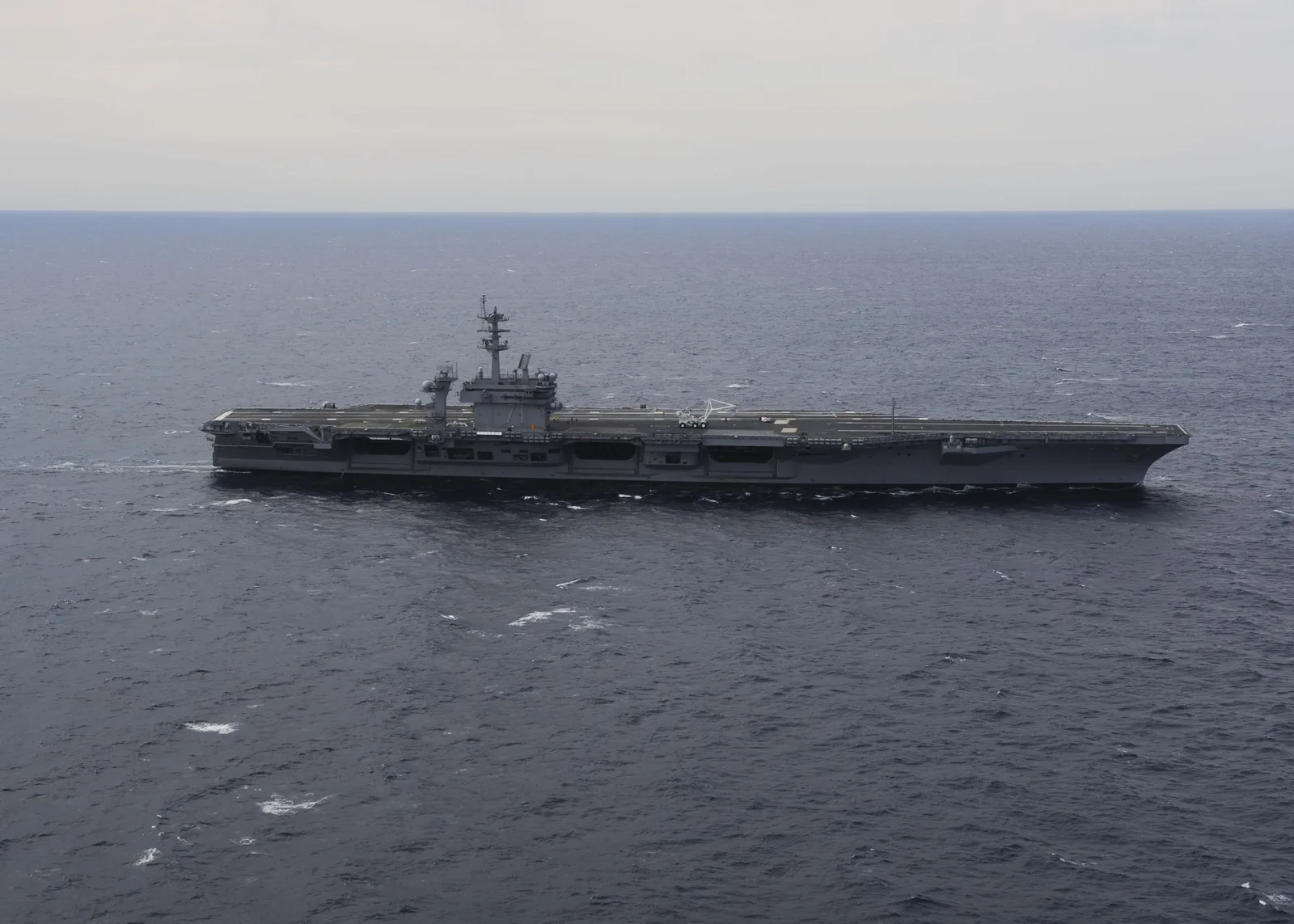
- The USS Theodore Roosevelt (CVN-71) left Naval Air Station North Island in San Diego on September 27, starting a deployment to the Middle East expected to last more than seven months, according to the San Diego Union-Tribune.
- The carrier is slated to relieve the USS George Washington, the Japan-based carrier that moved to the region in late August — sustaining a continuous U.S. carrier presence in the Iran war.
- The deployment comes as the Navy grapples with grueling tour lengths: the USS Abraham Lincoln has been at sea for roughly 10½ months, including a 265-day stretch without a port call, with eight sailors from its strike group attempting suicide.
- The Navy says it is loading the Roosevelt with extra food, supplies, and entertainment equipment and pledging better communication with families to avoid repeating the Lincoln's problems.
Contents
A rotation born of exhaustion
The Roosevelt's departure is not a routine rotation. Chief of Naval Operations Adm. Daryl Caudle told sailors at a Fort Meade town hall in late August that longer deployments are becoming the norm: "In the short term, until I can grow the Navy we need, I hate to admit it, but longer deployments are going to be probably part of that."
The ship the Roosevelt relieves tells the story. The USS Abraham Lincoln, which left San Diego in November 2025 for what was expected to be a six-to-seven-month deployment, is still at sea and not scheduled to return until early October — a roughly 10½-month trip that will go down as one of the longest in naval history, per the Union-Tribune.
The Lincoln and its escorts played a lead role in the U.S. conflict with Iran and in enforcing the naval blockade in the Strait of Hormuz. During the conflict, Iran largely destroyed a key U.S. naval logistics and supply depot in Bahrain, making resupply harder and more time-consuming. At one point the Lincoln, with about 5,000 crew, went 265 straight days without a port call, and Navy officials said eight sailors in its strike group attempted suicide during the deployment.
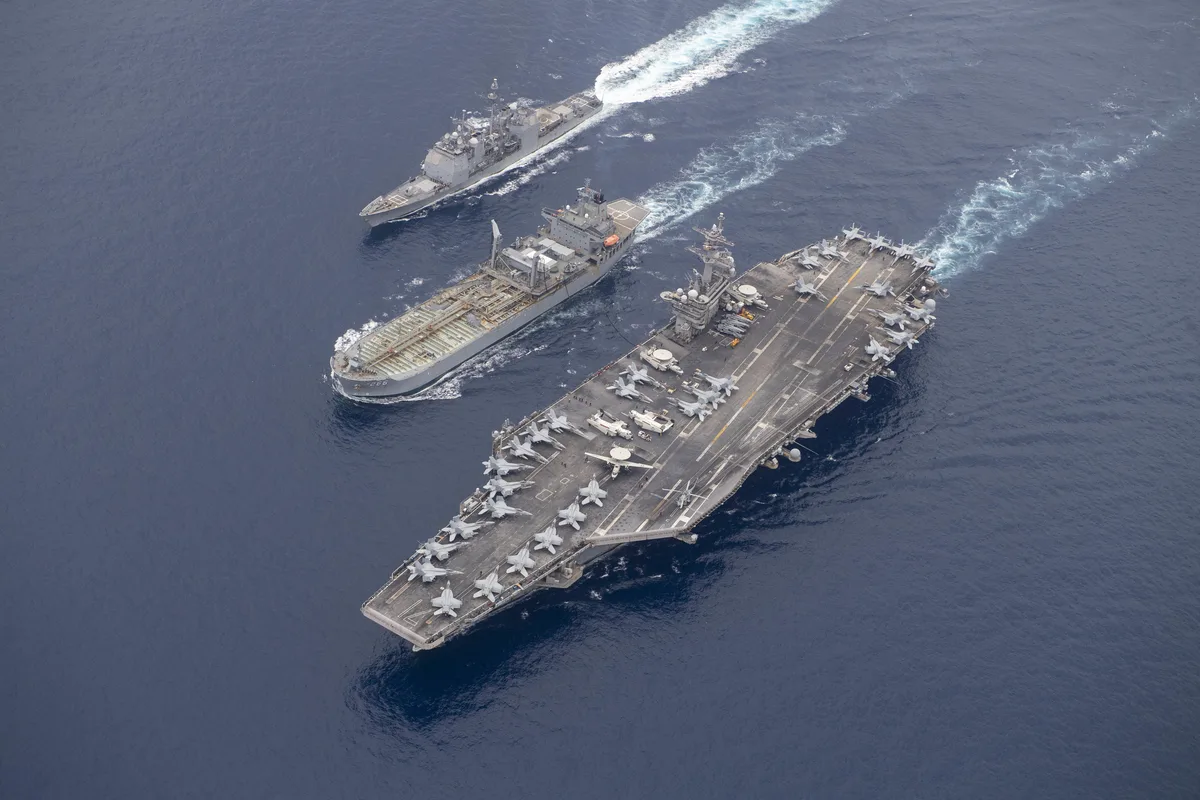
The Navy says it has applied lessons from the Lincoln's ordeal to the Roosevelt: the ship was loaded with extra food, hygiene products, and supplies, storage spaces were converted for stockpiling, and sailors were given additional exercise equipment and entertainment for the long deployment. The Navy also pledged better communication with families back home — families had raised crew isolation and stress at an August town hall.
Why the Navy cannot rotate ships fast enough
The Lincoln was eventually relieved by the USS George Washington — but Washington is the Japan-based carrier assigned to the Pacific, and pulling it to the Middle East left a gap in the Western Pacific that raised concerns among U.S. allies about Chinese assertiveness. The Roosevelt, the fifth U.S. carrier tied to operations connected to the Iran conflict in seven months, allows Washington to return to its Pacific role.
The deeper problem is structural. A 2025 U.S. Government Accountability Office report found the Navy has failed to increase the number of ships over the past 20 years despite a doubling of its shipbuilding budget — blaming overly optimistic plans and a tendency to start building before designs are finalized, which produced cost and schedule overruns. The result: an aging fleet, maintenance backlogs, insufficient shipyard capacity, and fewer hulls than the Pentagon's global commitments require.
The diplomatic backdrop
The carrier movement coincides with a week of sharp swings between escalation and diplomacy:
- On September 26, President Donald Trump rejected an Iranian proposal to reopen the Strait of Hormuz; Iranian Foreign Minister Abbas Araghchi responded that Iran is "fully prepared for hostilities to resume."
- Iran shared a 7-day plan with U.S. mediators in New York under which the strait would be reopened if certain conditions are met, Araghchi told reporters.
- On September 27, U.S. Chief of Naval Operations assigned Roosevelt's destination as the Arabian Sea, and the Joint Maritime Information Center kept the strait threat level at SEVERE.
- Eighty countries at the U.N. called for the full restoration of maritime navigation in the Gulf, and French President Emmanuel Macron said France would send "military means" to protect Saudi Arabia's Yanbu oil terminal from Houthi attacks.
Whether the Roosevelt's deployment shortens the war or merely extends America's ability to fight it remains an open question — but it guarantees the U.S. carrier presence near Iran will run at least through the end of 2026.
Sources
- title: "San Diego Union-Tribune — 'San Diego aircraft carrier deploys to Middle East uncertain how long its mission will last' (Sep 27, 2026)"
url: "https://www.europesays.com/us/1087151/"
- title: "CBS News live blog — 'Oil prices back up as U.S. and Iran trade threats to expand 7-month war' (Sep 25, 2026)"
url: "https://summamoney.com/investing/the-daily/oil-prices-back-up-as-u-s-and-iran-trade-threats-to-expand-7-month-war/"


