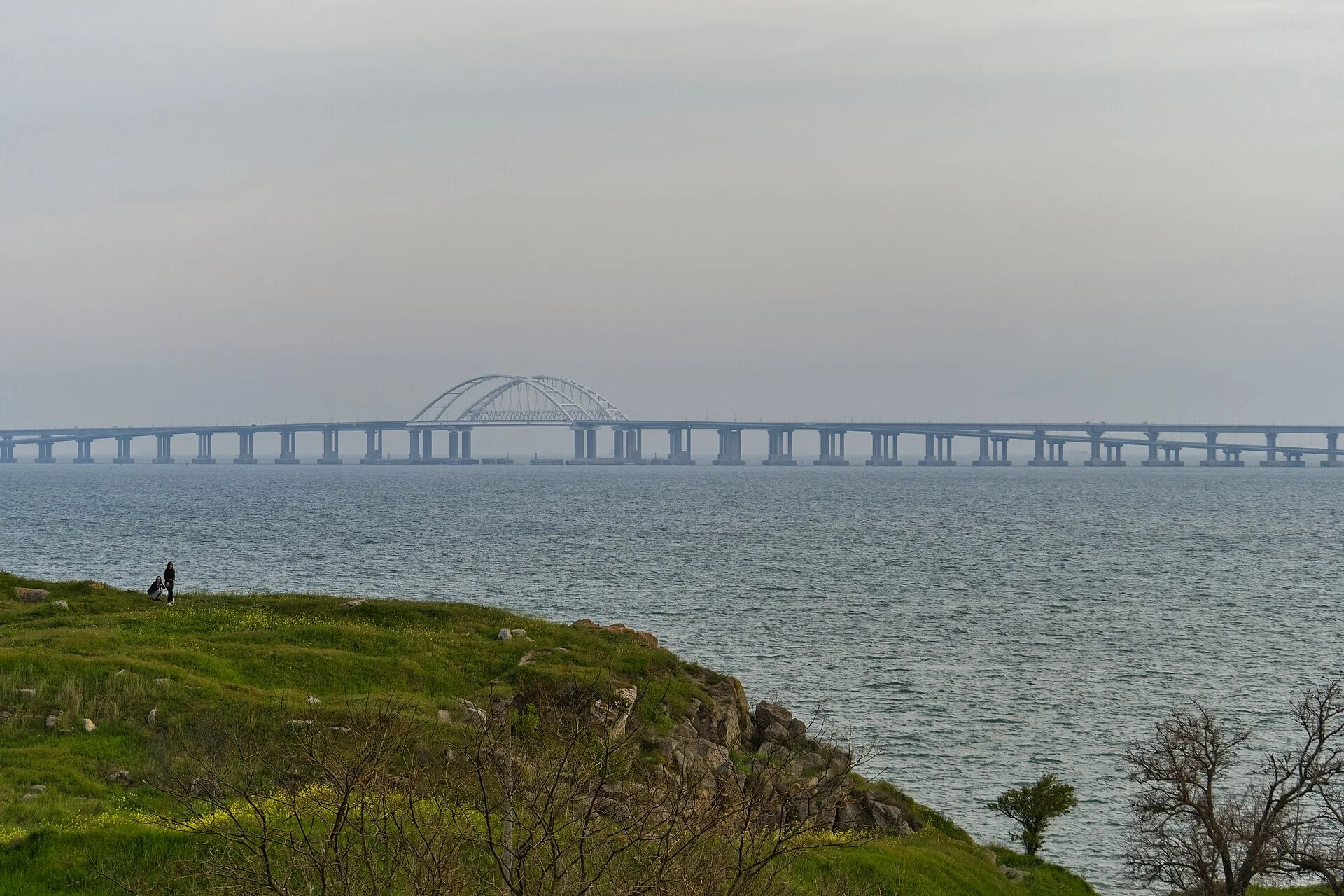
Ukraine's Crimean Bridge strikes are straining Russian logistics well beyond the bridge itself: with the crossing partly disabled, Russia must force more supply traffic through the M-14 land corridor that Kyiv already targets heavily — "more traffic means more targets," in the words of one analyst quoted by Reuters. The campaign is tracked on this site's Ukraine hub and set out in our Ukraine war explainer. This week's attacks destroyed the bridge's road section and, on Thursday, suspended its rail traffic; the assessment below is Reuters', drawn from two analysts and two Ukrainian commanders, and the one set of unit-level figures in it is published with Reuters' own non-verification note attached.
What is the campaign actually targeting?
The logistics system as a whole, on the account Reuters reported. "The more important story here is not necessarily the destruction of the Crimean Bridge itself, but the growing pressure Ukraine is putting on Russia's logistics system as a whole," said John Helin, a visiting fellow at the Atlantic Council. The bridge strikes follow a summer of stepped-up attacks aimed at isolating Crimea: Ukrainian forces systematically targeted massive tankers ferrying fuel to the peninsula, sparking widespread shortages, and struck energy infrastructure across Crimea. Months earlier, Ukraine had begun targeting Russian supply lines on the key M-14 highway through its occupied south — a major artery feeding Moscow's war effort on a huge swath of the front. Ukraine's rapid development of its mid-range drone capability, operating mostly between 30 and 180 km, has been central to the strikes, and other priority targets include Russia's ballistic-missile launchers and the aircraft that carry missiles and glide bombs.
Why does the M-14 corridor matter more now?
Because the bridge's loss pushes traffic onto it. With the Crimean Bridge partly disabled, Russia now has few alternatives but to force more traffic through that heavily targeted roadway, said Franz-Stefan Gady, a Vienna-based expert with the Center for a New American Security. "More traffic means more targets," he said — while adding that a "sudden logistical breakdown" would still be unlikely, because Russia has developed evasive tactics like dispersion and night driving. Helin said Russia had already long rerouted much of its military cargo, like fuel and ammunition, from the bridge to the land corridor; Ukrainian strikes on several smaller bridges over the Mius River in Russia could create new bottlenecks and a "game of cat and mouse" of repeated repairs. The commander of a Ukrainian drone unit operating over the highway said he expected Russia to strengthen its air defences there but was confident Kyiv's forces could continue doing damage: "The only thing helping them (the Russians) now is the weather," he said, citing recent rain and heavy cloud cover.
What is claimed about the rail link and the Azov figures?
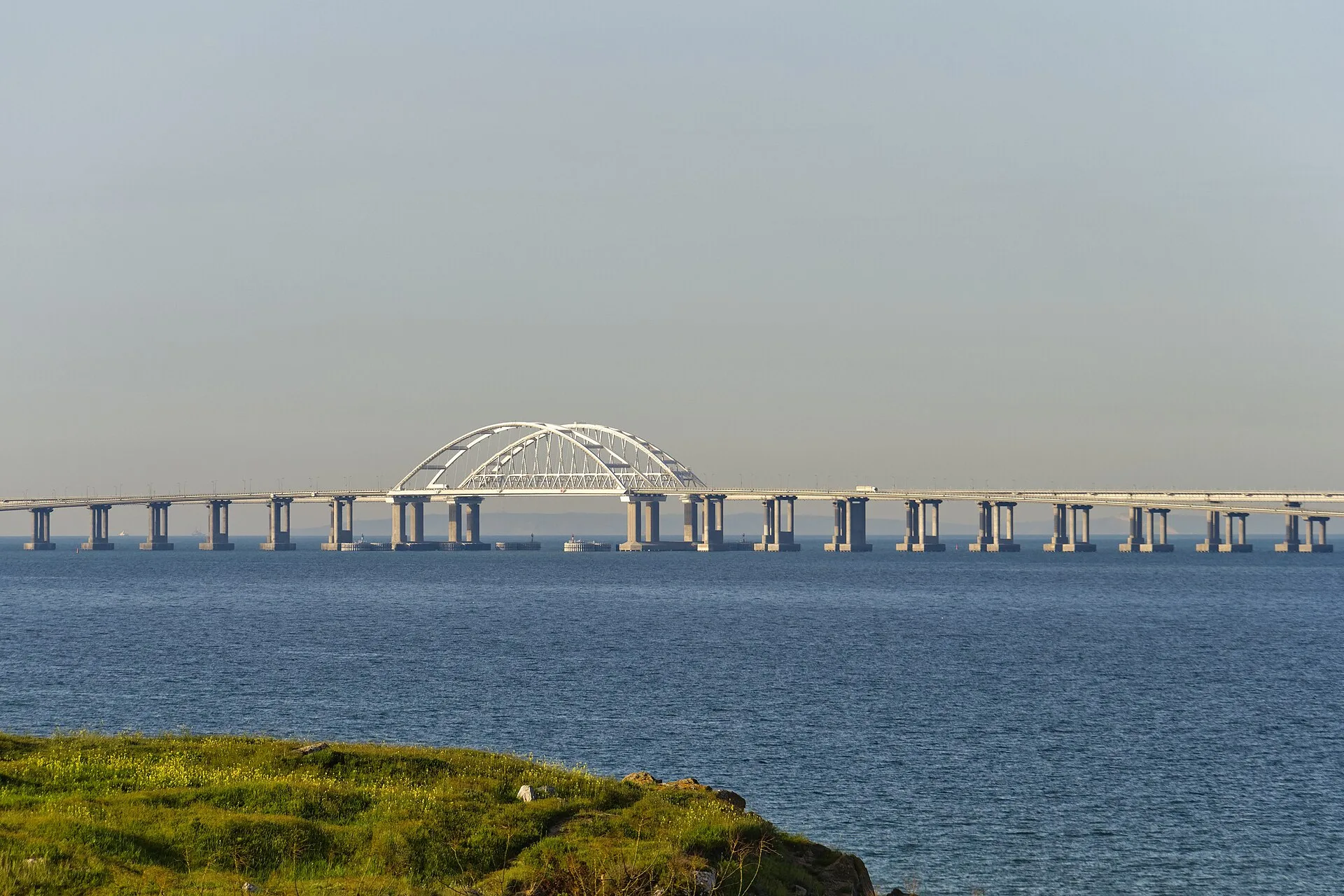
The rail link is the next pressure point, on a Ukrainian officer's account. Thursday's strike forced a suspension of traffic on the rail section, and Russian officials gave no other details. A destructive new attack on the railway part of the bridge could force all rail cargo through the same land corridor that houses the M-14, said an officer from Ukraine's Grouping of Forces Azov, which targets part of the corridor; increased Russian freight traffic through its sector would be a "huge bonus," the officer from the grouping's drone combat deployment center said. He added that Azov has struck 100 locomotives and destroyed 600 tonnes of fuel within its sector in recent months. Those figures are the Azov officer's, reported by Reuters, which could not independently verify them; they are published here as his claim, with that limitation. On the other side, Putin said on Thursday that the bridge was being used exclusively for civilian purposes and promised to hit back hard — a claim about the bridge's use that Ukraine's targeting of it as a supply artery contradicts in practice, and which this site reported yesterday alongside Kyiv's contrary position. A Russian ballistic-missile attack on Kyiv overnight then damaged three bridges across the Dnipro River, city officials said on Friday — the retaliation this site reported this morning.
What remains unverified?
The sources opened do not establish, beyond the Azov figures above, how much of Russia's Crimea-bound cargo the bridge was still carrying when it was hit, how long the rail suspension will last, or whether the corridor can absorb the diverted traffic at its current tempo. The analysts' bottom line, as Reuters reported it, is conditional: "The real question is whether Ukraine can keep the bridge out while also sustaining pressure on the corridor," Gady said. "Doing both at once is what would actually squeeze Russia." While not game-changing in themselves, this week's attacks pile pressure on an already strained logistics network in ways Russia could struggle to mitigate — and for Russia, losing the bridge would ultimately affect military and civilian logistics in Crimea more than its battlefield operations across southern Ukraine, Gady said.
Sources: Reuters (20 November 2026, read in full on reuters.com). The bridge's history (19 km; annexation in 2014; truck bomb 2022, sea drones 2023, underwater explosives 2025), the Thursday rail suspension and the campaign's components rest on the single Tier 1 wire actually opened — non-contested background and event facts, which may rest on one Tier 1 source. The analyst judgements are published as the named analysts' assessments via Reuters (Helin, Atlantic Council; Gady, Center for a New American Security). The Azov officer's figures (100 locomotives, 600 tonnes of fuel) are a single interested-party claim that Reuters could not independently verify, published with that limitation stated in the text. Putin's civilian-use claim is published as his claim. No casualty figures are reported in this article.