
Saudi Arabia's civil aviation authority says at least 12 people were killed and 309 wounded in Saturday's missile attack on King Khalid International Airport in Riyadh — the kingdom's deadliest attack in more than a decade. The dead included one American citizen, a fact confirmed by US Secretary of State Marco Rubio. The Saudi-led coalition vowed to respond, and President Donald Trump said the United States "may" join Saudi strikes on Yemen's Houthi militants.
What happened at King Khalid airport on Saturday?
A missile struck the airport on Saturday afternoon, CNN reported, hitting a complex that includes Terminals 3 and 4 for domestic flights. The Saudi General Authority of Civil Aviation confirmed the casualties in a statement, saying the dead were four Saudi citizens, two Bangladeshi nationals, and one citizen each of Egypt, Jordan, Palestine, Sudan, Syria, and the United States. At the latest count, 309 people were wounded, some in critical condition, with ambulances and helicopters flooding nearby hospitals.
CNN reported that the attack occurred without warning — no alert was issued by Saudi Arabia's threat warning system — and that more than a dozen ambulances were seen rushing to the facility. A video verified by Reuters showed ambulances at the airport. Operations at the airport, which serves a city of roughly 8 million people, were temporarily suspended, and flight-tracking data showed all flights diverted or canceled. The airport had already been under heavy disruption: this week's two earlier attacks killed four people and damaged a Saudi commercial plane on the tarmac, prompting carriers including Air India, flydubai, Lufthansa, and Pakistan International Airlines to suspend services.
What did the US say about the attack?
US Secretary of State Marco Rubio confirmed that an American citizen was among those killed and said the United States strongly condemns the attacks. "These reprehensible attacks demonstrate a blatant disregard for innocent civilian life. They must stop now," Rubio wrote on X.
President Donald Trump, speaking to reporters outside the White House, left open US military participation: "We may. We're going to look at it. We just found out about the recent attack, so we'll make a decision. We move very quickly." The AP reported that Trump is evaluating whether the US should join Saudi strikes on the Iran-backed Houthi rebels. The US embassy in Riyadh strongly recommended American citizens avoid the airport and surrounding areas; the UK, Canada, Germany, Australia, and other countries issued similar warnings.
Who was blamed for the strike?
Attribution is still being assembled. The Saudi-led coalition blamed the Houthis and vowed to respond, CNN reported. The head of the Houthi media office posted on X after the attack that the group had "shut down Riyadh international airport" — but there was no immediate formal claim of responsibility from the Houthis' military spokesman at publication time, and the Saudi civil aviation statement itself did not assign blame. The coalition also said a projectile had fallen near King Fahd International Airport in Dammam, in Saudi Arabia's Eastern Region.
The strike comes as the Saudi-backed Yemeni government wages an offensive this week to retake the Bab el-Mandeb chokepoint from the Houthis, and as Saudi Arabia says the Houthis have put the Yemeni city of Taiz under siege. The AP reported that Saudi Arabia is running low on missile interceptors and has asked France, Britain, Pakistan, and Egypt for air-defense support — a sign of how seriously Riyadh treats the escalating campaign.
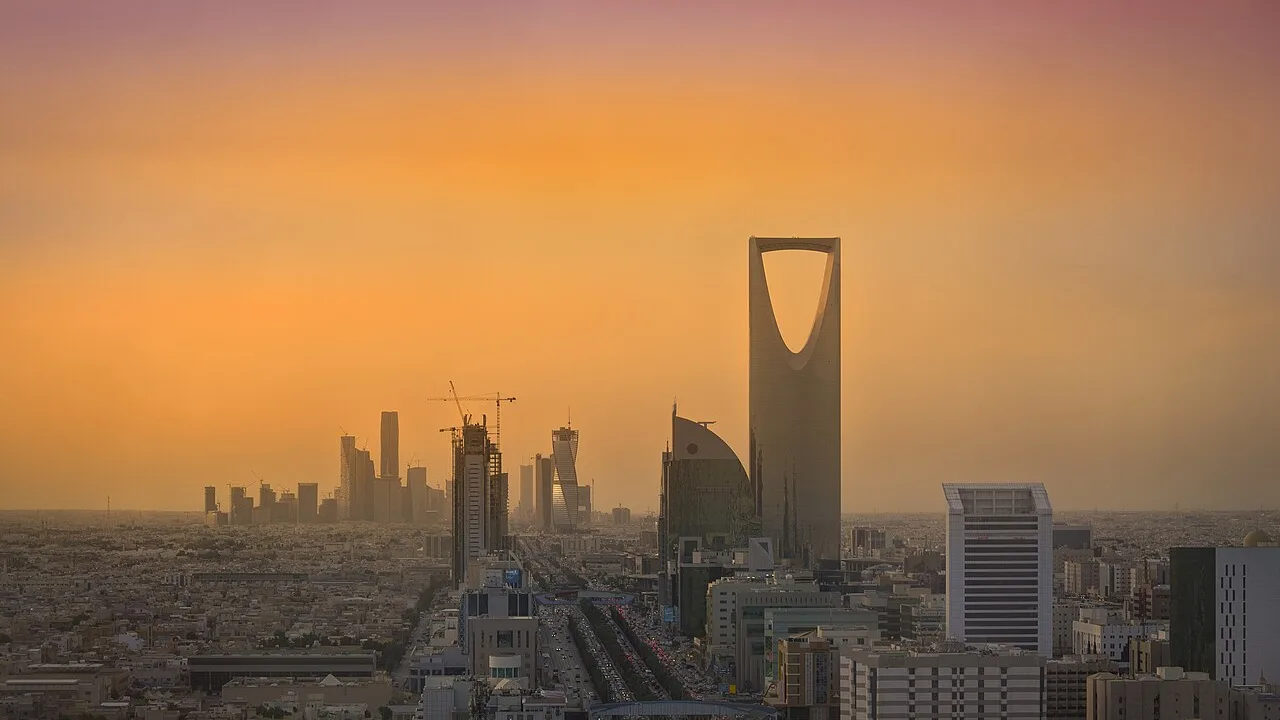
Attribution for Saturday's strike rests on coalition statements and tiered reporting; the Houthis had issued no formal military-spokesman claim at publication time. Casualty figures are reported by Saudi civil aviation authorities and are official but may be updated. This article was published on a Saturday; markets were closed, so no market snapshot box is carried.


