
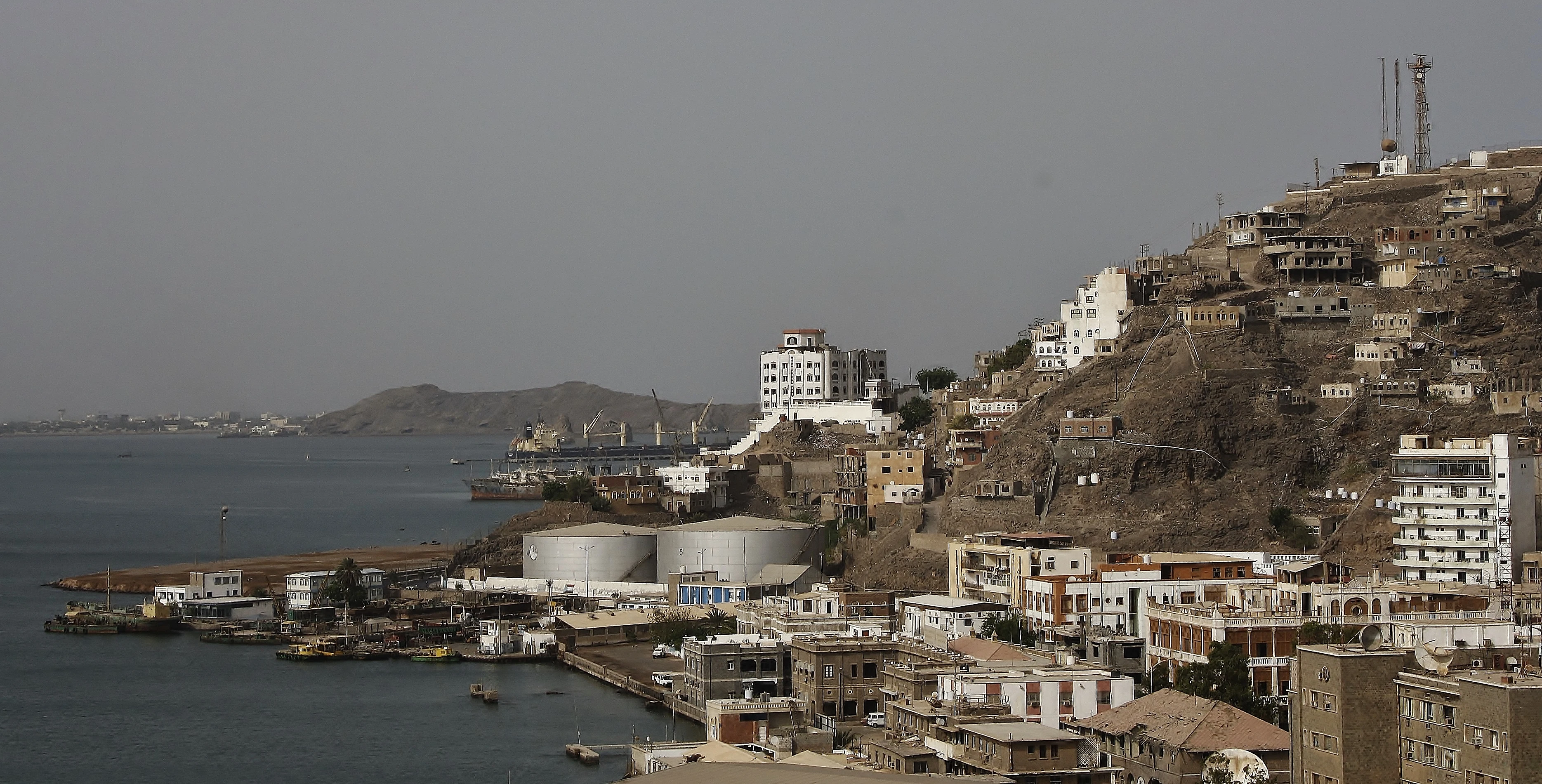
Two Houthi missiles targeted the international airport of Aden, southern Yemen, early on Wednesday, but no casualties were reported, Reuters reported, citing the media office of Aden's security department. The strike is the first on Aden — seat of Yemen's internationally recognized government — in the current round of escalation, and it came hours after the Saudi-led coalition said it had intercepted and destroyed a Houthi ballistic missile heading for the southern Saudi city of Khamis Mushait.
What happened overnight?
The two missiles struck the airport area before dawn on Wednesday, according to Aden's security department, as reported by Reuters. The airport is the main international gateway serving the parts of Yemen outside Houthi control, and the attack marks a sharp expansion of the Houthis' missile campaign beyond Saudi territory to the government's own seat of power.
The Wall Street Journal reported that Aden's security forces said the two missiles "targeted a vital civilian facility and put the lives of passengers, airport workers and flight crews at risk," though no one was wounded.
Earlier on Wednesday, the Saudi-led coalition said it had intercepted a Houthi ballistic missile launched toward Khamis Mushait, according to Saudi state television. The coalition said the missile threats had originated from the Houthi-controlled capital Sanaa and the governorates of Saada and Amran. Separately, the Journal reported coalition spokesman Maj. Gen. Turki al-Maliki saying another Houthi missile aimed north of Riyadh was intercepted and destroyed early Wednesday.
Following the coalition's statement, Houthi-affiliated Al Masirah TV said Saudi forces had carried out a strike in an area spanning the central Yemeni governorates of Ibb and Taiz. There was no immediate confirmation of that strike from the Saudi-led coalition, and it should be treated as an unconfirmed claim.
Why is the fighting escalating now?
The Aden attack lands in the middle of a rapid two-way escalation. The Yemeni government launched Operation "Dawn of Yemen" on Monday — a major counteroffensive, backed by roughly 100 Saudi coalition fighter jets, aimed at retaking the Red Sea coastline and the Bab el-Mandeb Strait from the Houthis after weeks of rebel advances. The government says its forces have entered areas around the strait, including parts of Dhubab and the outskirts of Mokha.
The Houthis have answered with an expanding missile and drone campaign against Saudi Arabia: on Monday evening their attacks damaged the airports in Jazan and Najran, wounding three people, and the group has claimed strikes on Riyadh's airport and an Aramco refinery in Rabigh — claims Riyadh has not confirmed. The Aden strike appears to be the Houthis' response to pressure on the coast: hitting the government's gateway city while defending their coastal gains.
Regional aviation is now directly in the line of fire. The European Union Aviation Safety Agency has warned airlines that "recurrent missile and drone attacks, together with the activation of air-defense systems, create an increased risk of misidentification of civil aircraft." The Houthis have repeatedly warned international airlines against using Saudi airspace, except over the Muslim holy cities of Mecca and Medina.
What is the broader context?
The Journal described Yemen as "the most active battlefield in the wider conflict with Iran," with the Houthis' position along the Red Sea and Bab al-Mandeb letting them pressure Saudi energy shipments at a moment when traffic through the Strait of Hormuz is already disrupted by the US–Iran war. The Journal also reported that an attack on Tuesday in the Strait of Hormuz wounded 12 mariners aboard the Panama-flagged commercial vessel MT On Peace, 11 of them Indian — a claim made by India's Ministry of External Affairs and not yet independently confirmed in tiered reporting.
Yemen's war began in 2014 when the Houthis swept into the capital, Sanaa; a Saudi-led coalition entered the war on behalf of the internationally recognized government in 2015. The conflict has killed more than 150,000 people and pushed the country toward famine, per the Journal. After an uneasy ceasefire held for years, the Houthis launched a new offensive in September 2026, seizing coastal territory and a strategic Red Sea island — the gains the government's counteroffensive is now trying to reverse.
What comes next?
The key question is whether the Houthis' strike on Aden prompts a heavier coalition response — and whether their campaign expands from Saudi airports and the government's gateway city to the oil infrastructure both sides have so far mostly avoided confirming. The coalition has already stepped up airstrikes in support of the ground offensive; Monday's activation of the Mecca Joint Defence Agreement, under which Turkey and Pakistan agreed to deploy forces to Saudi Arabia, adds a regional dimension that the breaking-watch covered in a companion article. Watch for the government's ground campaign around Mokha and the strait, and for any confirmed Houthi strike on energy facilities — that is the signal that would move oil markets materially.
---
Attribution notes: the Aden airport missile strike and the Khamis Mushait interception are confirmed by Reuters and the Wall Street Journal, citing official statements. The Al Masirah claim of Saudi strikes in Ibb and Taiz is unconfirmed. Houthi claims of strikes on Riyadh's airport and the Rabigh refinery are unverified. The MT On Peace casualty report rests on India's Ministry of External Affairs as carried by the Journal — no second tiered source yet. Government and Houthi battlefield claims around Bab el-Mandeb are covered in our companion articles on the "Dawn of Yemen" offensive.


