
The United Nations envoy for Yemen warned the Security Council on Friday that the country has "fallen back into full-scale war," as a Houthi offensive launched in September sharply escalated the 12-year-long conflict and displaced more than 200,000 people. The warning came the same day Europe's aviation regulator expanded its alert for Saudi airspace and a leading flight-safety organization told airlines to avoid Saudi Arabia entirely, after Houthi missile strikes on Riyadh's King Khalid International Airport killed three Saudi nationals.
What did the UN Security Council hear?
The Council met on Friday to discuss Yemen, where the September Houthi offensive has revived a war that had been largely dormant since a 2022 truce, according to UN News. Cross-border missile and drone strikes on Saudi airports and energy infrastructure have continued through the week, while fighting between the Iran-backed Houthis and Saudi-backed government forces is intensifying around Taiz, Yemen's third-largest city.
Government forces say they have recaptured the port city of Mocha on the Red Sea coast; that claim could not be independently confirmed. Aid agencies warned the Council of surging cholera cases, rising child casualties and deepening hunger, and diplomats discussed efforts to prevent a wider regional conflict, including threats to Red Sea shipping. Spillover from the US-Iran war has also provoked a new displacement crisis, UN News reported.
How is aviation responding?
The European Union Aviation Safety Agency (EASA) said on Friday it was recommending airlines avoid additional portions of Saudi airspace after the Houthi attack on Riyadh airport. In an updated conflict-zone bulletin — first issued on September 30 — the regulator said recent attacks had demonstrated the Houthis' ability and intent to strike targets deeper inside Saudi territory, including the capital, and added a further area in north-western Saudi Arabia to the advisory.
EASA warned that "recurrent missile and drone attacks, together with the activation of air-defence systems, create an increased risk of misidentification of civil aircraft," alongside risks from missile and drone overflights, interception activity and falling debris. Separately, OPSGROUP — a flight-risk organization with almost 10,000 aviation professionals — sent members a "do not fly" warning for Saudi Arabia on Friday, citing risks of sustained missile attacks and "misjudgment" in defensive responses, and recommended avoiding operations in the country entirely, including its use as an enroute alternate.
Saudi Arabia's civil aviation authority said on Friday that air traffic at Riyadh airport had returned to normal, with flight-tracking site Flightradar24 showing a gradual resumption of flights, including from some Middle Eastern airlines.
What is the state of the fighting?
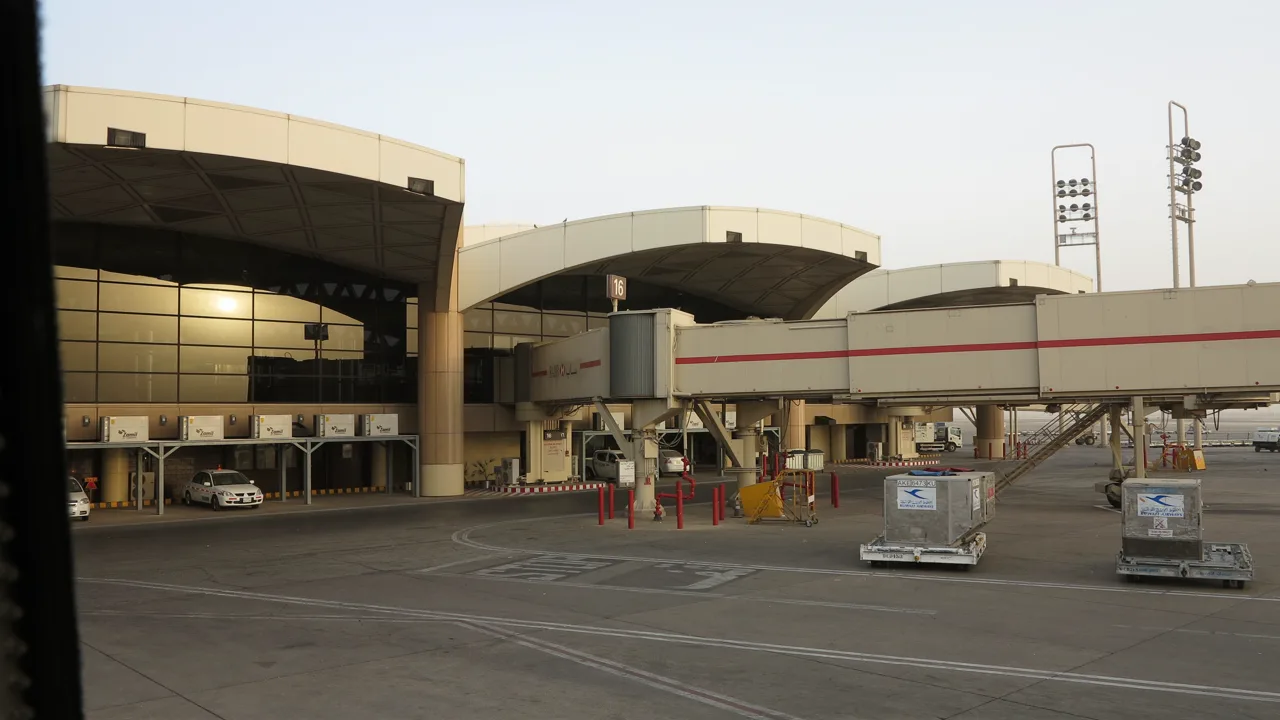
Thursday's attacks on Riyadh airport killed three people, Saudi authorities said on Friday, and injured several others. The strikes damaged a Saudia Airlines plane and sent smoke billowing over the airport; Saudia said one of those killed was its employee. Many airlines canceled flights to the Saudi capital days before it is due to host a major meeting of global oil chiefs. The Houthis said on Thursday they had struck the airport with two cruise missiles and renewed their threats against airlines flying to Saudi Arabia.
Saudi airstrikes hit Houthi targets in the Yemeni capital Sanaa overnight, Houthi officials and affiliated media said, and a Saudi-led coalition backing government forces said it had destroyed three Houthi missile launch platforms, warning of a firm response to attacks on civilians. Earlier in the week, Houthi strikes on airports in the kingdom had already killed three people.
On the ground, the Houthis have encircled government forces in Taiz and are defending positions on the Red Sea coast against a Saudi-backed offensive. Government forces took back territory around the Bab el-Mandeb coastline on Monday after intense Saudi airstrikes, but fighting continues there, and Houthi forces have cut a key road connecting Taiz with advances in mountain districts. The group has announced repeated rounds of ballistic missile fire at Saudi Arabia, proclaiming it would shut down Saudi airspace and warning workers at oil facilities that it would strike those too. Riyadh is seeking assistance from Pakistan and Turkey — its partners in a mutual defence pact — to help ward off the attacks, Reuters reported.
Why does this matter for energy markets?
Reuters described Yemen's civil war as having rapidly become the fiercest front in the wider regional confrontation triggered by the US-Israeli attack on Iran that began on February 28. The conflict is critical for global energy markets: the Houthis are firing on shipping in the Red Sea and at its southern gateway, the Bab el-Mandeb Strait, further squeezing Gulf oil supplies while Iran partly blocks the Strait of Hormuz. Last month the Houthis staged a lightning advance down Yemen's Red Sea coast, taking full control of the coastline around the strait and prompting Saudi Arabia to re-enter the long-dormant conflict in support of a government counteroffensive.


