
A projectile struck Terminal 4 at Riyadh's King Khalid International Airport on Sunday, causing a fire and injuring an unspecified number of people, and Saudi authorities later confirmed that King Fahd International Airport in Dammam had also been struck. The attacks came a day after a missile hit the same Riyadh terminal complex and killed 13 people. Yemen's Houthis claimed responsibility for Saturday's strike and for a wave of Sunday operations, while reporting that Sanaa's airport had been hit again in what they blamed on Saudi strikes.
What happened at Riyadh airport on Sunday?
Saudi Arabia's civil aviation authority said an "unidentified projectile" targeted Terminal 4 on Sunday, causing a fire, Reuters reported. The number of injured was not specified, and officials said damage assessment was still under way. The Saudi-led coalition said air defences had intercepted a cruise missile near the airport, and later said a drone had been intercepted and destroyed over the Eastern Province. AFP journalists in Riyadh reported hearing blasts in the capital on Sunday, according to The Times' live coverage, and UN News reported that Saudi authorities said late on Sunday that another projectile had hit a passenger terminal, causing further injuries and a fire.
The airport has been closed since Saturday's attack. Riyadh authorities also suspended in-person schooling across the capital, shifting classes online from Sunday until Thursday, Reuters reported.
What happened at Dammam airport?
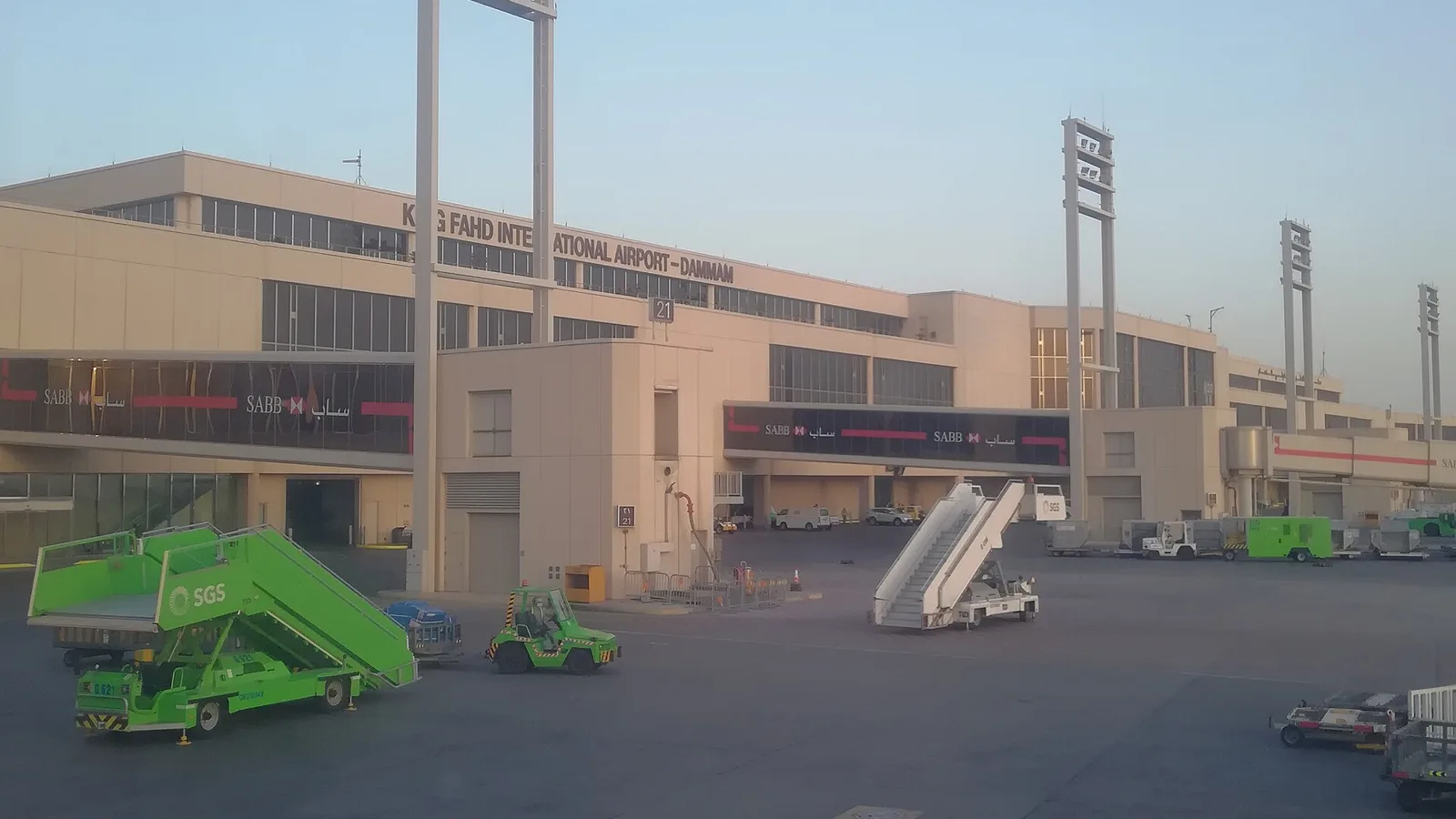
The civil aviation authority confirmed late on Sunday that Dammam's King Fahd International Airport had been struck, and said damage assessments and safety inspections were under way, Reuters reported. A passenger aboard a taxiing aircraft told Reuters they saw a projectile strike the tarmac beside parked aircraft at about 8:30 p.m. local time, causing a fire; the aircraft returned to the gate and passengers were told to leave the airport. Flight-tracking data showed delays and cancellations at Dammam, the kingdom's third-largest airport, which serves the capital of the oil-producing Eastern Province.
Who claimed the attacks, and what else was targeted?
In a televised statement on Sunday, Houthi military spokesman Yahya Saree claimed responsibility for Saturday's Riyadh attack and said the group had also attacked Dammam airport and two Saudi Aramco facilities, Reuters reported. In a separate Telegram post reported by The Times, the group said it had carried out four operations in 24 hours, naming King Khalid airport, Dammam's King Fahd airport, the Aramco Shedgum facility and the Tanajib refinery. Saudi Arabia's government media office and Aramco did not respond to requests for comment, Reuters reported. The Houthis renewed their warning to airlines and travellers against using Saudi airports, exempting Mecca and Medina.
The Houthis said Saudi Arabia had carried out 124 air strikes across Yemen in the previous 24 hours, including on Sanaa and Saada — a figure reported by Reuters as the group's claim, with no independent confirmation available. The Associated Press reported that Sunday's Riyadh strike came shortly after the Houthis said Sanaa's airport had been struck again and blamed the Saudis. The Houthi-run health ministry said a child was killed and six people were wounded in a suspected Saudi strike on a house in Sanaa, and said 91 Yemenis had been killed by the coalition in five weeks; the AP noted there was no immediate Saudi comment on those claims.
What is the toll, and what happens next?
India's embassy in Riyadh said on Sunday that an Indian citizen wounded in Saturday's attack had died, raising the toll to 13 killed and more than 300 wounded, Reuters and the AP reported. The dead from Saturday also included four Saudis, two Bangladeshis, and nationals of the United States, Egypt, Jordan, Syria, Palestine and Sudan, according to Saudi authorities cited by both wires.
A long-planned international energy conference went ahead in Riyadh on Sunday about 10 km from the airport, Reuters reported. The US embassy advised American citizens to avoid Saudi airports, according to The Times. President Donald Trump said on Saturday he was considering whether the United States would join Saudi strikes on the Houthis; the AP reported there was no immediate White House comment on Sunday.
Attribution of the Sunday attacks rests on the Saudi-led coalition's and civil aviation authority's statements and on the Houthis' own claim of responsibility, as reported by Reuters, the AP and The Times. The Houthis' figure of 124 coalition air strikes and the Houthi-run health ministry's casualty figures for Yemen are the group's claims and had no independent confirmation at publication time. This article was published on a Sunday; markets were closed, so no market snapshot box is carried.


