Update — 19 November, 15:10 UTC: Israel says the tank raid has ended; residents say the road is still dangerous
Israel's military said on Thursday it had concluded its tank raid into central Gaza and reopened the Salahudeen road, Reuters reported — but residents said the route remained dangerous, with sporadic gunfire forcing vehicles and people to stay away. The raid, against what the military described as a suspected Hamas tunnel west of the Yellow Line, was its highest-profile ground incursion across the ceasefire line since the October 2025 truce halted major fighting, Reuters reported. The conflict is tracked on this site's Middle East hub and the ceasefire's terms are set out in our reporting on the Board of Peace's warning that the ceasefire could collapse.
What we know
Posting a message to the people of Gaza on Facebook, the military said its forces had ended an "activity against Hamas infrastructure" in the area and that the main north-south Salahudeen road had been reopened for traffic, Reuters reported. Residents said on Thursday that the route remained dangerous, with sporadic gunfire being heard, forcing vehicles and people to stay away, Reuters reported. Palestinian families had fled a day earlier as the tanks rolled down the road — the first time since the October 2025 ceasefire that Israeli troops publicly announced a raid deep beyond the boundary line between Israeli and Hamas control, Reuters reported.
What is claimed
The Hamas-run Gaza government media office put the number of people who quit the area on Wednesday at around 6,000, Reuters reported. That figure is the Hamas-run office's own count, carried by Reuters from that single source; no independent count was reported in the source opened for this update, and it is published here on that basis.
What is unverified
Some footage on social media, which Reuters could not immediately verify, showed sand piles on the Salahudeen road and damage to shelters in the area where the tanks had operated, Reuters reported. Whether displaced families have been able to return, and whether the road is in practice passable, was not established in the source opened for this update: the military says it is reopened, and the residents Reuters spoke to say it remains too dangerous to use.
Update source: Reuters (19 November 2026, by Nidal al-Mughrabi, read in full via the duke.fm verbatim Reuters carrier, published 10:08 UTC). The conclusion of the raid and the reopening of the road are the Israeli military's own announcement, reported by Reuters (Tier 1) and published as the military's statement; the residents' account of continuing danger is Reuters' own reporting from Gaza. The 6,000-displaced figure is the Hamas-run Gaza government media office's claim, published with its single-source limitation stated above.
---
Israeli tanks crossed the Yellow Line into central Gaza on Wednesday and rolled along the Salahudeen road, the territory's main north-south highway, in what residents said was the first ground advance of its kind since the October 2025 ceasefire — and dozens of displaced Palestinians fled their tents and shelters again as shelling and airstrikes hit the area around the Nuseirat and Bureij refugee camps. Palestinian medics, hospital officials and Gaza's civil defence agency said three Palestinians were killed in Israeli strikes across Gaza on Wednesday. Hamas called the raid a flagrant violation of the ceasefire; Israel's military said it was a precise operation west of the Yellow Line to remove a threat to its troops, and that it was responding to Hamas ceasefire violations.
What happened in central Gaza?
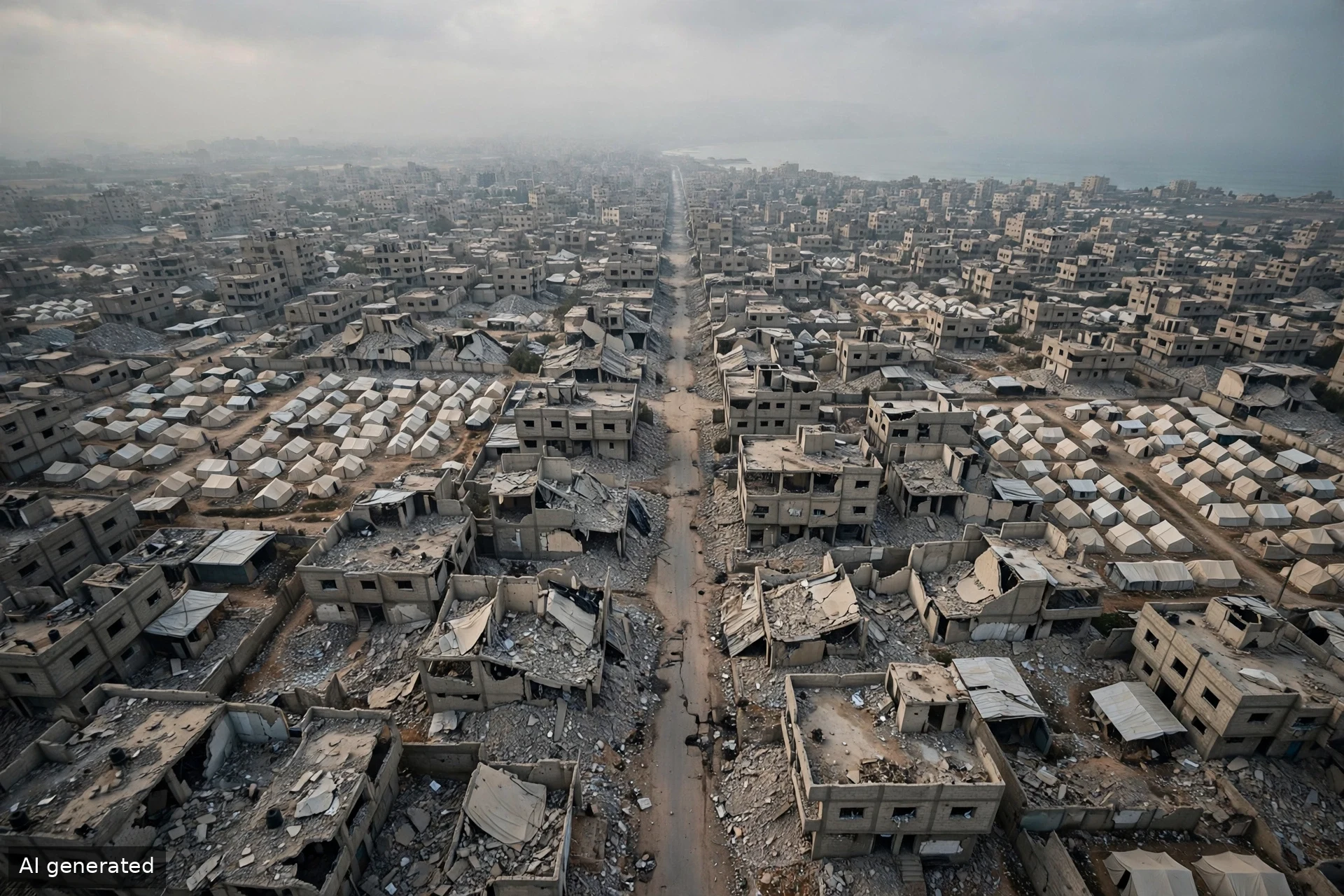
Israeli tanks advanced into an area of central Gaza that Israel withdrew from under the 2025 ceasefire, Reuters reported, rolling along the Salahudeen road west of the Yellow Line — the boundary between Israeli and Hamas control since the ceasefire was struck in October last year. The tank advance was the first of its kind to traverse the line since the ceasefire, some residents told Reuters; Al Jazeera described it as the first broad ground offensive since the ceasefire was signed more than a year ago. An AFP journalist saw Israeli tanks position themselves east of the Nuseirat refugee camp, and Al Jazeera's correspondents reported tanks operating near Salah al-Din Street, east of Nuseirat and north of the Bureij camp, amid explosions, live ammunition and artillery shelling. A Gaza security source told AFP there was "intense Israeli artillery shelling" north of Nuseirat, with military vehicles in central Gaza amid gunfire and airstrikes since midday.
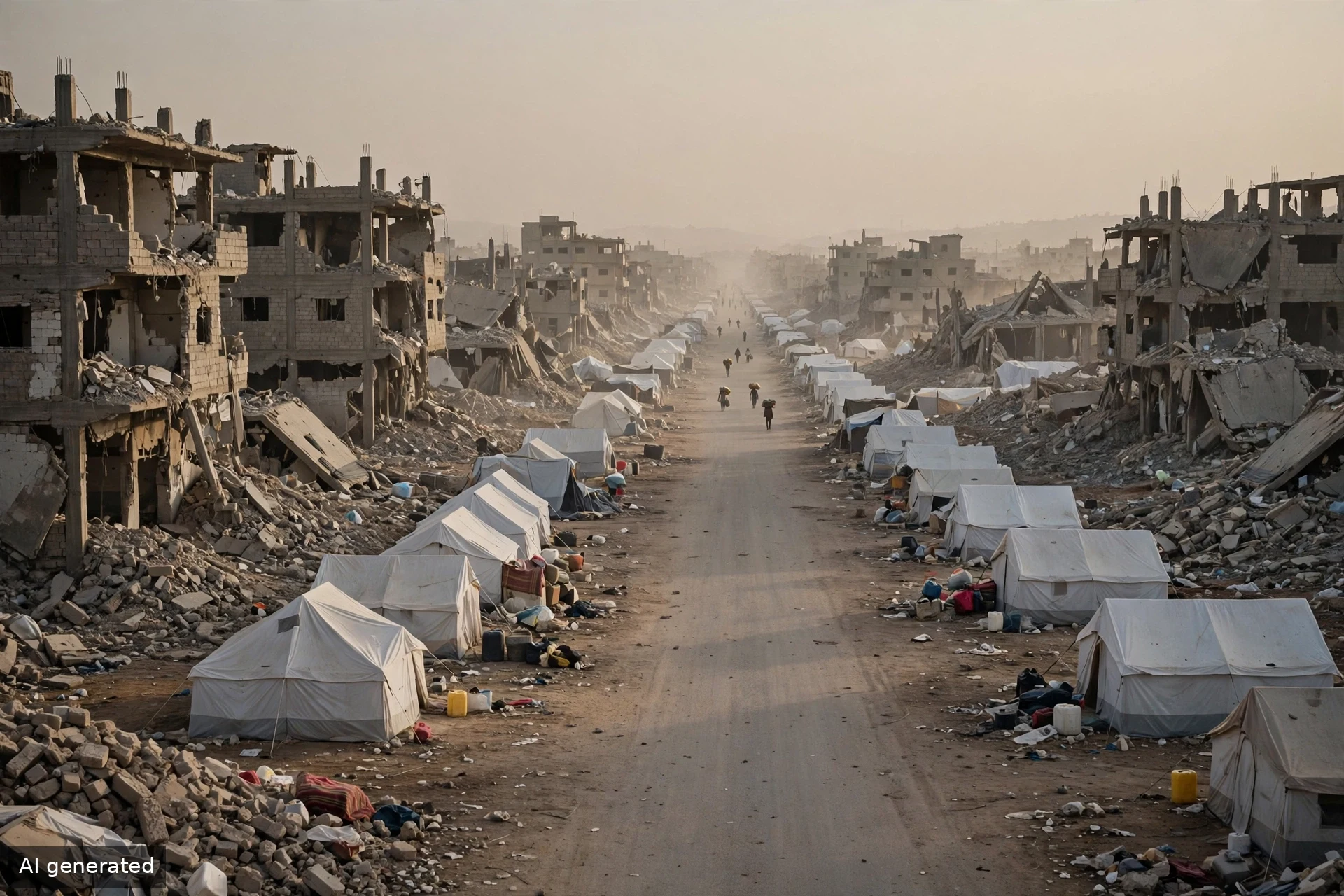
Dozens of Palestinians, most of them displaced many times since 2023, piled their belongings onto bicycles, wheelchairs, motorcycles and vehicles and fled, Reuters reported. "We are tired, I swear to God, we are tired," said Salam Aql, who told Reuters the military had ordered residents to leave but the family had wanted to stay until gunfire started and a boy was hit in the leg by a bullet: "Once he was wounded, we could not stay any longer." COGAT, the Israeli defence ministry body for civilian affairs in Gaza, urged residents of the targeted neighbourhoods to leave for the duration of the operation, warned international aid organisations against movement in the affected areas, and said the Salah al-Din road would be closed to traffic near the Bureij and Nuseirat camps, AFP reported. Al Jazeera's correspondent in Gaza, Hind Khoudary, said the Israeli announcement she saw did not issue an evacuation order, but announced an operation and demolitions; the two accounts could not be reconciled in the reporting opened for this article.
What did Israel and Hamas say?
The Israeli military said it had "launched a precise operation within the Gaza Strip earlier today west of the Yellow Line… to remove a threat posed to IDF troops operating in the Gaza Strip," that "there is Hamas infrastructure in the area in the central Gaza Strip," and that the operation involved military and Shin Bet personnel, AFP reported. Al Jazeera carried the military's statement that it reserves "the freedom to act and manoeuvre whenever necessary to eliminate any immediate threat in the Gaza Strip." The military told AFP it was responding to Hamas ceasefire violations, and Israel says Hamas has recently been regrouping and rearming, Reuters reported.
Hamas said the raid and the forced displacement of Palestinians marked a ceasefire violation and a dangerous escalation, Reuters reported. In its fuller statement carried by Al Jazeera, Hamas called the operation "a flagrant violation of the ceasefire agreement" and said that "forced evacuation orders and the displacement of citizens carried out under the threat of violence and bombardment constitute a war crime and a flagrant violation of international humanitarian law," holding Israel and the United States responsible for the repercussions.
How many people were killed on Wednesday?
Three Palestinians were killed in Israeli strikes across Gaza on Wednesday, and the three wires' accounts converge on the same three locations. Palestinian medics said an Israeli airstrike near the location of the army raid killed one person, and that two more people were killed by Israeli fire in separate incidents, one in Deir al-Balah and one in Gaza City, Reuters reported. Gaza's civil defence agency gave the same three locations to AFP — near the Nuseirat camp, in Gaza City, and outside the Deir el-Balah police station — and AFP reported it was not immediately clear whether the three strikes were linked to the ground operation. Al Jazeera's hospital sources placed the central-Gaza death at al-Mughraqa, north of Nuseirat, where an official at al-Awda Hospital said an airstrike killed one person and wounded several others, and reported the two earlier drone-attack deaths at Sheikh Ijlin in Gaza City and in Deir el-Balah. The Israeli military told AFP that in the first two strikes it targeted "terrorists" and that it was not aware of the third attack; to Reuters it said it was not aware of any incident in Deir al-Balah and that in Gaza City it had struck a militant. Earlier on Wednesday, Gaza's Ministry of Health said hospitals had recorded seven deaths and received 15 wounded people in the previous 24 hours, Al Jazeera reported.
What does the raid mean for the ceasefire?
It is the ground war returning to ground the ceasefire was supposed to have settled. The October 2025 deal halted major fighting but never halted Israeli attacks or secured Hamas' disarmament, and it left Israeli troops in control of well over half of Gaza — since expanded to around two-thirds — with Hamas holding a sliver of territory along the coast, Reuters reported. Gaza health authorities say at least 1,600 Palestinians have been killed since the ceasefire went into effect; the Israeli military says five of its soldiers have been killed over the same period, Reuters reported, while AFP's tally, based on the Israeli military's figures, put the Israeli toll at seven soldiers and one civilian contractor. The raid came on the same day the US-backed Board of Peace overseeing the truce accused both Israel and Hamas of failing to meet their commitments and warned the ceasefire is in danger of collapse — the subject of this site's earlier report today. For the families who fled Bureij and Nuseirat on Wednesday, that collapse is not a diplomatic scenario: "We fear this may be the start of a broader operation and that displacement will begin anew, as we have not yet recovered from the effects of the previous war and displacement," Mahmoud al-Saafin, 27, of the Bureij camp, told AFP.
Sources: Reuters (18 November 2026, updated filing read in full via the rostered srnnews.com verbatim carrier and the original filing read in full on reuters.com; and the Board of Peace report filing read in full via the rostered wnflsports.com verbatim carrier), Al Jazeera (18 November 2026, read in full via the rostered 234radio.com verbatim carrier, updated 18:59 UTC) and AFP via France 24 (18 November 2026, read in full via thevoicenewsmagazine.com). The ground operation, the tank advance across the Yellow Line and the flight of residents are confirmed by three independent outlets in two tiers — Reuters and AFP (Tier 1) and Al Jazeera (Tier 2) — with AFP's own journalist observing the tanks east of Nuseirat. The characterisation of the advance as the first of its kind since the ceasefire is published as the residents' account carried by Reuters and as Al Jazeera's description of the first broad ground offensive since the ceasefire. The three Wednesday deaths are reported by all three outlets from Palestinian medics, hospital officials and the civil defence agency, with the same three locations; whether the strikes were linked to the ground operation was not established in the sources opened, and the Israeli military's responses are published beside the toll. The since-ceasefire toll is published as the Gaza health authorities' figure (at least 1,600, carried by all three outlets; AFP's tally is based on the Gaza health ministry, whose figures the United Nations considers reliable). The Israeli since-ceasefire toll differs between the wires — five soldiers in Reuters' report of the military's figure, seven soldiers and a civilian contractor in AFP's tally — and both are stated. COGAT's instruction to residents to leave is reported by AFP and by a resident speaking to Reuters; Al Jazeera's correspondent said the announcement she saw contained no evacuation order, and that discrepancy is stated in the body. No markets snapshot box is included: no source opened for this article reported a market move on the operation.