The body charged with overseeing Gaza's ceasefire told the UN Security Council on Tuesday that the agreement could collapse unless its terms are finally implemented — a warning delivered after a year in which Israeli strikes have continued, aid has stayed restricted, and as many as 1,650 Palestinians have been killed since the truce took effect, according to Gaza health authorities. The Board of Peace report, a copy of which was obtained by the Associated Press, says the distance between what was agreed and what is happening on the ground is now the principal risk to the process, and that Gaza's two million people face "another winter in tents and rubble." The board calls on both Israel and Hamas to uphold last year's commitments and urges the Security Council to lend its full weight to the agreement it endorsed.
What did the report say?
"The distance between what has been agreed and what is happening on the ground nonetheless remains the principal risk to the process," the report says. "A ceasefire that delivers nothing visible cannot be sustained indefinitely. Should it collapse, there would be no road map to return to, no administration to deploy and no enabling environment to rebuild."
It is the board's second bleak assessment in six months. Its first report was delivered in May by its director-general Nickolay Mladenov, a former UN Mideast envoy, who acknowledged then that the truce brokered by President Donald Trump had stalled since taking effect in October 2025, with the deadlock over disarming Hamas paralysing progress. The new report echoes the same issues, pointing to continued Israeli strikes in Gaza and Hamas military activity as the obstacles to both sides adhering to the road map. Its closing formula is addressed to both parties: "Neither party may treat the other's delay as license for its own inaction, and together these obligations are the only route to Israeli withdrawal and reconstruction at scale." The end result, it says, "must lead to the credible pathway to Palestinian self-determination and statehood … and no unilateral step should be allowed to foreclose it."
Why is the interim administration still not in Gaza?
Because the decisions that would let it deploy have not been taken in Jerusalem, on the board's account. The technocratic civil administration the board created to run Gaza on an interim basis has still not been allowed by Israel to take up its job in the territory. "The absence of decisions by the government of Israel on the necessary conditions and arrangements for the training, deployment and return of civilian police to Gaza continues to impede full implementation of the Comprehensive Plan," the report said. "The Board of Peace calls on the government of Israel to take these decisions without delay."
The delay cascades. Without the police decisions, the international stabilization force cannot deploy — and that force is key to Israel's withdrawal of troops from Gaza, the disarmament of Hamas and the start of reconstruction. The terms the board is trying to implement are set out in this site's Gaza ceasefire status explainer. CNN's account of the same deadlock, published on Sunday, describes the board as sidelined and unable to make substantive progress on the 20-point plan: on Friday it announced "very constructive discussions" with 17 countries about a civilian Gaza police force under the Palestinian technocratic committee, but that committee has yet to enter the enclave and the security force has yet to materialize.
What is happening on the ground while the plan stalls?
The killing has not stopped. As many as 1,650 Palestinians have been killed since the ceasefire took effect, according to Gaza health authorities, AAP reported; CNN, citing the Palestinian Ministry of Health, puts the toll at more than 1,600 people killed in near-daily Israeli strikes since the ceasefire was signed. On Saturday night Israel killed Samir Mahmoud Abu Younis, commander of Hamas' Rafah Brigade, in southern Gaza — a killing both Hamas and the IDF confirmed, CNN reported; he had held the post for two months, since his predecessor was killed in September. Defence Minister Israel Katz said the offensive policy in Gaza "will continue – until Gaza is demilitarized and there is no Hamas."
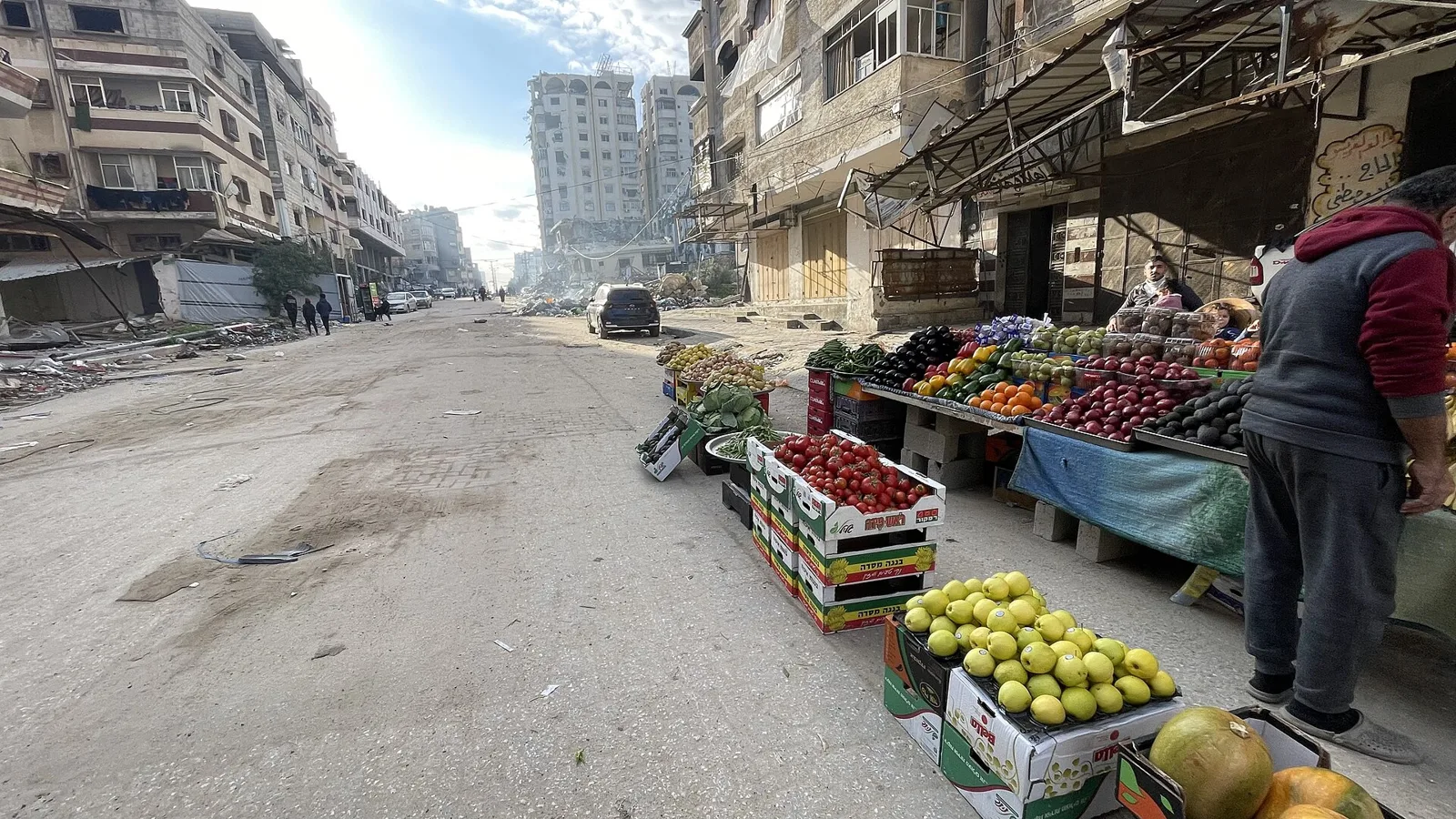
Last week an Israeli strike on Nasser Hospital in Khan Younis killed at least six people, including Dr. Rizk Abu Shaira and a 13-year-old boy who was awaiting surgery, according to Palestinian officials cited by CNN; 40 others were injured. The IDF said it had targeted the Khan Younis Brigade commander and others it said were hiding inside the hospital, but did not answer when pressed on whether he was killed. Doctors Without Borders condemned the strike. On aid, the board's report says restrictions imposed by Israel on the entry of supplies and equipment, compounded by funding shortfalls, continued to impede preparedness and response efforts, and it calls for immediate scaled-up entry of shelter and winterization materials and approvals for pumps, generators and heavy machinery. Four foreign ministers — of Australia, Canada, Italy and the United Kingdom — said on Sunday that 150,000 tents and other vital supplies were being held at the border. Israel says more than 91,000 tents had entered Gaza ahead of winter, but it has refused to allow in the heavy equipment needed for large-scale clean-up and rubble removal, and its Coordinator for Government Activities in the Territories says reconstruction can begin only after Hamas fully disarms. Seasonal rains last week swamped tens of thousands of tents across Gaza, where nearly two million Palestinians remain displaced.
What happens if it collapses?
On the board's own terms, there is no fallback: no road map to return to, no administration to deploy, and no enabling environment to rebuild. The report sets no hard deadline. What it asks for instead is pressure — the Security Council putting its full weight behind the agreement it endorsed last year, and both parties treating the other's delay as no excuse for their own. Until then, the ceasefire the board oversees remains what its report describes: an agreement whose terms exist on paper while the strikes, the blocked supplies and the winter arrive on the ground.
Sources: the Associated Press (17 November 2026, wire read in full via ktsa.com) and the Australian Associated Press (18 November 2026, read in full on aapnews.aap.com.au) for the Board of Peace report's contents and wording — both wires report the same report the AP obtained, and the report's own quoted language is the primary material here; and CNN (15 November 2026, read in full on cnn.com) for the ground picture (the Rafah Brigade killing, the Nasser Hospital strike, the tents dispute and the board's sidelined status). The since-ceasefire toll is published as the Gaza health authorities' figure: AAP (1,650) and CNN (more than 1,600) both cite the same underlying source — Gaza's health authorities, the Palestinian Ministry of Health in Gaza — and no independent count of the toll was available in the sources opened; the figure is reported as that authority's toll, with its sourcing stated, in line with this site's Gaza editorial directive. The hospital-strike toll is Palestinian officials' figure via CNN, with the IDF's targeting claim published beside it. No markets snapshot box is included: no source opened for this article reported a market move on the report.