
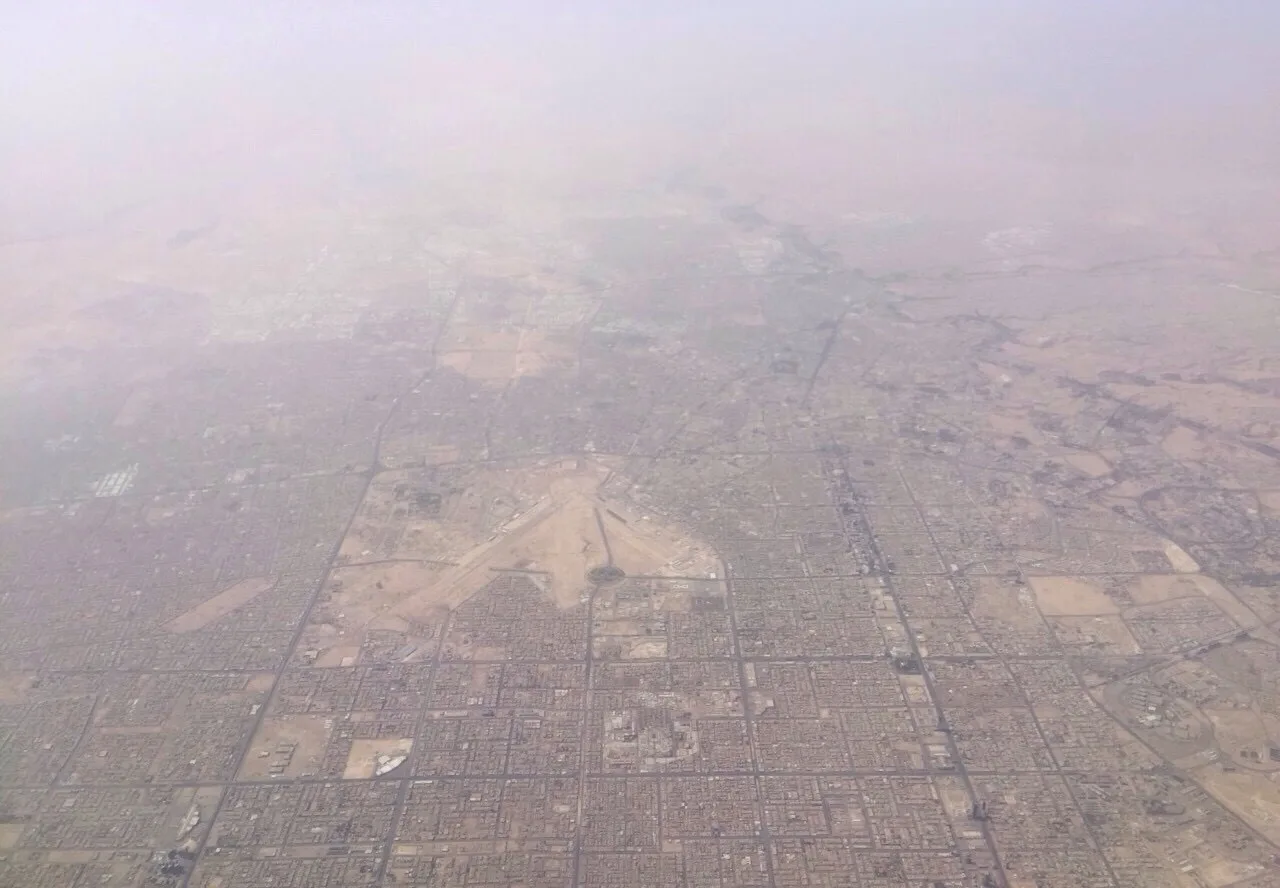
Saudi Arabia's civil aviation authority said on Friday that three Saudi nationals were killed and several people of various nationalities were injured in two attacks on Riyadh's King Khalid International Airport on Thursday. The national carrier Saudia identified one of the dead as its pilot, Captain Hamoud Ali Al-Kalthami, and confirmed that one of its aircraft was damaged on the ground, with no passengers aboard. A Reuters wire on Friday carried the same casualty figure, citing the Saudi aviation authority.
What happened at the airport?
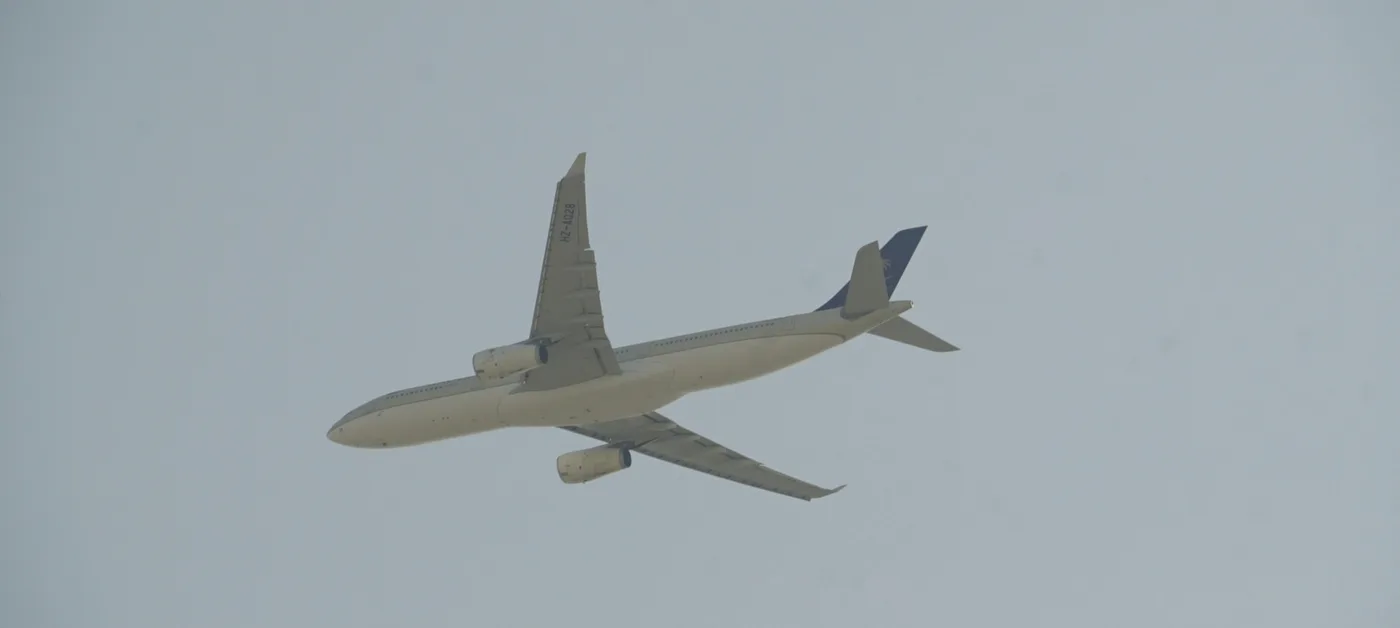
The first attack targeted airport facilities, while the second struck an aircraft belonging to Saudia, according to the General Authority of Civil Aviation (GACA). Smoke was seen rising from a stationary aircraft at the airport earlier on Thursday, according to a witness and three people briefed on the matter, Reuters reported. Images posted on X and verified by CNN showed smoke rising over Terminal 4 at King Khalid International Airport as well as what appeared to be a damaged Saudi aircraft, while the Associated Press cited a witness as saying several explosions had been heard in Riyadh, including at the airport.
Saudia announced that its flights and operations at the airport had returned to normal from 6pm Saudi time on Thursday. GACA said emergency response teams had responded immediately, the injured had been taken to hospital, and air traffic had returned to normal.
What do we know about the dead and injured?
GACA said three Saudi nationals were killed and several other Saudi citizens and residents of different nationalities were injured, with conditions ranging from minor to critical; the authority did not give a total for the injured. Saudia identified the pilot as Captain Hamoud Ali Al-Kalthami, confirming his death in a statement on Friday and paying tribute to his career in an obituary.
The fatalities follow a series of attacks on Saudi aviation infrastructure earlier this week: on October 6 and 7, separate attacks on Abha International Airport and King Khalid International Airport killed three foreign nationals and injured 36 others, according to GACA. Those killed included two female residents of Moroccan and Algerian nationality in Abha and a Sudanese resident in Riyadh. GACA did not identify those responsible for Thursday's two attacks, though Yemen's Iran-aligned Houthi movement has claimed responsibility for airport strikes in recent days.
Why are airlines suspending flights?
Lufthansa Group told Reuters it would suspend flights to Riyadh through October 16, citing "current developments in the Middle East." India's largest airline IndiGo said it had cancelled all flights to and from Riyadh until October 9, while Air India and Akasa Air said they had cancelled all flights to the Saudi capital until October 10. Air India added that a flight from Delhi to Riyadh turned back to the Indian capital on Thursday.
The suspensions follow renewed Houthi threats against airlines after the group claimed an attack on the Saudi capital's airport. The Houthis said they had struck King Khalid International Airport in Riyadh with a ballistic missile, although there was no immediate confirmation from Saudi authorities at the time. Data compiled by aviation analytics firm Cirium showed 49.7% of departures from Riyadh airport had been cancelled by 1500 GMT, with a further 31 cancellations expected across Saudi airports on Friday. Flightradar24 data showed 162 cancelled departures by 4:40pm Saudi time on Thursday, according to Gulf Business.
The US Mission in Saudi Arabia said it was "aware" of the attacks and warned American citizens to exercise heightened vigilance, cautioning that the conflict "has the potential to escalate." It warned of possible flight cancellations, airspace closures and travel disruptions, and said US government employees now required "special authorization" to use the airport and remained barred from traveling within 20 miles of the Yemen border.
What did the Houthi leader say?
In a televised speech on Thursday, Houthi leader Abdul Malik al-Houthi vowed to continue attacking Saudi targets and confronting Saudi-backed forces in Yemen, and warned Saudi Arabia against continuing its military campaign in Yemen, saying his group had the military capabilities and resolve to withstand a lengthy conflict.
"The Yemeni people today possess all the determination and elements of strength, regardless of how long the war lasts," al-Houthi said, according to CNN. The Houthis, an Iran-backed armed group that controls much of northern Yemen including Sanaa, have been at war with Yemen's internationally recognized government and a Saudi-led coalition since 2015.
The group also renewed warnings to airlines, airport operators, travelers and workers at Saudi airports and facilities, and separately warned employees, engineers and workers at Saudi oil facilities to avoid locations that could become targets of future attacks.
How is Saudi Arabia responding?
Saudi authorities said on Thursday the country had intercepted and destroyed two ballistic missiles fired toward Riyadh and that falling debris had damaged a kindergarten and a medical clinic, CNN reported.
The Saudi-led coalition said late Wednesday that it had responded to a Houthi missile attack near Aden airport by launching a large-scale operation striking 82 Houthi military targets in Saada, Hodeidah, Al-Jawf and Marib provinces. Coalition spokesman Major-General Turki Al-Malki said the operation targeted 11 mountain-based ballistic missile storage facilities in Saada, along with command and control centres, communications systems, weapons depots and gathering sites, and warned that attacks on civilian facilities "will not go unpunished."
International condemnation has mounted, according to Gulf Business: the UN's Stéphane Dujarric stressed that targeting civilians and civilian facilities is prohibited under international humanitarian law and called for maximum restraint; the UK's Foreign Office condemned the strikes as reckless; France called on the Houthis to immediately cease attacks; and the UAE, Bahrain, Kuwait, Oman, Egypt, Jordan, the Arab League and the Muslim World League issued condemnations and solidarity statements with Riyadh.
What is the wider picture?
The airport strikes come as the war has intensified sharply since the summer. On Thursday, Yemen's internationally recognized government said its forces had carried out 1,729 precision strikes against Houthi targets during Operation "Dawn of Yemen," claiming to have killed 1,370 fighters and destroyed or disabled 300 vehicles and other military assets. The same day, the Houthis accused Saudi Arabia of escalating its air campaign, claiming Saudi warplanes had carried out 59 airstrikes and missile attacks across Sanaa and several provinces over the previous 24 hours, causing civilian casualties. CNN said it could not independently verify either claim.
---
Attribution notes: the three-killed figure is reported by both CNN and a Reuters October 9 wire, citing Saudi civil aviation authorities; the pilot's identity comes from Saudia's own Friday statement via Gulf Business. The Houthi attack claims are the group's own statements; Saudi authorities confirmed interceptions and casualties but did not attribute Thursday's attacks to the Houthis in the GACA statement. Battlefield claims from the Yemeni government and the Houthis (1,729 strikes/1,370 killed; 59 airstrikes) are each single-side accounts with no independent verification. The 82-target coalition operation is the coalition's account. The oil price moves reflect Middle East supply concerns broadly, not this incident alone.


