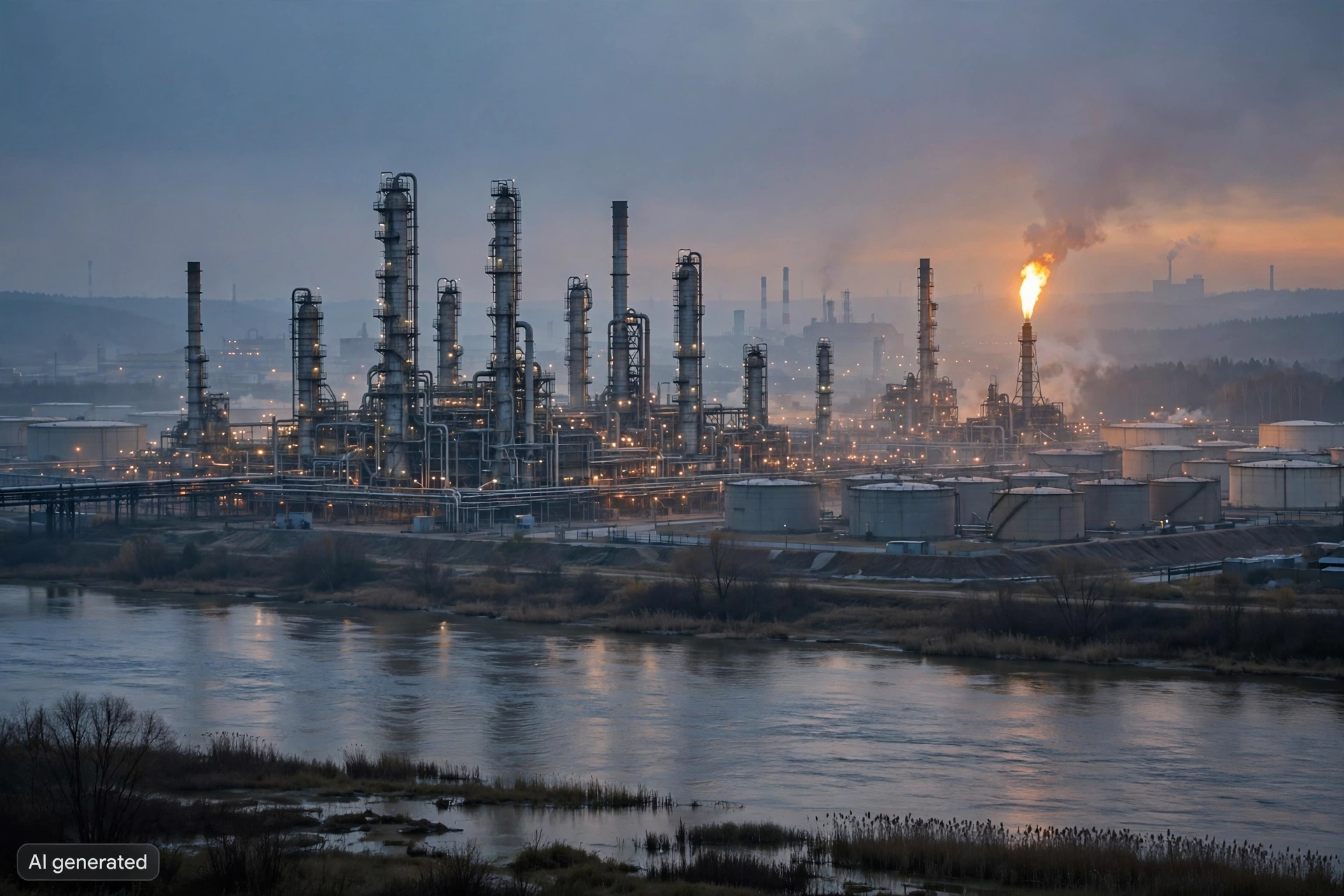
Ukraine's drone attacks have cut Russian oil refining by 45% since late October — processing down to around 400,000 metric tons a day from over 700,000, with 15 of Russia's 35 major refineries disrupted or halted — according to estimates from two industry sources reported by Reuters. The campaign is the energy half of the war tracked on this site's Ukraine hub: the same week Ukraine struck the Crimean Bridge for the third time, it kept up near-daily strikes on the refineries that turn Russian crude into fuel, and the market consequences run through our explainer on how war moves oil prices. The figures below are the industry sources' estimates as Reuters reported them; Russia's energy ministry did not respond to a request for comment, and no official Russian processing data was opened for this article.
What do the industry estimates say?
Following near-daily drone strikes over the last 20 days, crude processing volumes at Russian refineries have fallen to around 400,000 metric tons per day, or around 3 million barrels per day, from over 700,000 metric tons per day at the end of October, the estimates showed. The attacks have disrupted or halted operations at 15 of Russia's 35 major refineries, up from 9 in the middle of last week. The combined nominal capacity of the refineries affected since late October stands at around 500,000 tons per day — approximately 54% of the country's total primary refining capacity of an estimated 930,000 tons per day. Major refineries affected include plants in Ryazan, Yaroslavl, Kirishi and the Volga region, the sources said.
The sources themselves qualify the headline number. Because operating capacity was reduced gradually, average crude processing volumes in November remain above 500,000 tons per day — about 5% to 10% below September and October levels. The 45% figure is the drop in current daily processing against the end-of-October rate, not the November average. Reuters also reported the surrounding pressure: Russia is already facing domestic fuel shortages in some regions and restricted export capacity due to Ukrainian strikes on ports, and reduced refining could tighten global fuel markets and hamper Russia's ability to deliver on a deal to export diesel to the United States.
Did the campaign continue on Thursday?
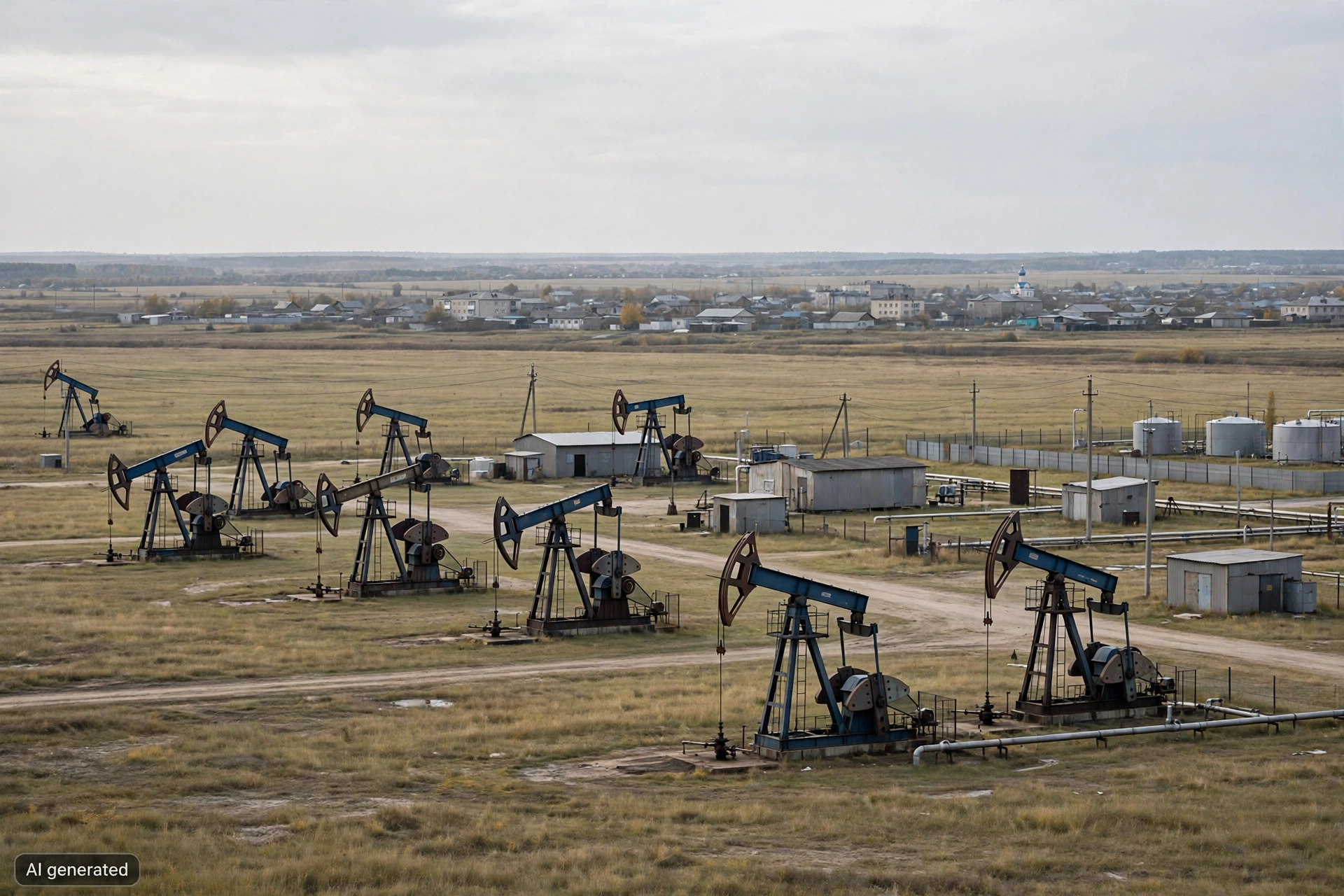
Yes, on the local authorities' account reported by Reuters. Russian air defence systems repelled a Ukrainian drone attack on an oil facility in the Tatarstan region east of Moscow on Thursday, as Ukraine pounded Russian energy infrastructure during the APEC summit in Shenzhen. "An oil facility was targeted. Thanks to the automatic fire suppression system and the coordinated efforts of security services, a major fire was prevented," said Gyuzel Khabutdinova, the head of the Almetyevsk district. Debris damaged several civilian facilities, but there were no injuries or casualties, she added. That account is the Tatarstan district head's, carried by Reuters; no Ukrainian statement on the Tatarstan attack was opened for this article, and the claim is published with that attribution.
The week's tempo is part of the story. Ukraine hit a strategically important bridge and targeted oil refineries this week in what Russian defence ministry data showed on Monday was the biggest overnight drone attack on Russia since the start of the war in 2022, Reuters reported — the bridge strike being the third hit on the Crimean Bridge in a week. The escalation follows a pause that never formally existed: Trump announced an energy ceasefire on October 11, neither Moscow nor Kyiv acknowledged agreeing to it, and although Ukrainian strikes eased for roughly two weeks, the war has since intensified on both sides, with Russia ramping up its own drone and missile strikes as Ukraine's attacks increased in scale and frequency.
Why does it matter beyond Russia?
Because refining is where the Ukraine war touches fuel supply directly. ANZ analysts, quoted in Reuters' Thursday oil report, put the market reading plainly: "Intensifying Ukrainian attacks on Russian energy infrastructure are keeping supply risks elevated for both crude oil and products, with production and exports falling." Oil prices themselves edged up only slightly on Thursday — Brent at $92.19, up 0.26% at 0953 GMT — because the supply risk ran against surplus expectations, a larger-than-expected 3.4-million-barrel rise in US crude inventories, and pressure from expected higher US interest rates. PVM analyst John Evans noted Brent has not been able to stay below $90 a barrel. The snapshot box on this page records those Thursday figures with their check time; they are a snapshot, not a live price, and nothing in this article is financial advice.
Sources: Reuters (18 November 2026, read in full on reuters.com) for the refining estimates, the affected plants and the capacity figures; Reuters (19 November 2026, read in full on reuters.com) for the Tatarstan attack as stated by the Almetyevsk district head; and Reuters (19 November 2026, read in full via the rostered q106fm.com verbatim carrier) for the Thursday oil prices, the ANZ and PVM comments and the EIA inventory figure. The 45% processing drop and all capacity figures are estimates from two industry sources reported by Reuters — published here as attributed estimates, with the sources' own November-average qualification carried in the text; Russia's energy ministry did not comment. The Tatarstan damage account rests on the district head's statement via Reuters and is attributed as such.