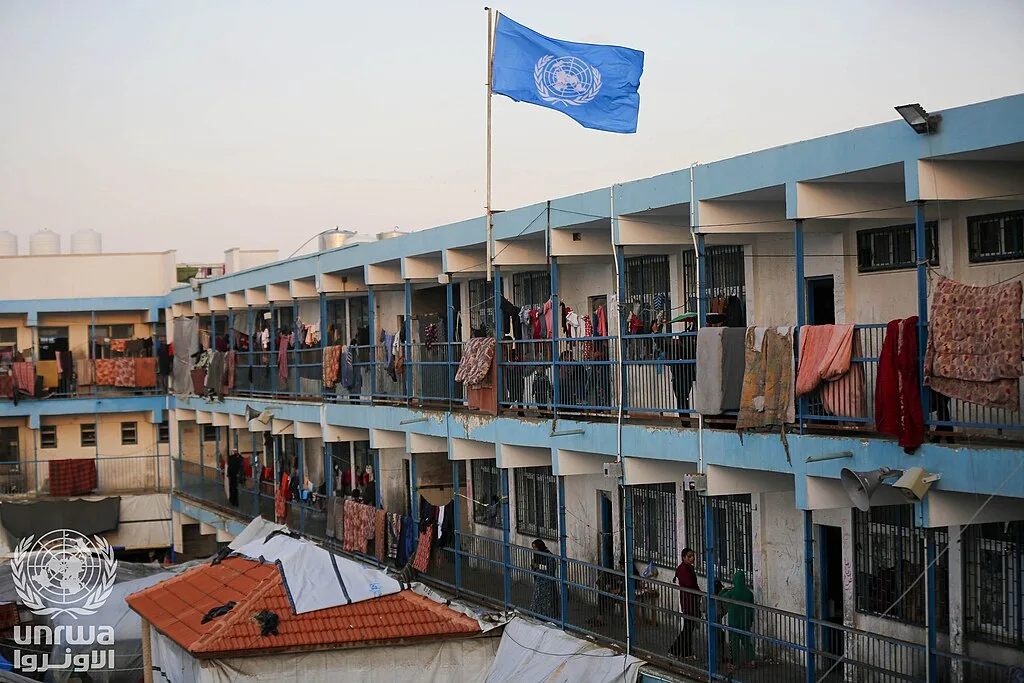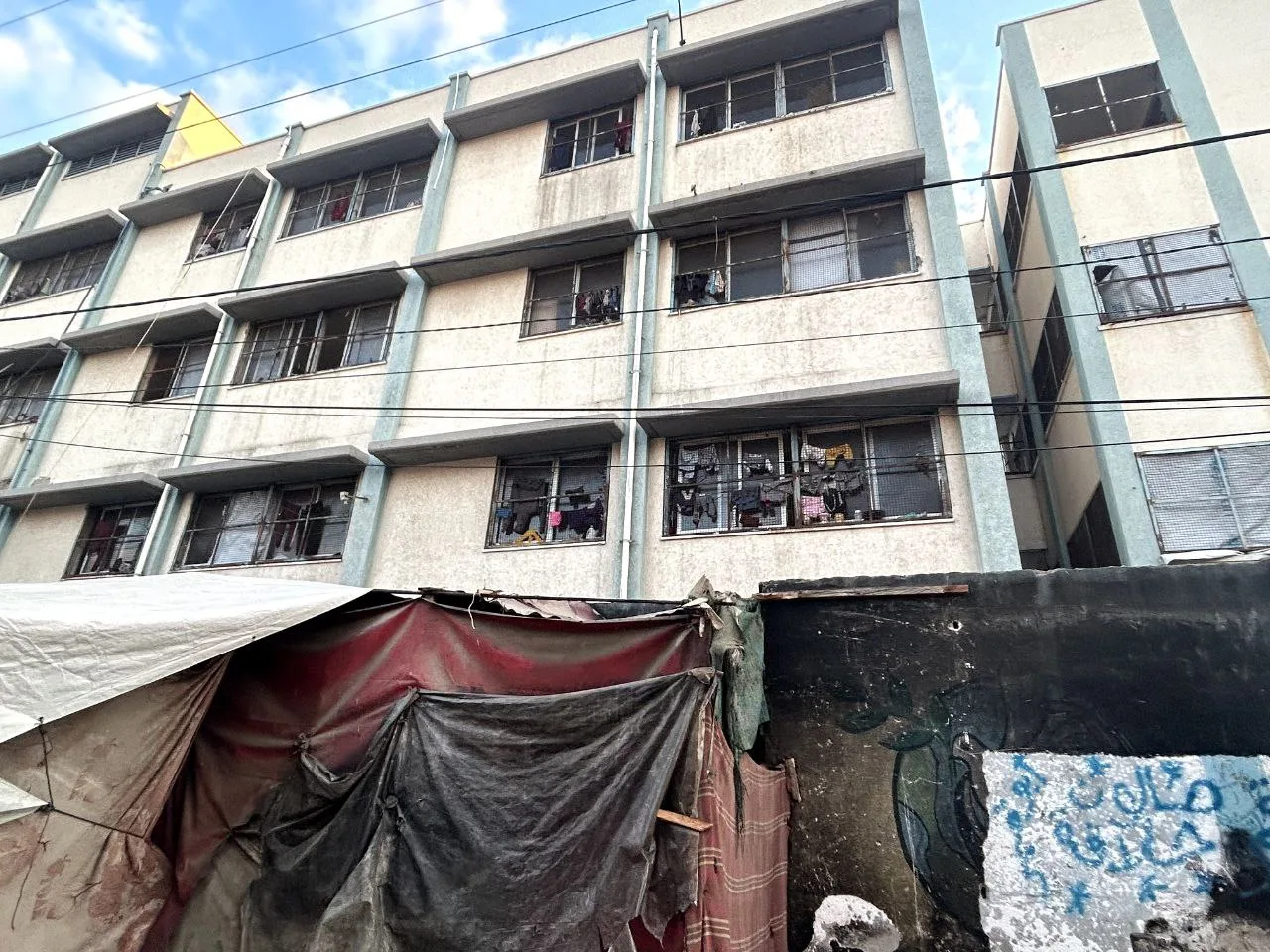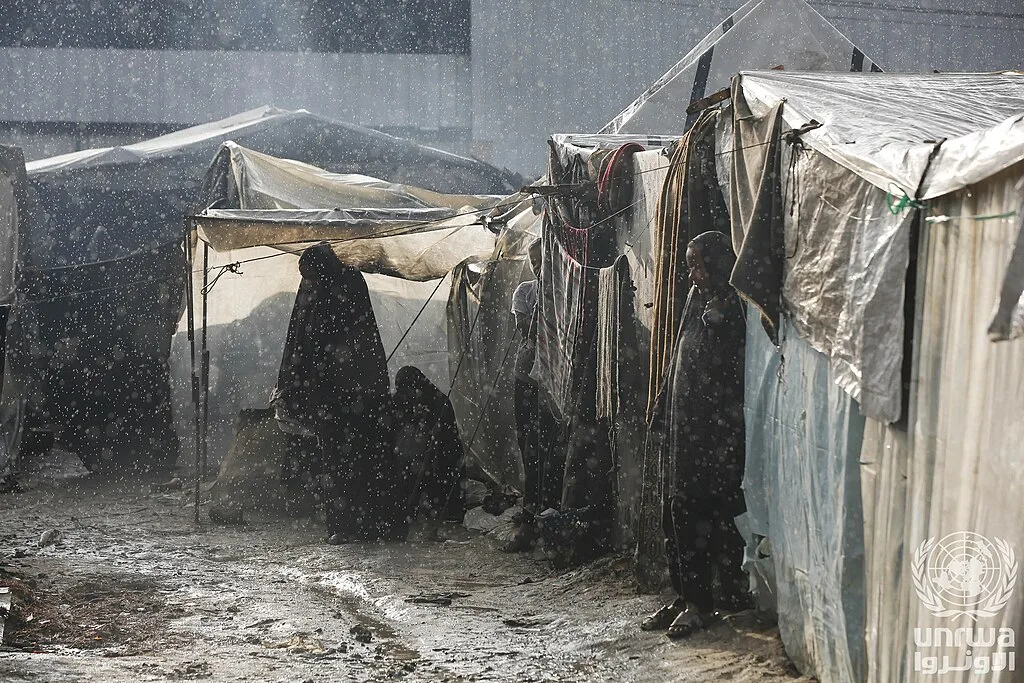
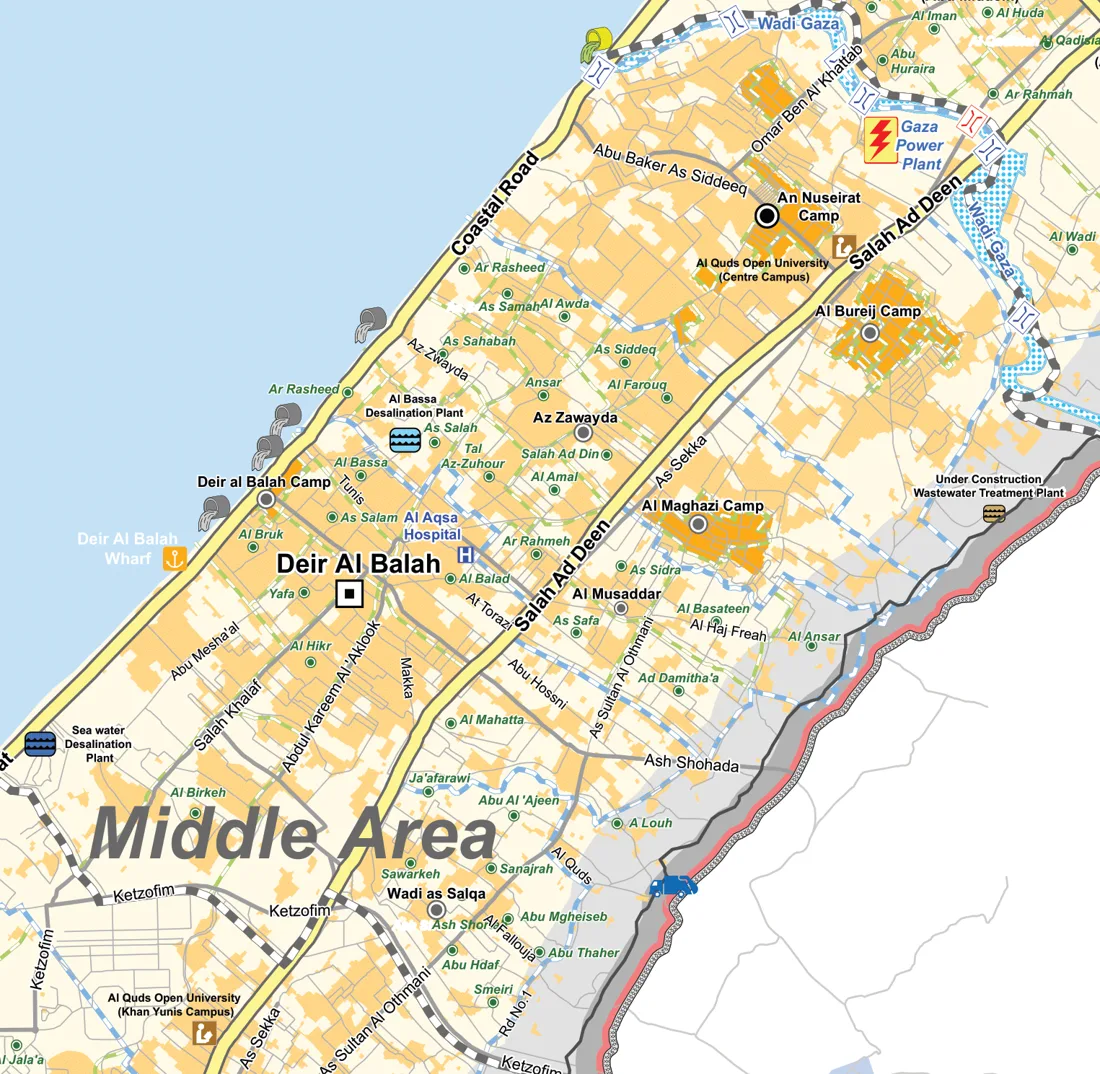
Gaza's winter shelter crisis is no longer a forecast: the season's first heavy rains flooded the displacement camps over the weekend, and by November 8 humanitarian partners had received appeals from more than 26,000 households whose shelters or belongings were damaged, the UN Office for the Coordination of Humanitarian Affairs (OCHA) said in an update reported by UN News and Reuters. More than 6,000 family shelters were reportedly destroyed and 17,400 damaged, and more than 3,900 households currently have no shelter at all, UN News reported. South of Deir al-Balah, the rain killed: medics told Reuters that heavy rain late on Sunday washed away a rocky sand bank abutting a camp for displaced families, killing a woman and two of her children, aged 8 and 6, and a fourth child, aged 4, and injuring six others. OCHA's count, citing local authorities, was five killed — three children and two women — at Al Berka Reservoir, west of Deir al-Balah, with one person injured and an infant reportedly drowned separately. The two credible counts do not match, and both are carried here with their attributions rather than merged; what neither disputes is that children died under a bank of wet sand because a tent was the only shelter their families had. For the ceasefire framework that was supposed to end this, see the Gaza ceasefire, one year on and Gaza reconstruction, explained.
What did the storm do to the camps?
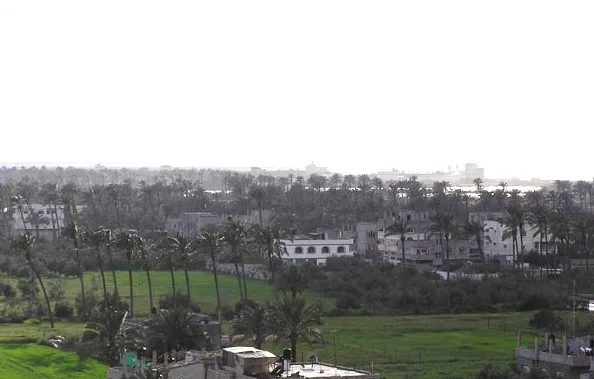
Rain and strong winds that began lashing Gaza on Friday night flooded displacement sites, collapsed damaged buildings and disrupted services across all five governorates, OCHA said — the storm found the camps exactly as the UN had warned, five days earlier, that it would. Water levels rose to 1.5 metres in some locations; civil defence units received 2,166 distress calls and could respond to only 218; at least 55 learning spaces serving some 55,000 children were flooded, and health facilities were damaged, UN News reported. Local authorities said at least 70,000 tents had been flooded in the first hours after the heavy rain began on Saturday, Reuters reported. Residents of one tent camp in Deir al-Balah said overflowing sewage had surged in with the floodwater, soaking mattresses, clothing and other belongings, UN News reported. "What can one say about the situation in Gaza? Whoever did not die from bombs and missiles is dying from buildings collapsing on them, from the collapse of sand and mountains on them," Amal Al-Zein, 35, a relative of the victims, told Reuters. Mahmoud Basal, spokesman for Gaza's civil defence service, told Reuters that people pitch their tents beside sand banks believing the banks will protect them: "Tents can't protect people, neither from rain nor of the heat, the only solution is reconstruction."
How large is the shelter gap?
About 121,000 tents short — and that was the position before a single tent flooded. In a situation report dated November 5, OCHA recorded the Shelter Cluster's estimate, as of November 1, that Gaza needed approximately 121,000 tents, 561,000 tarpaulins, 57,000 emergency shelter kits and 1.7 million mattresses for the cold and rainy season, against stocks inside Gaza of about 2,800 tents, 76,000 tarpaulins and 4,993 mattresses — and no emergency shelter kits at all, as reported by the Eastleigh Voice and the International Rescue Committee from the same OCHA report. OCHA warned that funding gaps, procurement delays, entry restrictions and delayed approvals could push much of the shelter pipeline into the second half of winter; winter-assistance funding stood at $186.5 million against an estimated $269.7 million required. Some 65 per cent of Gaza's population — about 1.4 million people — live in tents or makeshift shelters, UN News reported, and humanitarian stocks of tents, tarpaulins, blankets and clothes inside Gaza are now virtually exhausted.
The tents exist. More than 150,000 tents purchased by humanitarian partners and member states are outside Gaza ready to be dispatched, including about 117,000 from the Egyptian Relief Committee in Al-Arish, UN News reported. UN Deputy Special Coordinator Ramiz Alakbarov called for the urgent lifting of all unnecessary restrictions and delays, including those preventing aid organisations from bringing in vacuum trucks, dewatering pumps, heavy machinery, engine oil, spare parts, tents, tarpaulins, plastic sheeting, blankets and winter clothing. Asked about rebuilding, UN Deputy Spokesperson Farhan Haq told the daily briefing: "We certainly can be getting more in. We just need the permissions from the Israeli authorities to get them in through the various checkpoints." The UN and its partners are pumping out water, improving drainage, reinforcing sites with sandbags, repairing shelters and delivering emergency supplies, UN News reported — a response measured, so far, in 1,877 households assessed and 422 supported at 29 displacement sites, against more than 26,000 appeals.
Why are families still in tents a year after the ceasefire?
Because the ceasefire stopped the largest-scale fighting without delivering the reconstruction it promised. A US-brokered ceasefire last year called for the eventual reconstruction of Gaza, but little progress has been made, Reuters reported: negotiators have failed to agree on terms for Hamas to disarm or for Israel to withdraw its troops, which control about two-thirds of the territory and from which residents have been ordered to leave. Israel says no reconstruction can happen before Hamas is disarmed, Reuters reported. The vast majority of Gaza's 2 million population lives in tent encampments or the ruins of bombed-out buildings, and for many of them this is the fourth winter in which flood water will overtake their tents and soak everything they own. That is the documented record behind this weekend's deaths — not the rain, which falls every winter, but a population of two million left under canvas, beside sand banks and inside damaged buildings, while the supplies that could shelter them wait at the crossings and the political file that could rebuild their homes stays closed. Winter has only just begun.
Sources: Reuters (9 November 2026, read in full on reuters.com); UN News reporting the OCHA update of 9 November 2026 (read in full on news.un.org); the UN OCHA situation report dated 5 November 2026 as reported in full by the Eastleigh Voice and the International Rescue Committee. The death toll for the Deir al-Balah embankment collapse is published as both sources gave it — four (medics, via Reuters) and five (local authorities, via OCHA) — because the counts differ and neither source had reconciled them at the time of writing; the 70,000 flooded-tents figure is the local authorities' figure as carried by Reuters. Shelter-need and stock figures are the Shelter Cluster estimates as of November 1, dated as such in the text.