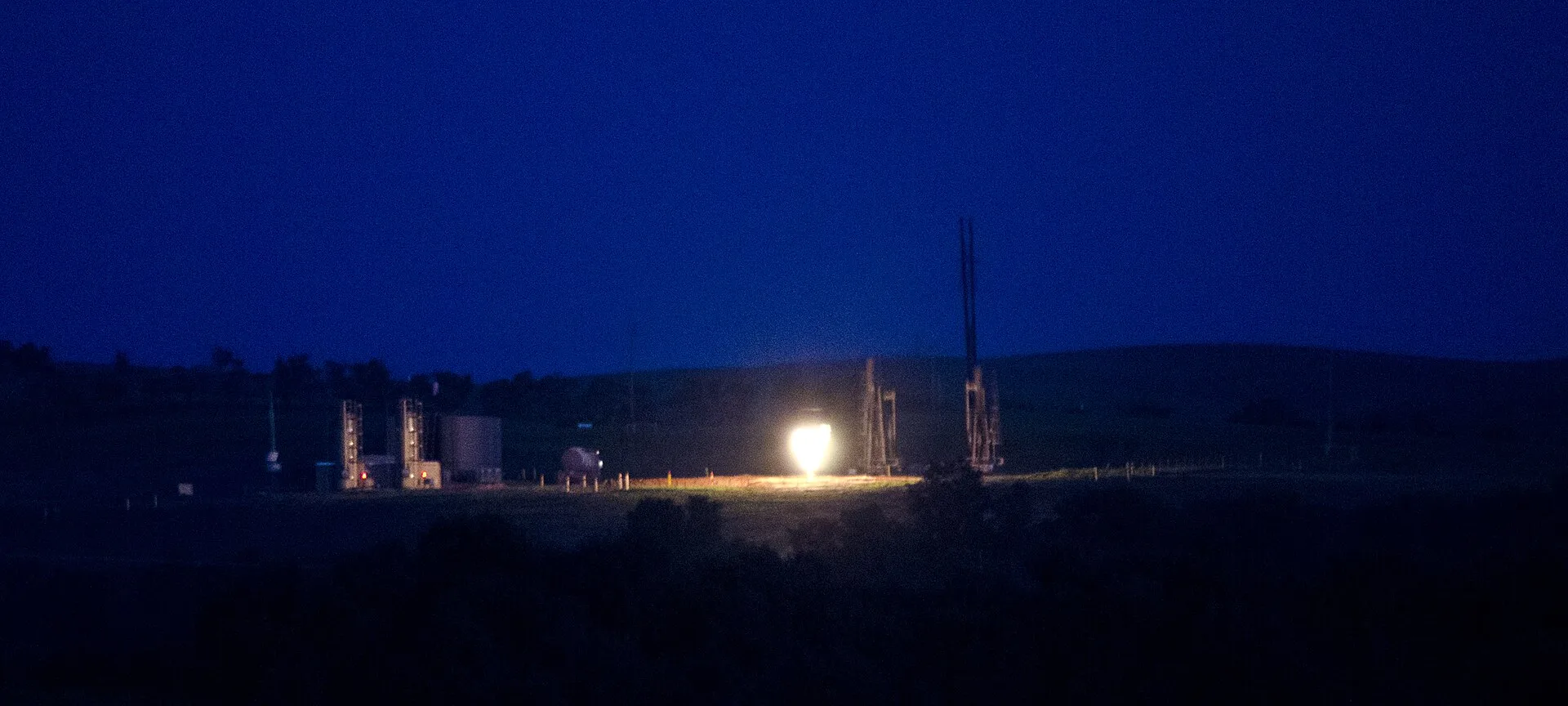
Production was halted on Sunday night, November 8, at Iraq's Khor Mor gasfield — one of the largest in the semi-autonomous Kurdistan region — after a single drone strike hit a liquefied petroleum gas (LPG) storage tank and started a fire, Reuters reported, and the region's electricity ministry said about 2.8 gigawatts of power generation was lost. Al Jazeera reported that more than 70 percent of the Kurdish region was left without power. Iraq's prime minister, Ali al-Zaidi, said the attack did not result in casualties, based on an initial assessment, and there was no claim of responsibility.
What happened at Khor Mor on Sunday night?
A single drone strike hit the field's LPG storage tank, causing a fire that was still raging when Reuters reported on Sunday, two sources in the region's electricity ministry said. Two security sources said smoke was seen rising from the field, and an engineer at the field said a gas storage facility was hit. Employees were evacuated to shelters inside the facility for fear of further attacks, the ministry sources said. Al Jazeera's fact-checking agency Sanad verified footage of smoke and flames rising from the vicinity of the gasfield in Sulaimaniyah governorate, and Al Jazeera's Peter Smith, reporting from Baghdad, cited security sources as saying an explosive-laden drone struck the gas storage facility.
How much power was lost, and what is being done about it?
Some 2,800 megawatts — 2.8 gigawatts — of generation was knocked off the grid, the electricity ministry said, a figure Al Jazeera reported as a range of 2,500 to 2,800 megawatts given by ministry spokesperson Omid Ahmed to the official Iraqi News Agency (INA). Ahmed said the attack suspended gas supply to power plants serving Erbil, Sulaimaniyah, Bazian, Chamchamal and Duhok, and that the ministry would supply critical facilities such as hospitals and water treatment plants by operating hydroelectric stations and other plants that run on alternative fuel. Al-Zaidi directed that a joint investigative committee be formed with the relevant authorities in the Kurdish region to investigate the circumstances of the attack, INA reported, via Al Jazeera. A joint statement by the region's natural resources and electricity ministries described the attack as a "terrorist attack" and said they were working to minimise its impact, Reuters reported.
Who was responsible for the attack?
No one, in the reporting opened for this article: Reuters said there was no claim of responsibility, and Al Jazeera said it was not clear who was responsible or whether the attack was related to the United States and Israel's war on Iran. This article therefore attributes the strike to no party. Khor Mor, which provides gas for regional power generation, has been struck before: Al Jazeera noted that a drone strike hit the same facility last year, with no group having claimed responsibility for that attack either, and Reuters reported that joint operator Dana Gas shut down the field's main production facilities in July because of credible security threats and regional tensions, before restarting production later the same month. What has not been established is the extent of the damage to the storage facility, how long production will remain halted, or when the lost generation can be restored.
This report is drawn from Reuters' November 8, 2026 reporting, opened and read on reuters.com and in full via 985theriver.com, the rostered Reuters verbatim carrier, and from Al Jazeera English's November 9, 2026 report, opened and read in full via carriers carrying its text verbatim. The halt, the fire, the 2.8-gigawatt loss and the no-casualties initial assessment are the electricity ministry's, the prime minister's and the field sources' accounts, attributed as such; responsibility for the attack is stated as unclaimed and unclear because that is what both outlets reported. No market snapshot box is published: Khor Mor supplies regional power generation, and no market move on this news was reported in the sources opened for this article.