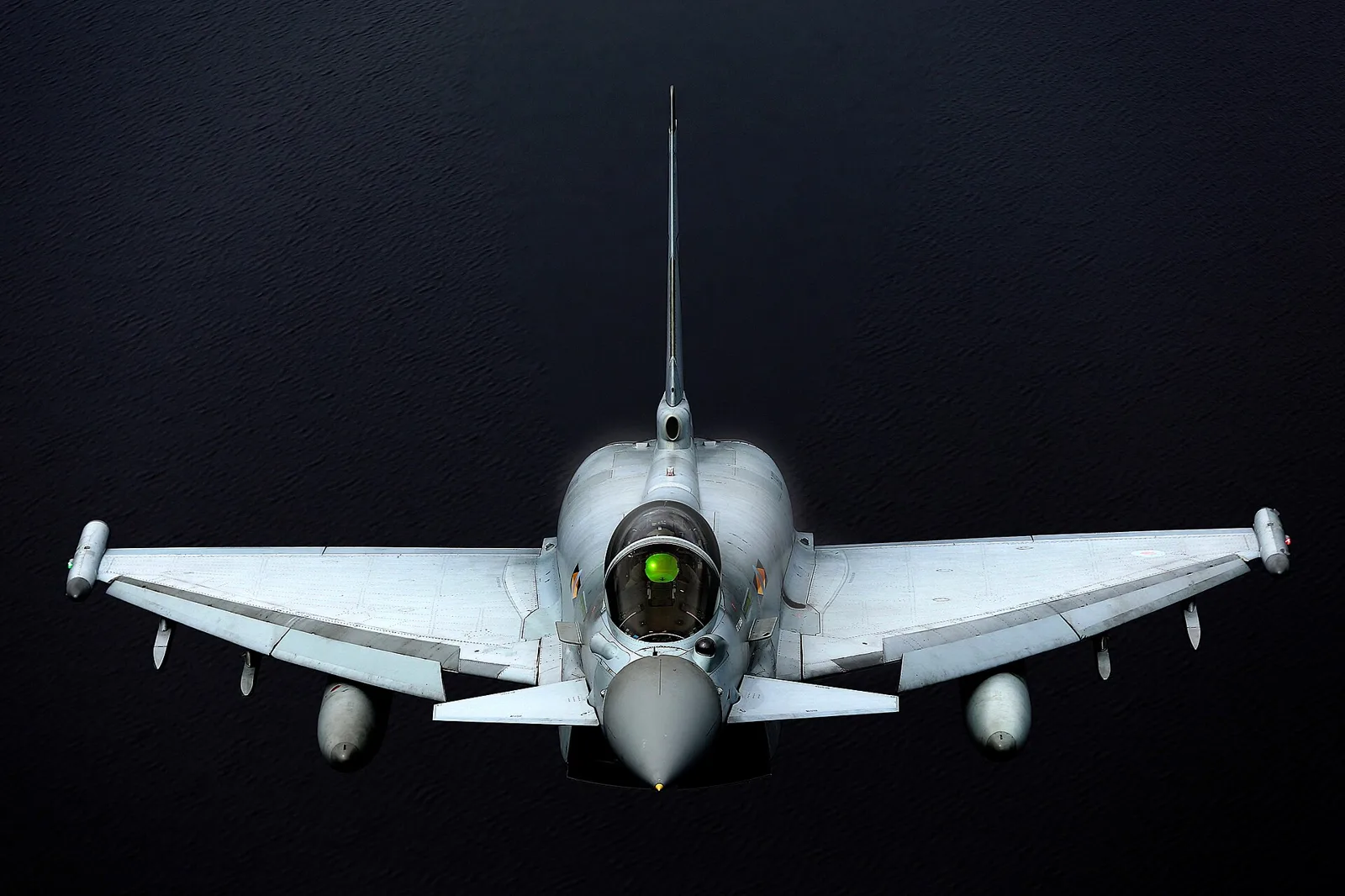
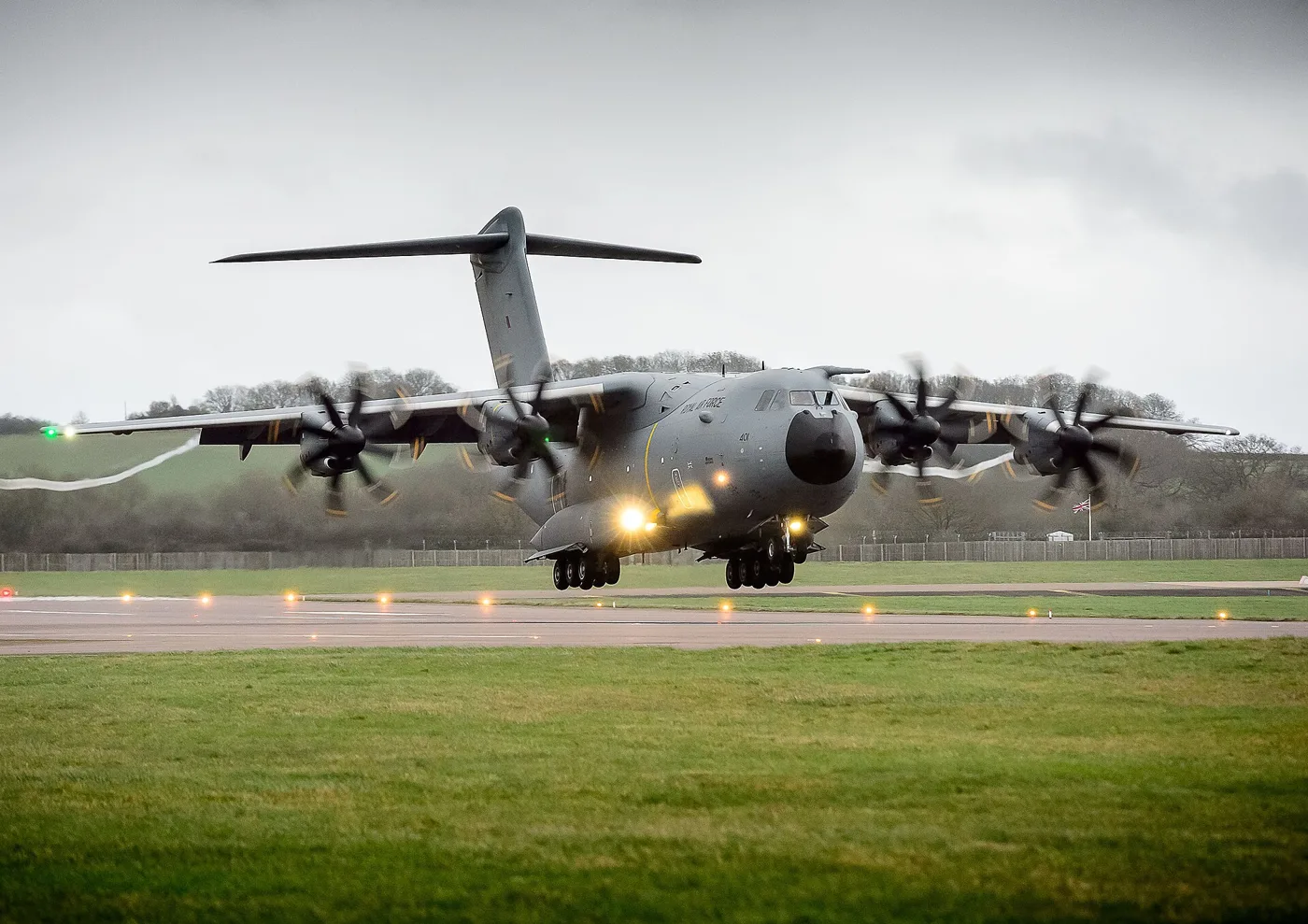
Britain will fly Royal Air Force Typhoon fighter jets on defensive missions over Saudi Arabia to protect Saudi cities and critical infrastructure from Houthi drone and missile attacks, the Ministry of Defence announced on Tuesday. The deployment, first reported by Bloomberg and confirmed in a ministry statement the same day, also includes an Atlas A400M transport aircraft and military advisers. It is a significant expansion of Britain's role in the conflict: the assistance London announced in September, after Houthi attacks on the kingdom resumed, consisted of an RAF Voyager air-to-air refuelling aircraft and did not include fighter jets.
What exactly will the RAF do?
Fly defensive counter-air missions, and nothing offensive, according to the British government. The Ministry of Defence said the Typhoons would help protect Saudi cities and critical national infrastructure from aerial attack, would operate only in a defensive role, and would not conduct offensive strikes against the Iran-aligned Houthis, whose attacks Britain says threaten regional stability and risk disrupting energy supplies and trade routes. A Downing Street spokesperson told reporters the jets will intercept missiles and drones launched against Saudi Arabia, CNN reported. The Times reported that the Typhoons are based in Qatar and will fly defensive missions over Saudi skies; a defence source told the paper: "If Houthi drones or missiles come over the border towards Saudi Arabia they will take them out." The A400M will move defence equipment within Saudi Arabia, and the military advisers will support Saudi staff officers, the reports said.
"The continuing attacks from the Houthis on our ally Saudi Arabia are absolutely despicable. The targeting of the airport in Riyadh in particular shows the lengths the Houthis are going to escalate the situation in the region," defence minister Wes Streeting said in the ministry statement. "That's why today I have approved further UK military support. RAF Typhoons will fly defensive air missions to help protect Saudi airspace from drones and missiles." The additional support follows a request from Saudi Arabia's government, which Prime Minister Andy Burnham said earlier this month Britain was prepared to consider, Reuters reported.
Why is Saudi Arabia asking for help now?
Because its air defences are under sustained strain. Over the past month the Houthis have intensified their attacks on Saudi Arabia, launching ballistic missiles and drones at key infrastructure, including oil facilities and airports, CNN reported. Repeated strikes have targeted Riyadh's King Khalid International Airport; one strike killed 13 people and wounded more than 300, which CNN described as the deadliest attack on Saudi Arabia in more than a decade, and The Times reported that Saudi Arabia announced on Tuesday that it had downed a missile over the capital, where the airport remains closed. On Tuesday the Houthis said again that they had launched attacks on Saudi energy, airport and military targets — an Aramco site in Yanbu, the Shaybah oilfield, and the Riyadh and Abha airports — claims Saudi authorities did not immediately confirm and Reuters could not independently verify. Inside Yemen, the toll from Monday's Houthi ballistic-missile strike on a government security forces training camp in Shabwa province rose to 73 killed, with 14 people still missing and more than 200 injured, the provincial media office and governor said on Tuesday, according to Reuters — up from the 58 reported when Britain's announcement was first published.
How does Britain's move fit the wider allied build-up?
Saudi Arabia has been collecting defensive commitments from regional and Western allies for weeks. Britain was already providing air-to-air refuelling support and had deployed air defence equipment and personnel to the kingdom before Tuesday, a Downing Street spokesperson said. France has agreed to deploy defence assets including military personnel, and more than 100 American military advisers are on the ground providing intelligence and targeting support under a newly established joint forces command, CNN reported; Pakistan has forces stationed in Saudi Arabia, and Egypt's parliament is debating whether to send support after President Abdel Fattah al-Sisi called an emergency session. The escalation is also moving oil markets: Brent crude rose to $111.75 a barrel on Tuesday, its highest since May, and was trading at $111.20 at 1120 GMT, up 1.5%, as traders priced in a geopolitical risk premium from the Houthi attacks and reports of vessel attacks in the Gulf, Reuters reported.
This article is drawn from reporting opened and read for this article: Reuters' October 20, 2026 reports (the Ministry of Defence announcement and Streeting statement, carried in full by TBS News; the first Bloomberg-sourced deployment report; the Brent five-month-high market report; and the Shabwa toll revision to 73), CNN's October 20, 2026 report (the Downing Street spokesperson, the existing British support, and the allied build-up), and The Times' October 20, 2026 report (the Qatar basing, the defence source's account, and Saudi Arabia's Tuesday missile-downing announcement). The Houthis' Tuesday attack claims are published as claims: Saudi authorities did not confirm them and Reuters could not independently verify them.